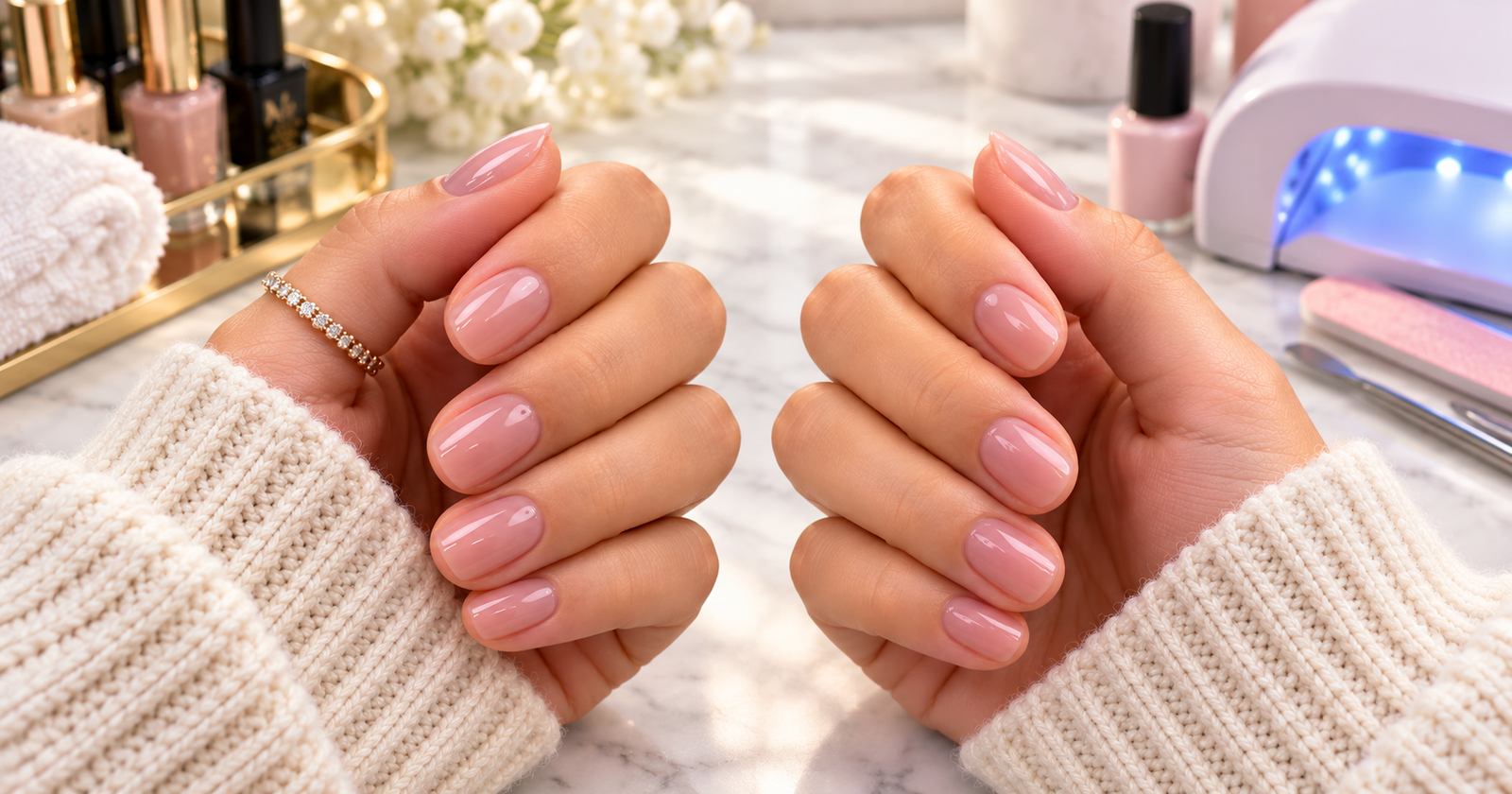
At-Home vs Salon Manicure: What You Really Pay, and Which to Choose
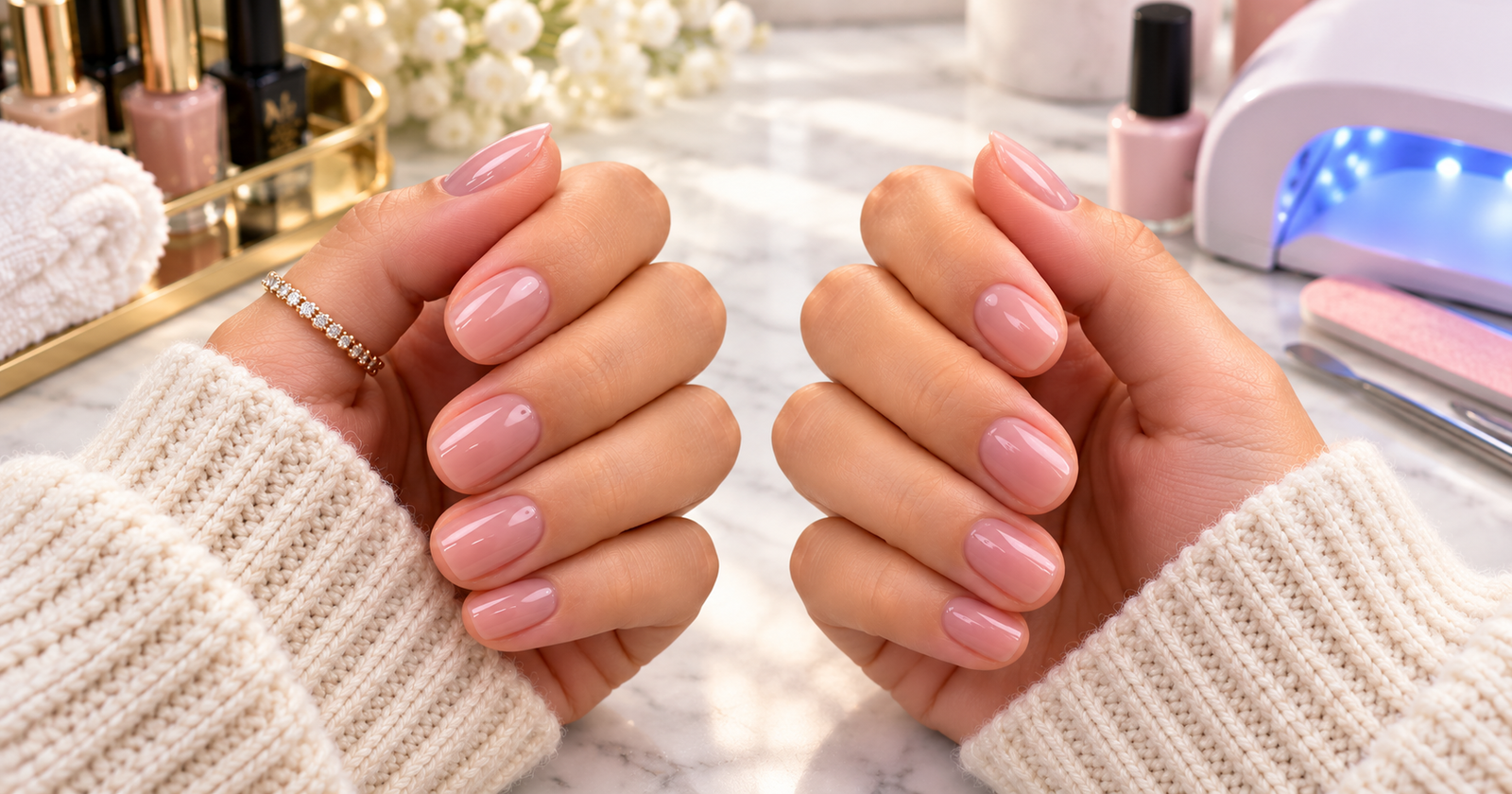
For about a year I went to a salon for gel nails every three weeks. Every time I paid, I did a little mental arithmetic that I did not enjoy. Then a friend handed me her at-home gel kit and said it had changed her life. It did not change mine exactly, but it did change how I think about the question.
The honest answer to "at-home or salon" is not one or the other. It depends on what you actually want from your nails, how often you get them done, and how much you enjoy doing them yourself. Here is how I would think about it.
First, a warning about the numbers
Most of the cost comparisons you will find online are written by companies that sell at-home kits, and they have an obvious reason to make salons look expensive. The salons, naturally, say the opposite. So I have used ranges rather than single figures, and where sources disagree I say so. Prices also vary enormously by city, so check what your own local salon charges before you decide anything.
What it really costs
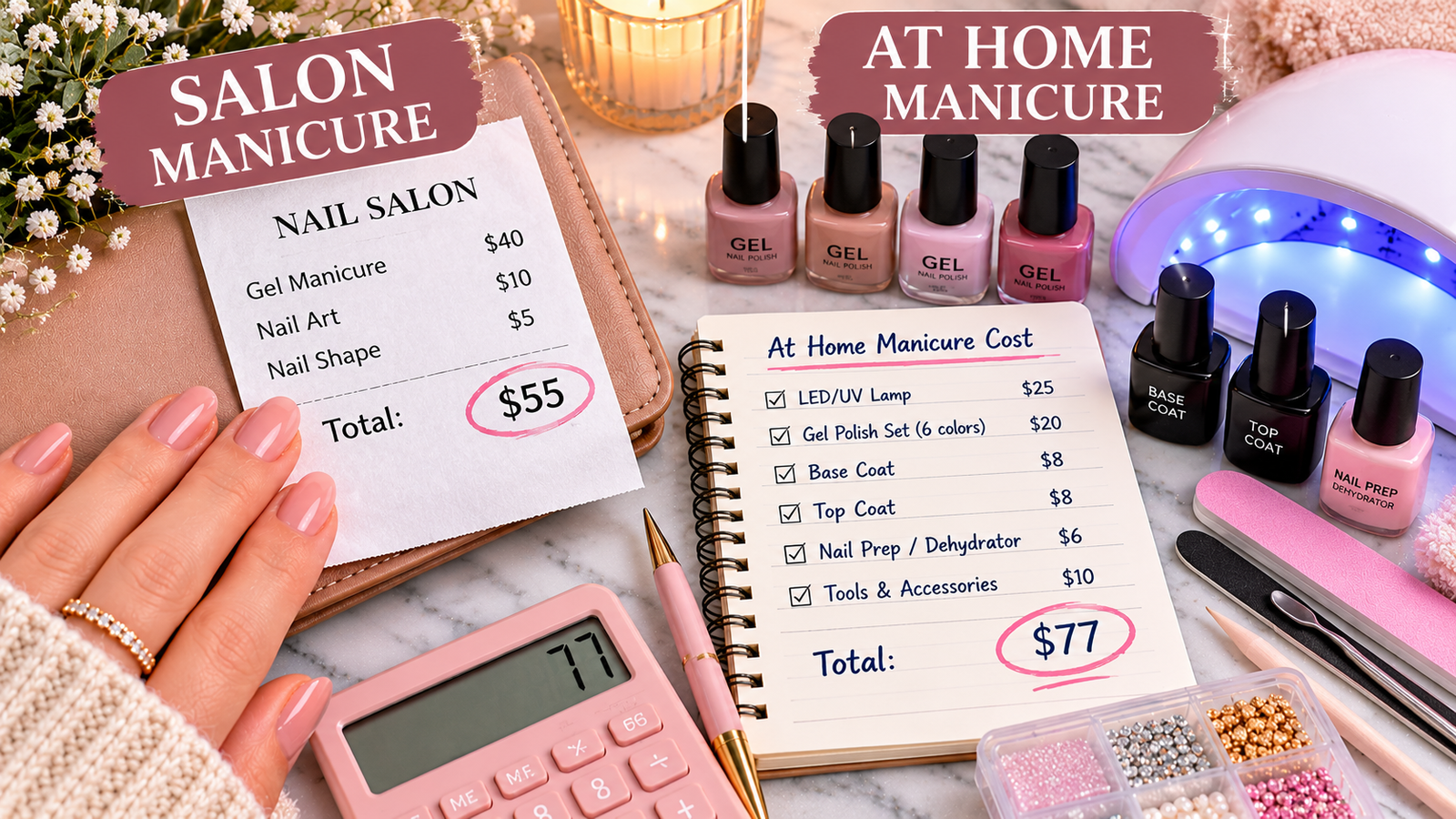
Here are the ranges I found, drawn from several recent cost comparisons.
| Salon gel manicure | At-home gel | At-home regular polish | |
|---|---|---|---|
| Per manicure | About $30 to $85, higher in big cities | About $2 to $8 once you own the kit | A few dollars |
| Upfront cost | None | About $45 to $120 for a starter kit with a lamp, more for professional kits | About $20 to $25 for a no-lamp kit, or polish you already own |
| Time | About 45 to 75 minutes, plus travel | About 60 to 90 minutes, including prep and cleanup | Depends on how fast you are |
| How long it lasts | Usually 2 to 3 weeks | 2 to 3 weeks when done well | About 7 to 10 days, with a fresh top coat every 2 to 3 days |
Take a simple example. If you get gel done every three weeks, that is about 17 visits a year. At $30 to $85, a year of salon gel comes to roughly $500 to $1,450. At home, a $45 to $120 kit plus about 16 manicures at $2 to $8 comes to roughly $75 to $250 in the first year. That is my own arithmetic from the ranges above, and it leaves out refills, tools and remover, so call it a few hundred dollars for a realistic first year. The gap is still large.
Several sources put the break-even point at about two to three salon visits, which means a kit can pay for itself quickly.
There is one catch. If you only get gel done a few times a year, say for weddings and holidays, the salon can end up cheaper than a kit that sits in a drawer. The savings only show up if you actually use the thing.
Where the salon wins
A nail tech has trained hands and a lot of practice. For nail art, extensions, shaping, and clean cuticle work, the salon is simply better, and for most people it is not close. A tech also paints your dominant hand with the confidence of someone who does it all day, which is the hand most of us wobble on.
If you want something complicated, a velvet cat-eye, a detailed French, anything with layered art, I would book it. Some looks are worth paying for.
Where at-home wins
Solid colors, simple micro French tips and a quick change of color before an event are all easy to do at home. You also control the schedule. You can redo a color at 10 pm on a Tuesday without booking anything or traveling anywhere.
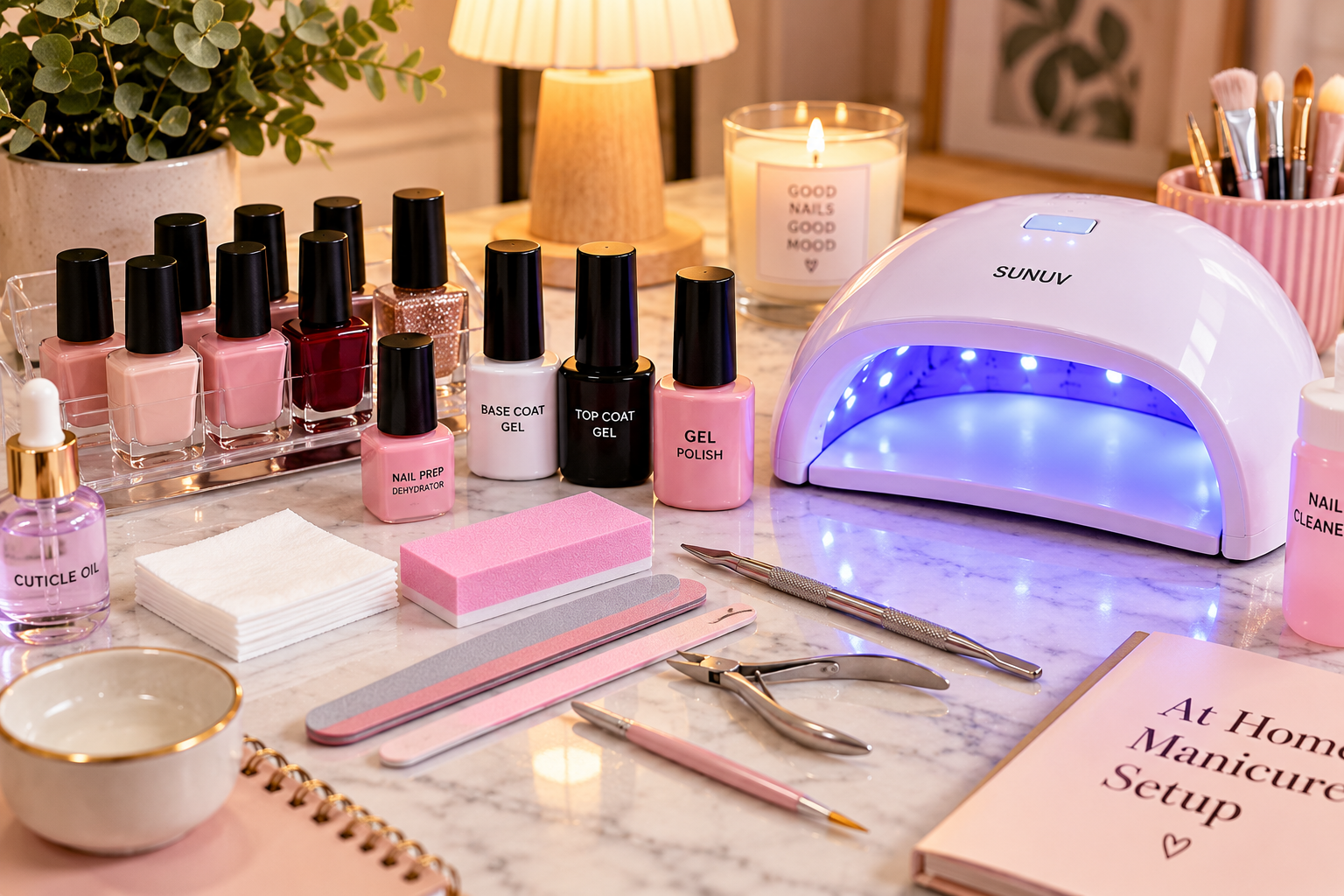
The time is similar. At home it takes about 60 to 90 minutes including prep and cleanup, and a salon visit is about 45 to 75 minutes plus the trip there. People often assume at-home saves time. It usually does not, at least at first. What it saves is money and the need to schedule.
Does at-home gel last as long?
It can. Several sources say well-applied at-home gel lasts two to three weeks, the same as salon gel. The difference is how often it goes wrong. Even companies that sell at-home kits say most failures come from under-curing, not from bad painting. That usually means thick coats, a weak lamp, or a lamp that does not suit the polish.
My first at-home set lifted at the edge within a week. I had used thick coats and I had not sealed the tip of the nail. The second set lasted nearly three weeks, and the only thing I did differently was apply thinner coats and run the brush along the free edge.
Mistakes to avoid at home
Thick coats. Thin, even coats cure properly. Thick ones stay soft underneath and peel.
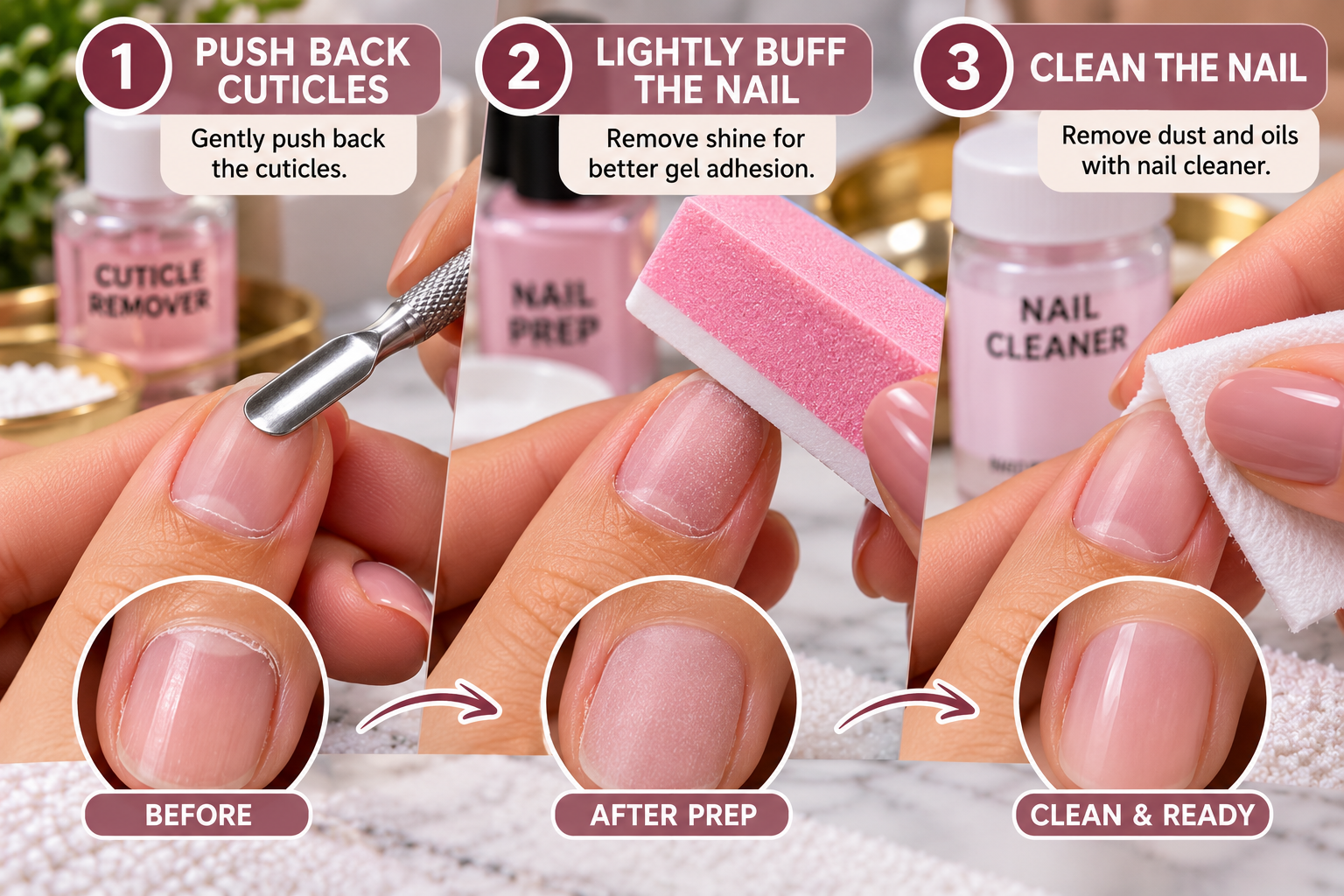
Skipping prep. Gently push back the cuticles, buff the shine off the nail and wipe it clean. Polish grips a clean, slightly rough nail much better.
Flooding the cuticle. Leave a hair of space around the skin. Polish that touches the skin tends to lift.
Not capping the free edge. Run the brush along the tip of the nail to seal it. Most chips start there.
Wrong lamp, wrong time. Use a lamp that suits your polish and cure for the time on the bottle. Under-curing is the most common problem, and it is easy to fix.
Peeling it off. This one is for every gel manicure, salon or home. Peeling lifts layers of the nail along with the polish and leaves it thin and sore. Soak it off properly instead.
Which one should you choose?
If you want a new color every two to three weeks and you like solid colors, go with at-home gel. This is where the savings add up, and you will get faster with practice.
If you only get your nails done a few times a year, use the salon. A kit would sit unused, and a tech will do a better job for an occasion.
If you want nail art or extensions, book a tech. Some things are not worth learning at your kitchen table.
If you do not want to buy a lamp or commit to gel, do regular polish at home and add a fresh top coat every two to three days. A regular manicure usually lasts about 7 to 10 days that way, and it costs almost nothing.
If you are a complete beginner, start with regular polish, then try gel with a cheap starter kit once you know you enjoy it. There is no point spending on a lamp before you know you will use it.
The hybrid I would actually use
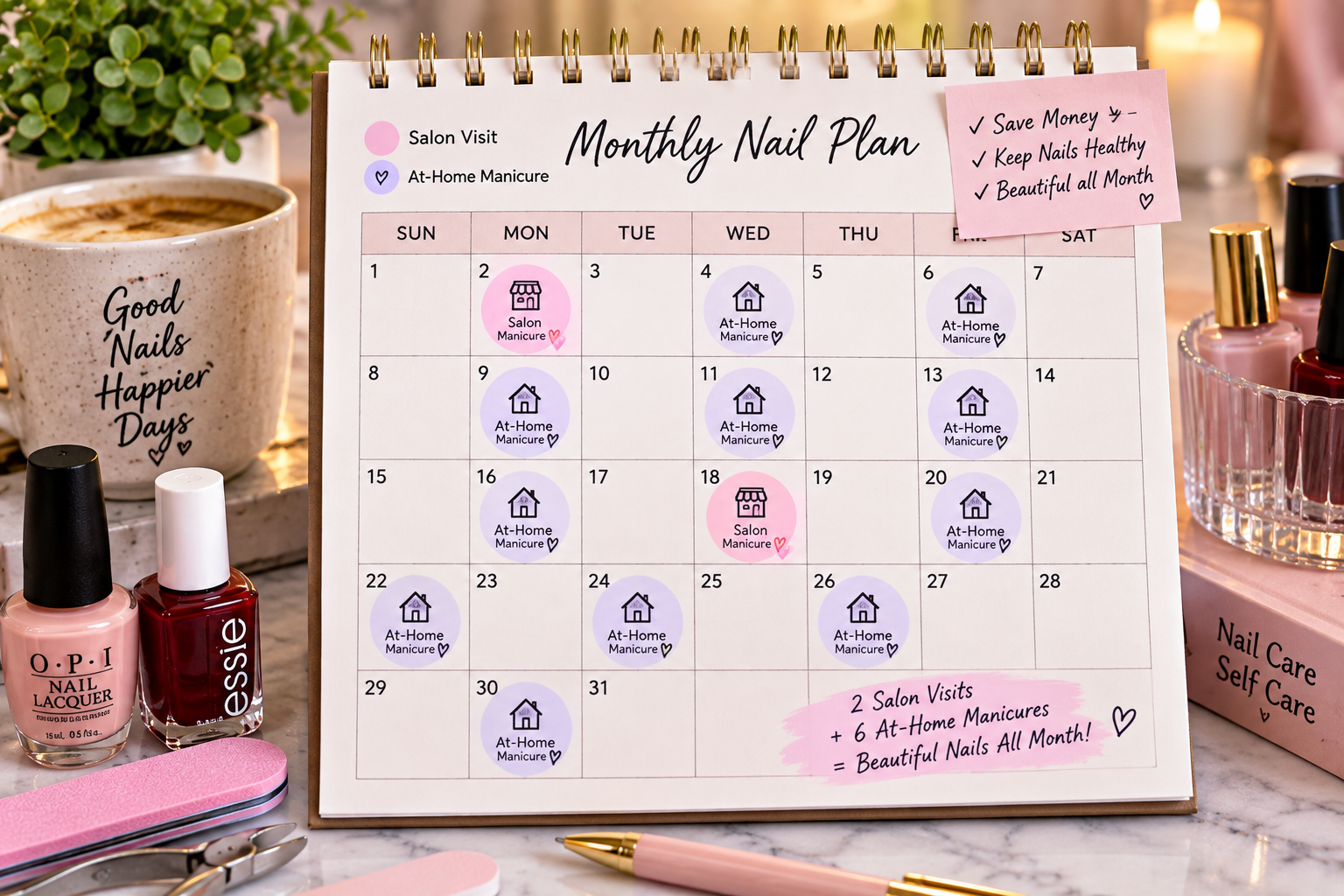
My own answer is a mix. I do solid colors at home, the kind I could do half asleep, and I go to a salon a couple of times a year for something I cannot do myself, like a detailed set before a wedding. That keeps costs low and still gets me the occasional proper treat.
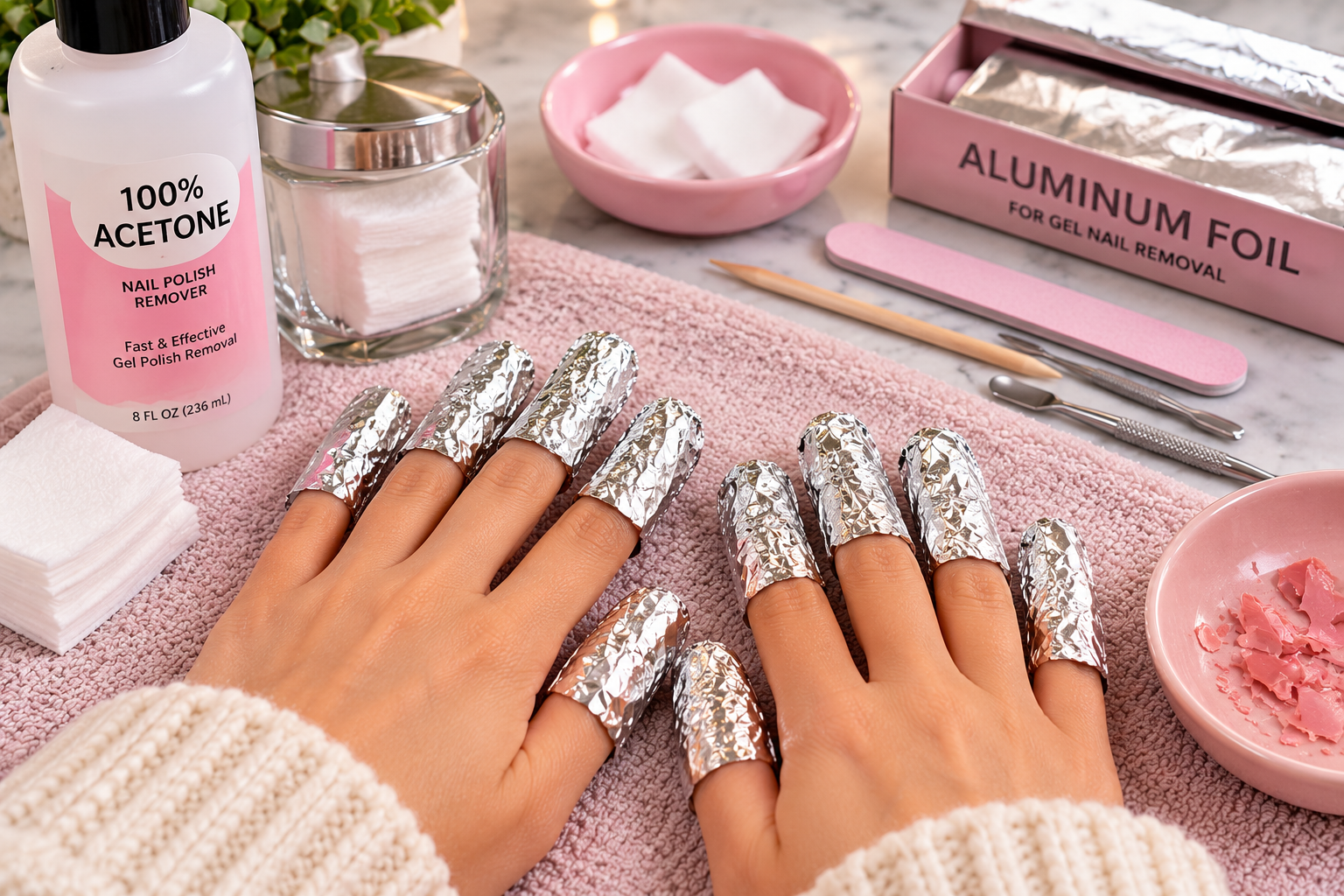
If you try gel at home, the way you take it off matters as much as the way you put it on. File off the shiny top layer gently, soak a cotton pad in remover, wrap each finger in foil for about ten to fifteen minutes, and let the polish soften and slide off. If it does not come away easily, soak it a little longer, and do not scrape.
A note on timing
If you are doing a holiday manicure, plan one or two days ahead, so the polish has time to cure. I wrote about this in my November nails post → November Nails for Short Nails: Thanksgiving, Work, Travel. And if you are planning something cozy for the cold months, my winter nails post → 7 Winter Nail Ideas for Short Nails (Not Just Christmas) shows which looks you can do yourself and which to leave to a tech.
So, which is better?
Neither, on its own. The salon is better at the things that take skill. At-home is better at the things that take time and repetition, and it is a lot cheaper if you do it often. Most people end up somewhere in the middle, and that is a perfectly good place to be.
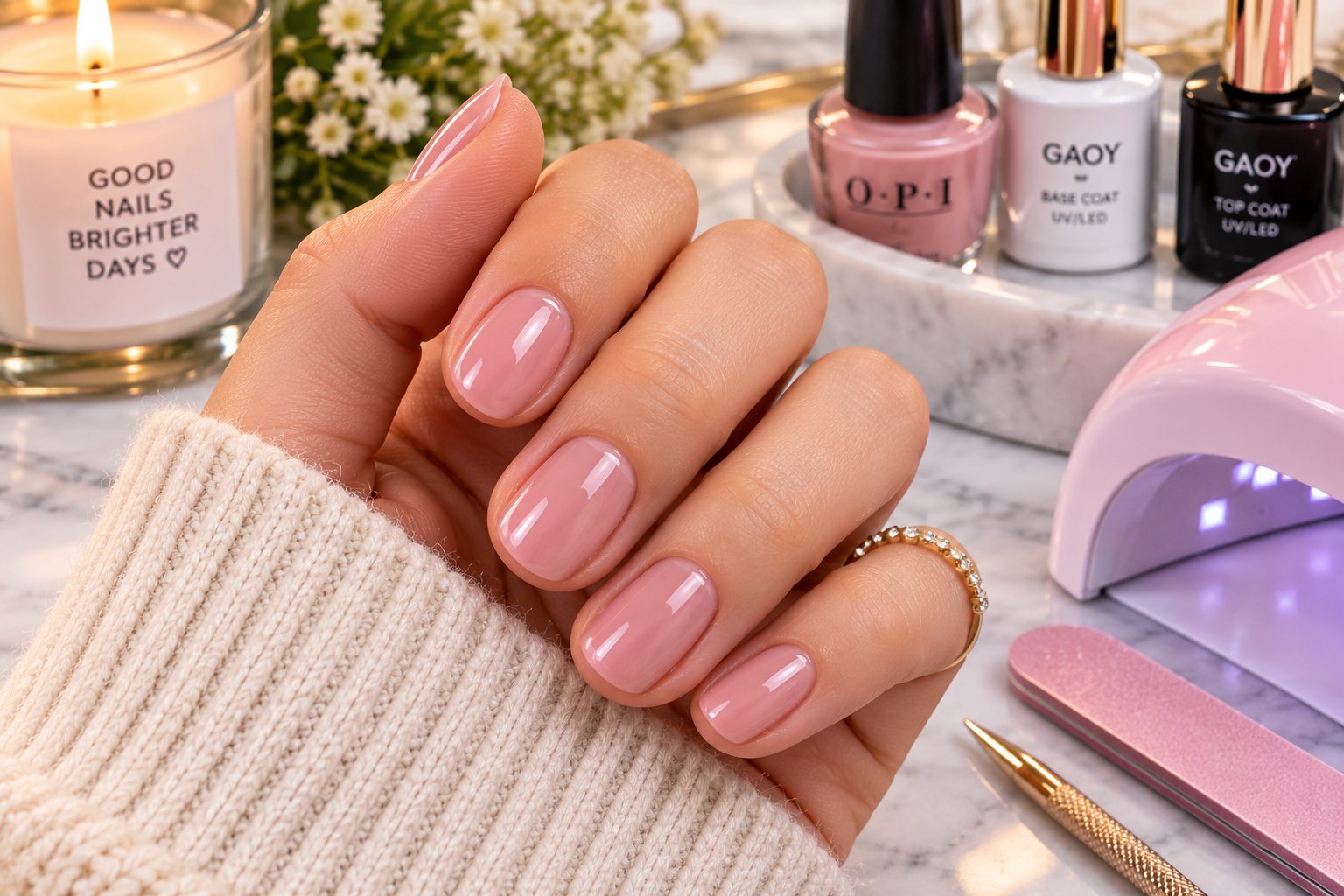
If you are on the fence, try regular polish with a good base and top coat for a month. It costs almost nothing, and it will tell you whether you enjoy doing your own nails. If you do, a gel kit is the next step. If you do not, you have saved yourself the lamp, and you can spend the money at the salon on something you will actually enjoy.