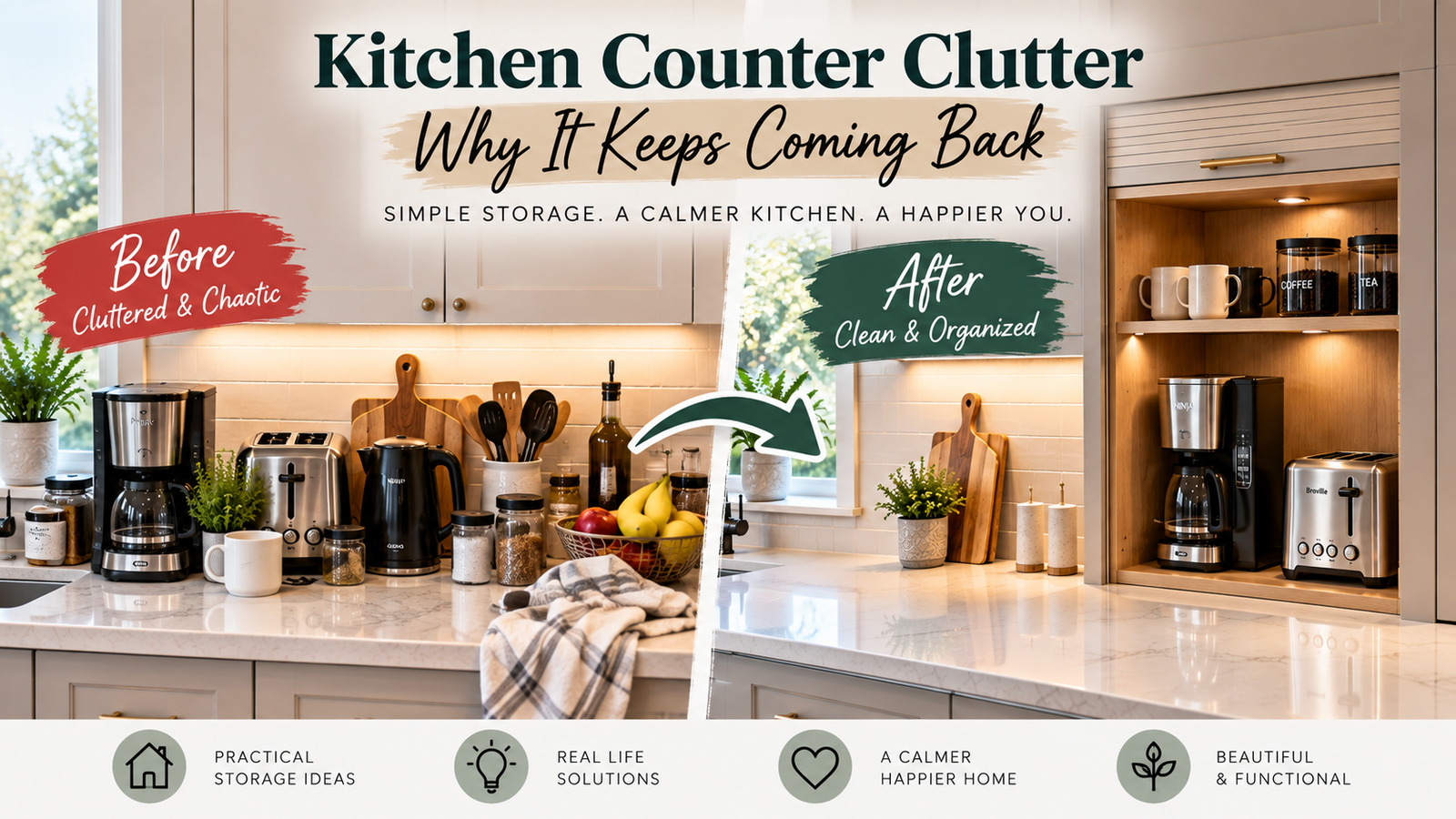
Kitchen Counter Clutter: Why It Keeps Coming Back
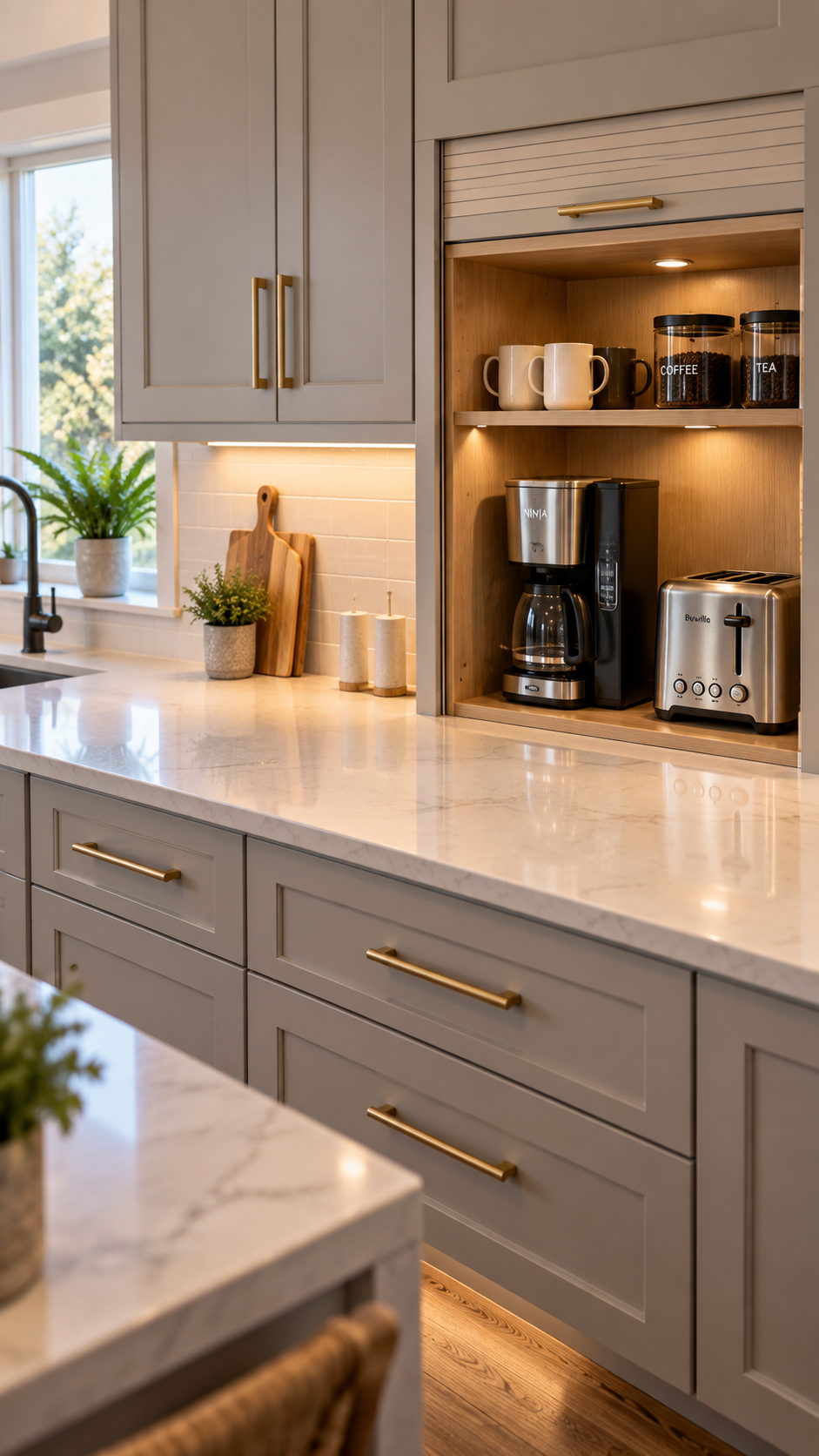
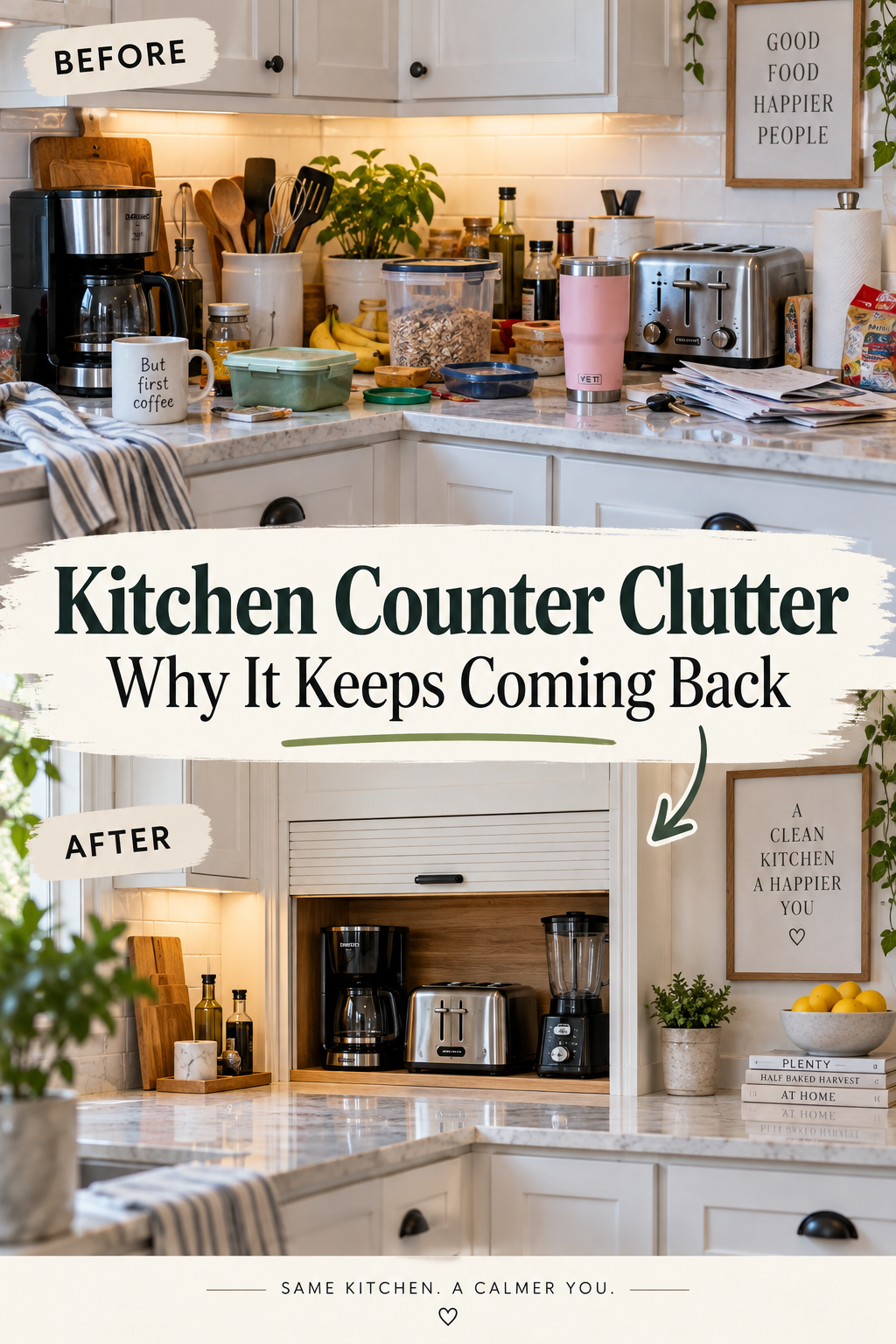
For about three years, my counter had a coffee maker, a toaster, and a blender on it permanently. I cleared it maybe once a month, usually before someone visited, and within four or five days everything had crept back.
I assumed this was a discipline problem. I am, by most measures, a reasonably tidy person, so it bothered me that this specific corner of my life refused to stay organized no matter how many times I put things away. It took an embarrassingly long time to notice the actual issue: I never put those three appliances away because there was nowhere to put them. "Away" wasn't a real place. It was an aspiration.
Clutter that keeps coming back almost always means there's no assigned zone for the thing in question, not that the person living there lacks willpower.
Why clearing the counter never sticks
A one-time clear-out treats the symptom. The appliances go into a cupboard, a drawer, wherever there's a gap, and the next time you need the toaster, it comes back out. If getting it back out is annoying enough, it just stays out afterward, which is exactly what happened to mine for three years running.
The fix isn't a bigger clean-up. It's a permanent zone, sized correctly for what actually needs to live there, positioned somewhere it's genuinely easy to use. This is the same principle behind the reversed-hanger method for a closet → How to Audit Your Closet Without a Weekend Purge. You're not disciplining yourself into tidiness. You're building a system honest enough that the tidy version is also the easy version.
Step 1: Work out what actually needs a zone
Not everything on your counter is clutter. Some of it is genuinely used daily and deserves to stay visible. The rest needs somewhere else to go.
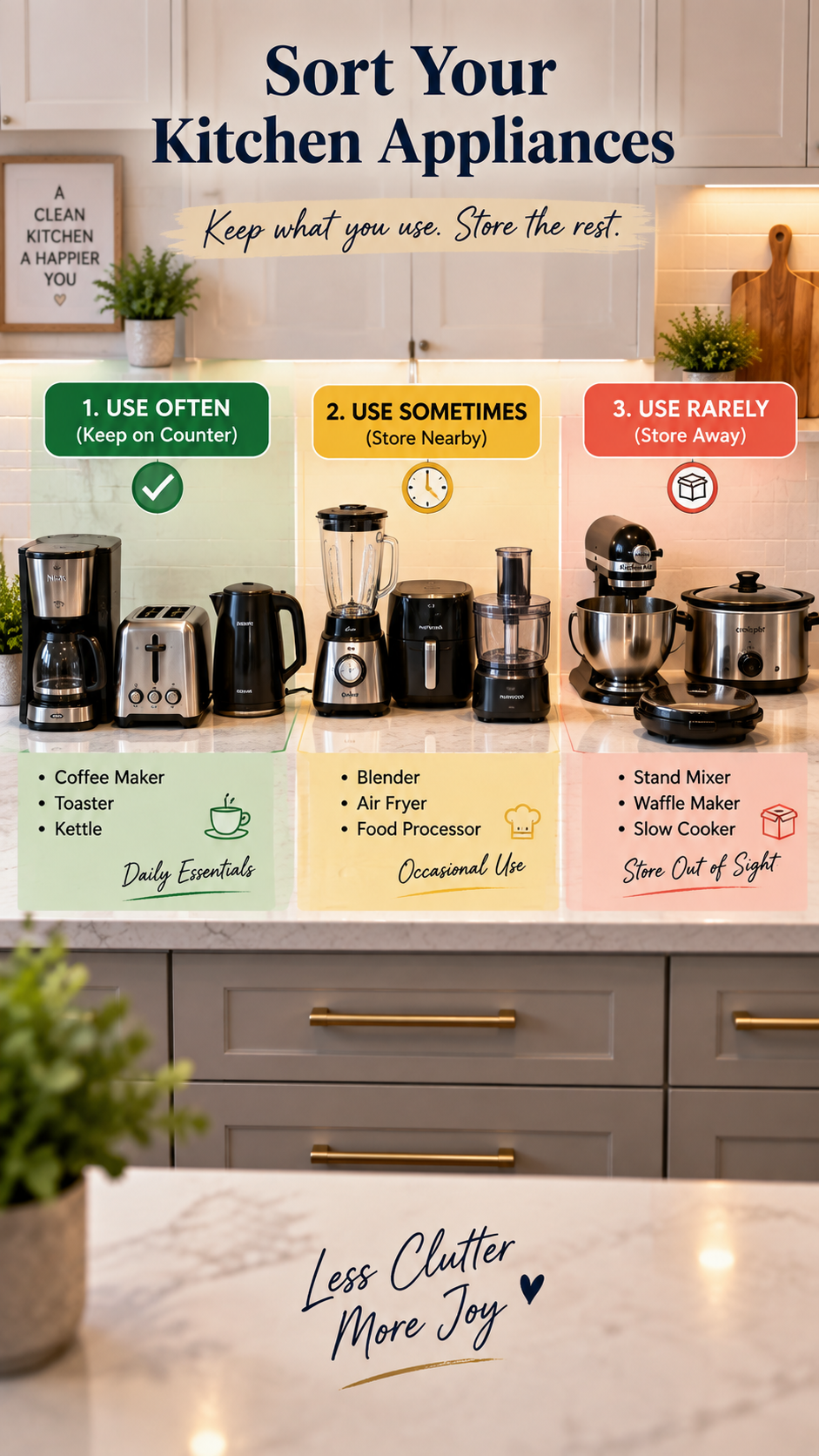
Sort what's currently out into three groups:
Used daily. The coffee maker you touch every morning. This can stay on the counter, but it should have a defined spot, not just wherever there happened to be room.
Used a few times a week. The toaster, the blender. This is the group that benefits most from a dedicated hidden zone, since it's used often enough to be annoying if buried, but not often enough to justify permanent counter space.
Used occasionally. Slow cooker, stand mixer, waffle iron. This can live further away entirely, in a cabinet, a pantry, even another room, since it only comes out a handful of times a year.
Most kitchen counter clutter comes from group two sitting out because there's no proper place for it, alongside group three that's simply never been relocated anywhere better.
Step 2: Build a proper zone for the "used a few times a week" group
This is where an appliance garage earns its reputation. Not as a place to hide things you're embarrassed by, but as a designated spot that makes putting an appliance away exactly as easy as leaving it out.
What makes a zone actually work:
- A nearby outlet, so plugging in doesn't require dragging the appliance somewhere else first
- Enough depth that the appliance fits with its cord coiled behind it, not wedged in sideways
- A door or opening mechanism that takes one motion, not two hands and a small negotiation with the hinge
If any of those three is missing, the zone will fail the same way the open counter did. An appliance garage with an awkward door or no nearby socket just becomes a slightly more annoying version of the same problem.
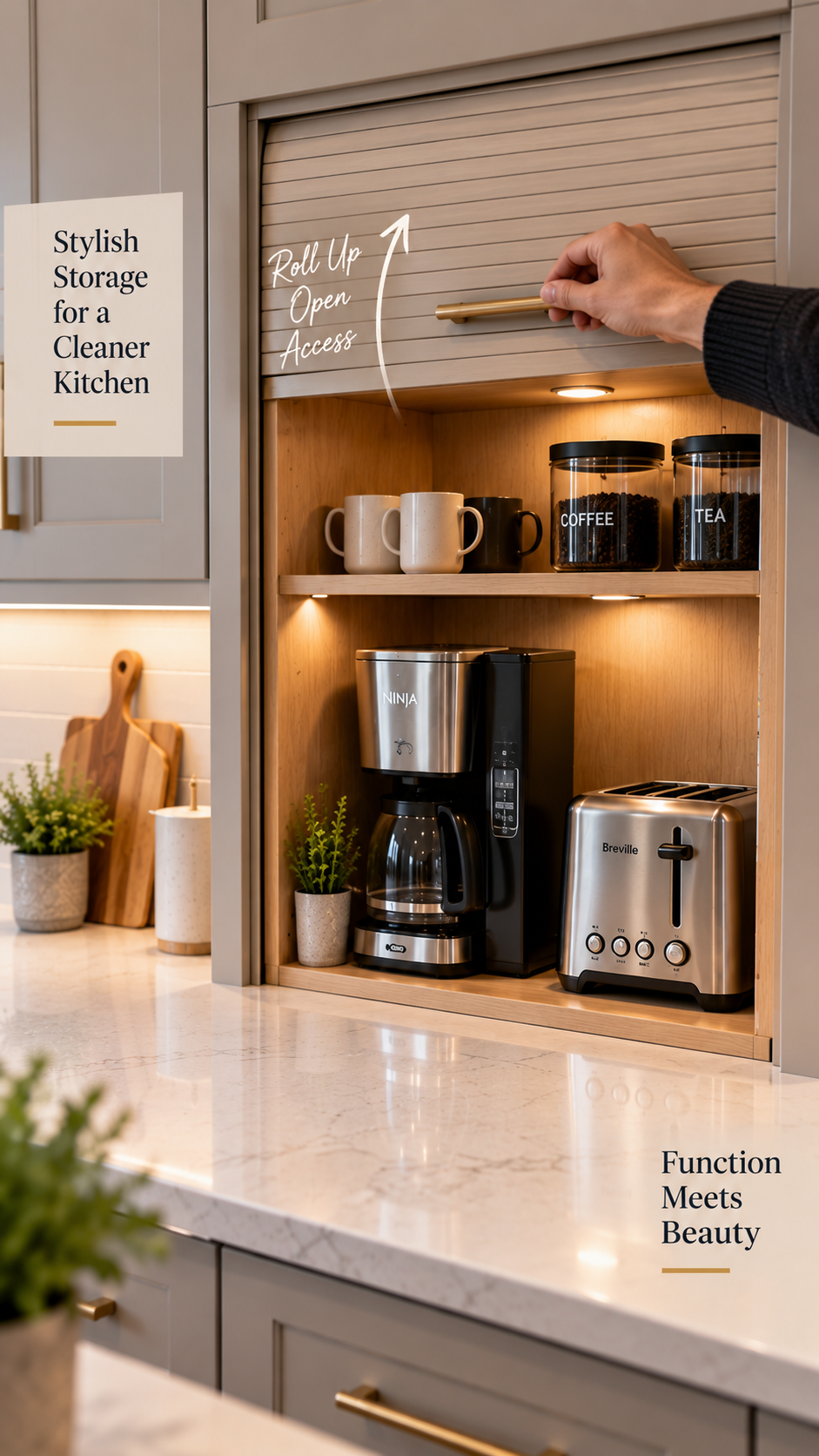
A roll-top appliance garage cabinet solves the door problem specifically. The tambour-style rolling door needs no swing space, which matters in a kitchen where every inch of clearance is already accounted for.
Step 3: Give coffee its own small station
Coffee deserves special mention because it's the single most common source of counter clutter, and because it usually involves more than one item: the machine itself, mugs, filters or pods, sometimes a grinder.
Rather than treating coffee as one appliance to find a home for, treat it as its own small zone. A shelf or a section of counter dedicated entirely to coffee, with everything related to it kept in that one place, tends to stay tidy far more reliably than scattering the same items across three different cabinets.
An under-cabinet coffee station shelf adds a dedicated surface without eating into existing counter space, mounting directly beneath an upper cabinet.
Step 4: Fix the drawers before blaming the counter
A lot of counter clutter is really a drawer problem wearing a counter's clothes. Utensils, spices and small tools end up on the counter because the drawers meant to hold them are too disorganized to use quickly.
Spices. A wall-mounted or cabinet-door spice rack keeps them upright, visible and out of drawers entirely, which frees up drawer space for everything else competing for it.
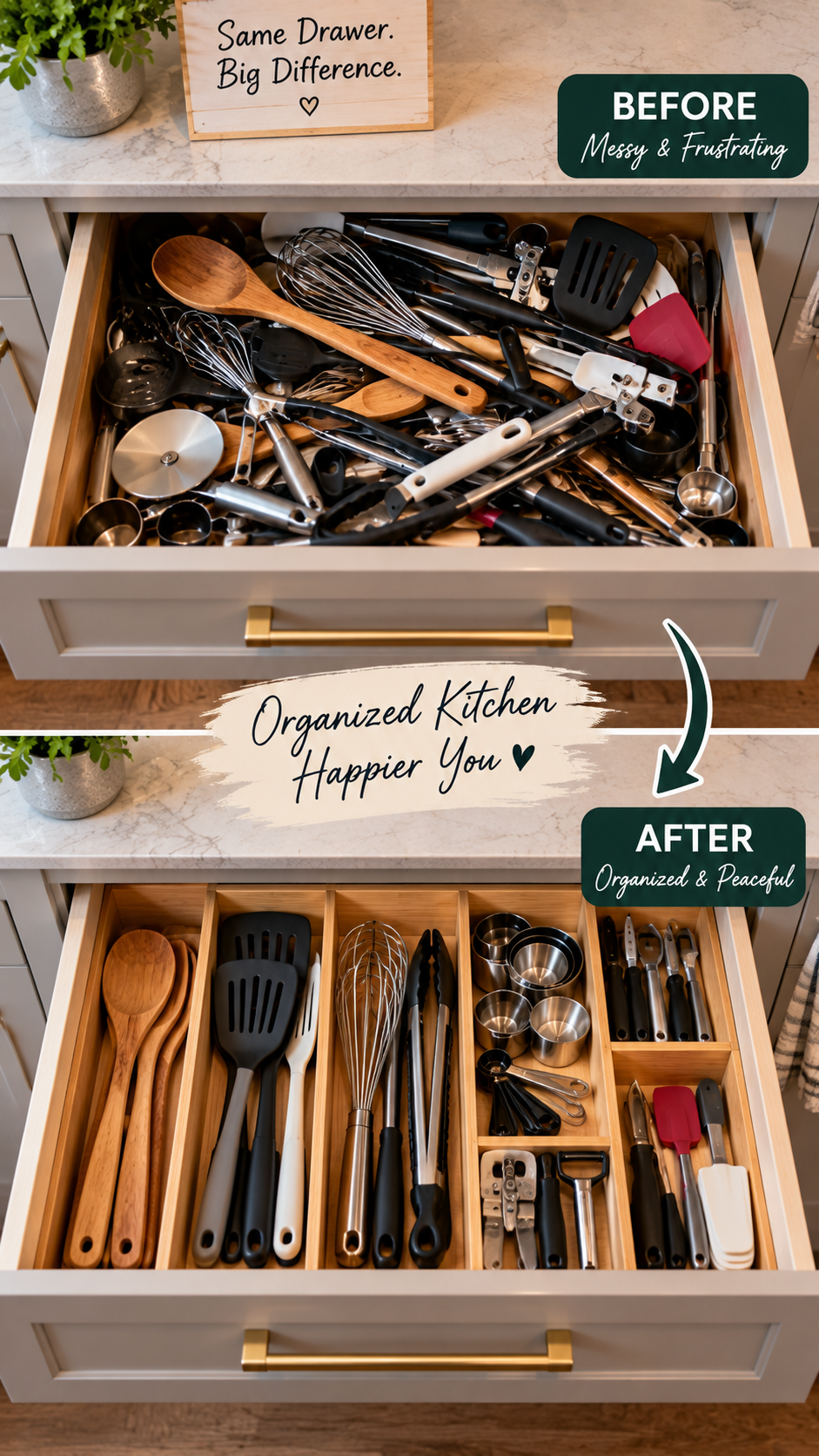
Utensils. A drawer without dividers turns into a single tangled mass, which is exactly the kind of drawer people give up on and start leaving things out to avoid.
Cords and chargers. Increasingly a real category of its own. Phone chargers, tablet cables, wireless earbud cases tend to collect near a kitchen counter because it's a central, always-occupied room. A dedicated drawer with cord cutouts and a built-in outlet keeps this from becoming its own separate clutter category.
✅ Worth doing
- Solves the root cause rather than moving the mess somewhere else
- Most of these are under $30 and install without tools
- Makes daily use faster, which is what actually keeps a system working long-term
❌ Worth knowing before you buy
- Drawer inserts need accurate measuring first. A too-large insert won't sit flat, and a too-small one slides around and defeats the purpose
- Cabinet-door spice racks add weight to the door, so check the hinge is rated for it before loading it up
A cabinet-door spice rack organizer and a drawer divider set for utensils solve two of the most common drawer failures directly, and a charging drawer insert with cord cutouts handles the newer cord-clutter category specifically.
Comparing the storage options
| Appliance garage | Open shelving | Standard cabinet | |
|---|---|---|---|
| Hides clutter | Yes | No | Yes |
| Access speed | Fast, one motion | Fastest | Slower, often two hands |
| Best for | Daily-to-weekly appliances | A handful of nice items only | Occasional-use appliances |
| Common mistake | Skipping the nearby outlet | Using it for everything, not just the good stuff | Stacking without zones |
This is the same trade-off that shows up in any small kitchen's storage decisions → Small Kitchen Ideas That Actually Work: closed storage for anything you don't want visible all the time, open storage reserved only for what genuinely earns being seen.
What to avoid
Building the zone somewhere inconvenient. An appliance garage across the kitchen from the outlet you need defeats its own purpose. Measure the actual distance to power before committing to a location.
Making the zone too small. If the appliances barely fit, cords get crushed and the door won't close cleanly, which brings back exactly the friction that caused the clutter in the first place.
Trying to hide everything. Not every appliance needs a garage. The one you use every single morning is allowed to live on the counter, the same way a room's genuinely used items don't need hiding, only the excess does. The goal is a zone for what's currently homeless, not a totally empty counter as an end in itself.
Ignoring the layout constraints of the room. In a tight galley kitchen especially, appliance garage doors need clearance to open without blocking the walkway. A lift-up door works differently than a swing door here, and the corridor width decides which one actually fits.
The short version
Counter clutter that keeps returning isn't a willpower problem. It's a missing-zone problem. Sort what actually needs to stay visible from what's just been homeless for years, build one proper storage spot near an outlet for the appliances used a few times a week, and fix the drawers that are quietly pushing things onto the counter in the first place.
Mine took one Saturday afternoon to solve after three years of monthly clean-ups that never lasted. The appliances didn't change. The zone did.
Affiliate Disclosure
Some links in this post are affiliate links. If you buy something through one, GlamNestStudio may earn a small commission at no extra cost to you. I only link to things I would recommend to a friend, and I have used or genuinely researched everything mentioned here.
Before you go
More on making small kitchens work harder, from layout to storage, across the guides on GlamNestStudio.