I Thrifted My Whole Outfit. Here's What Actually Worked.
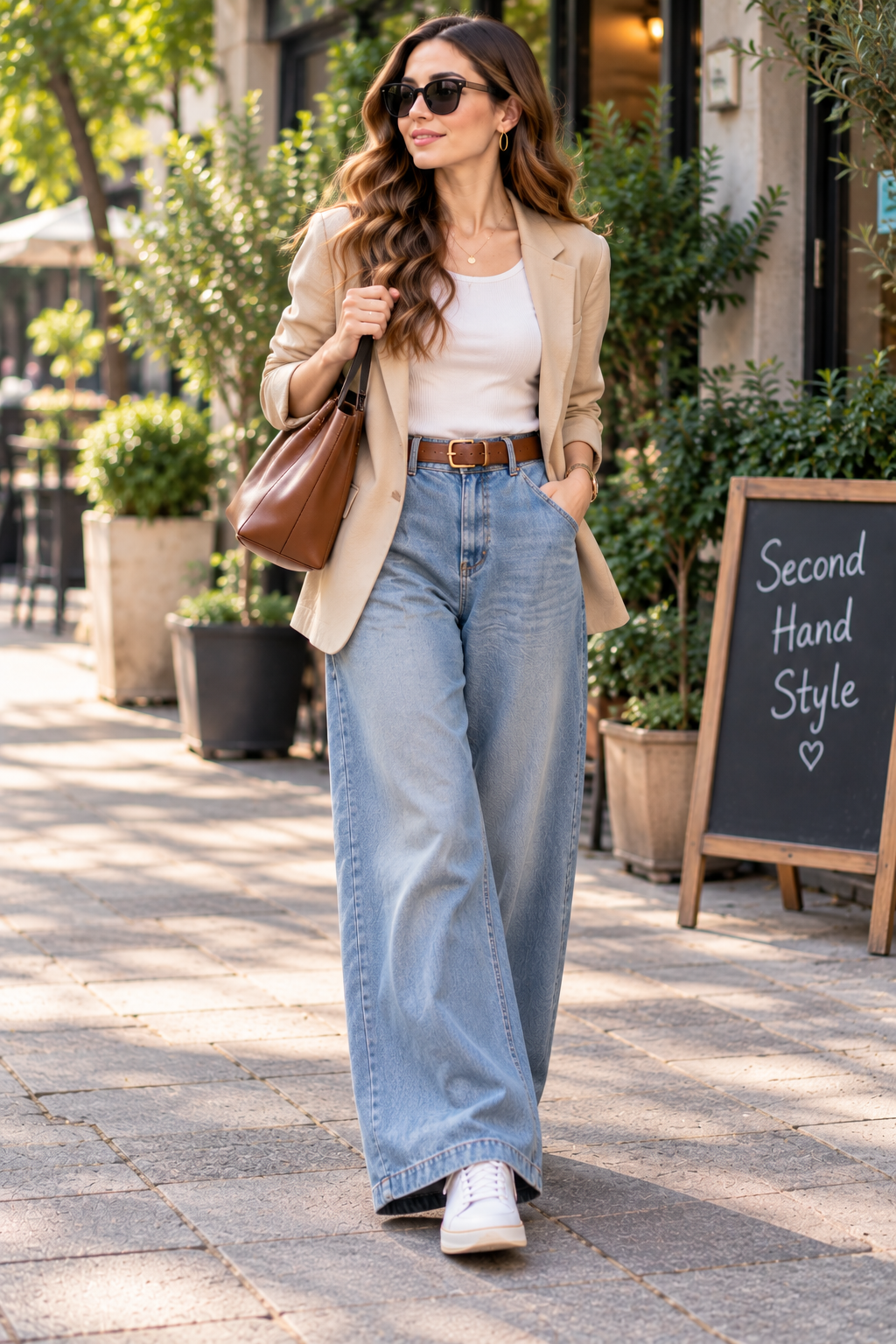
Thrift and secondhand fashion searches just hit an all-time high, and the plan to actually build a full outfit from secondhand pieces had been sitting around for months rather than getting done. One rule made it real: everything visible had to be secondhand, no exceptions, and the outfit had to actually be worn out of the house, not just photographed at home.
Here's what that one rule actually involved.
1. The piece almost left on the rack
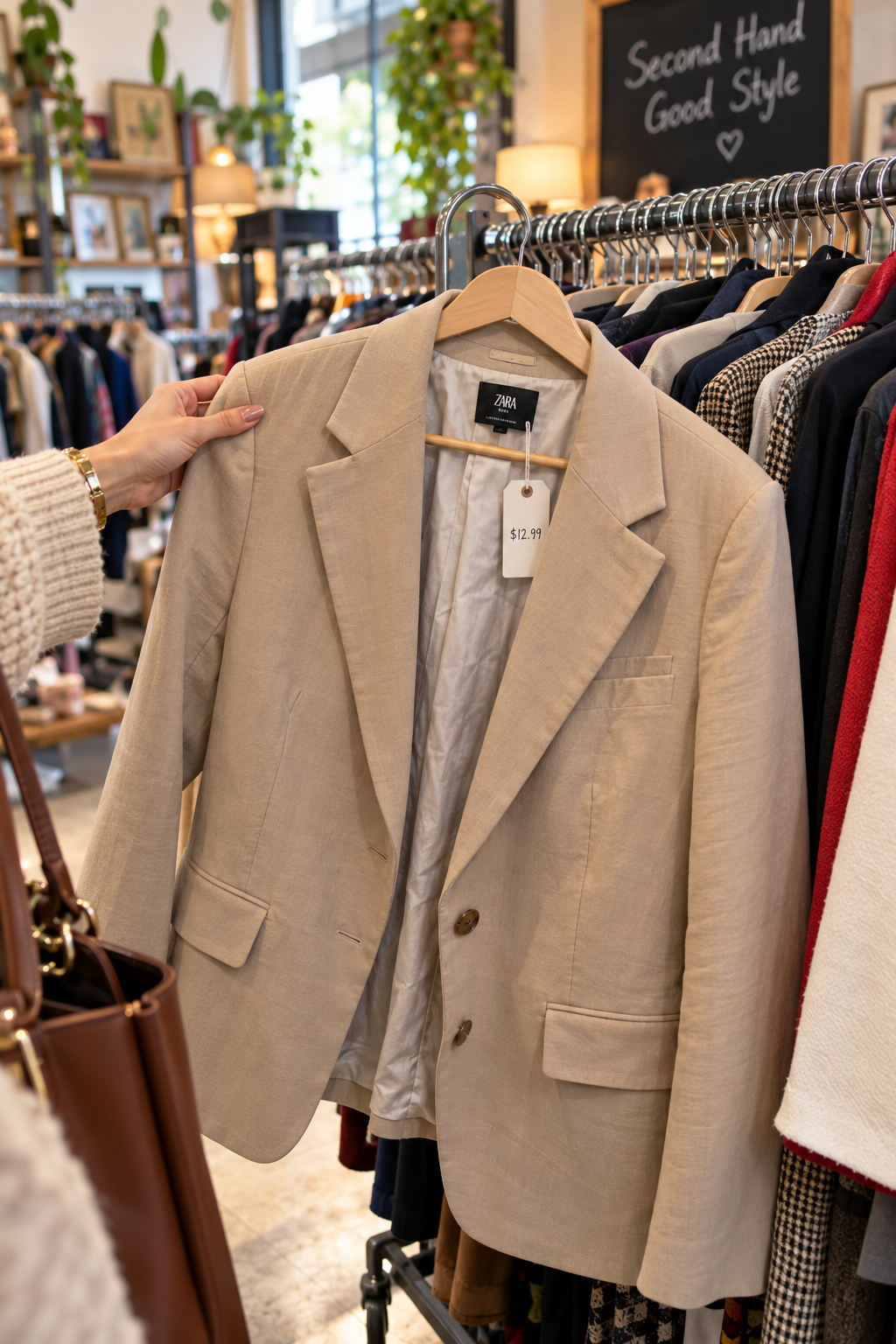
This blazer nearly went back on the rack twice. The shoulders fit well but the sleeves ran a good two inches too long, and the first instinct was that it would just sit in the closet unworn the way too-long sleeves always do. It cost very little, so it came home anyway, more out of curiosity than confidence. A quick hem fixed the sleeves within a week, and it's now worn more than almost anything bought new in the last year.
2. Checking fabric before checking the price tag
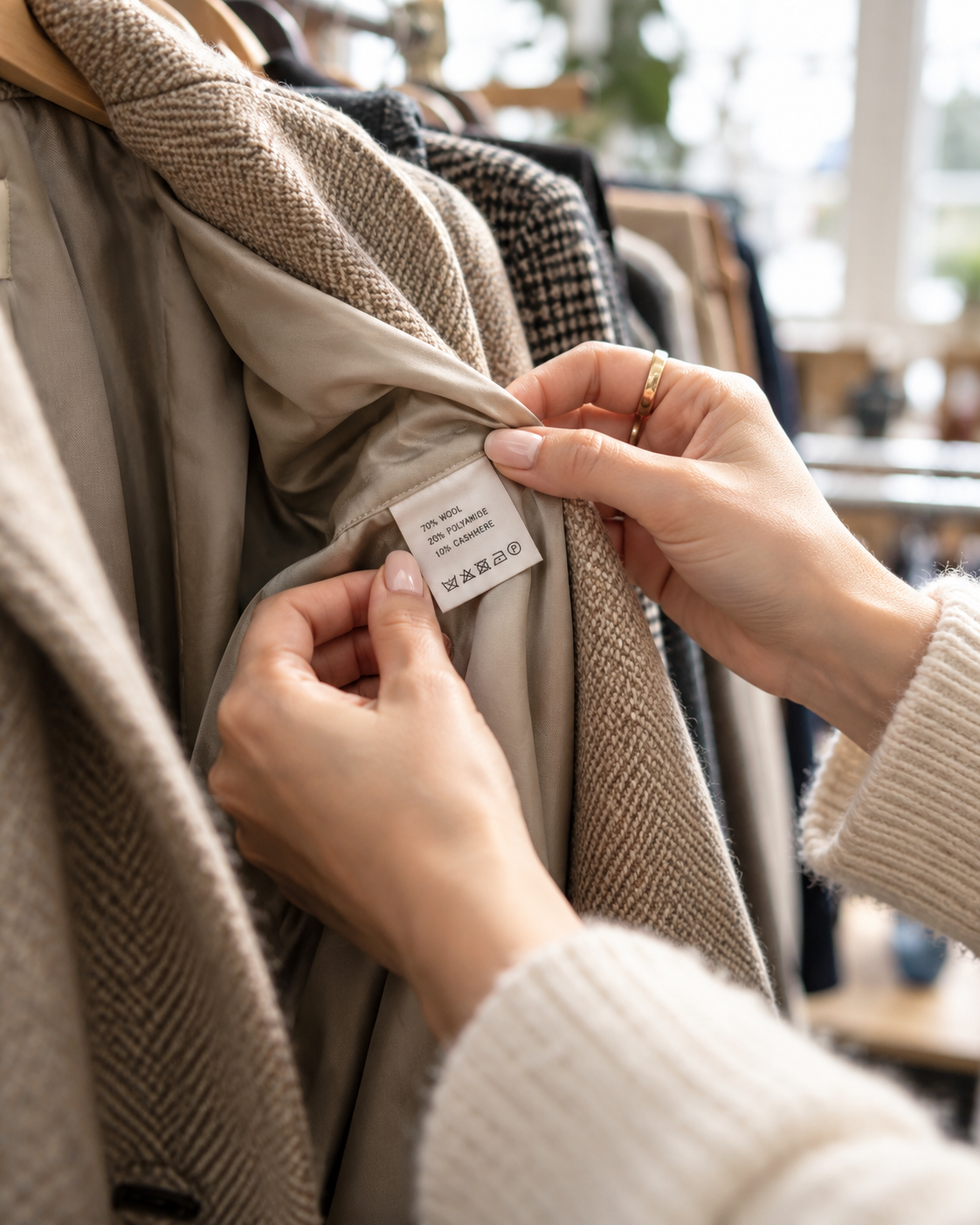
Three tops got tried before settling on the one that actually came home, and the deciding factor each time was the fabric label, not the price. One was a thin polyester blend already looking slightly worn at the seams. Another was a cotton blend with enough weight to clearly hold its shape. Checking the label took about ten seconds and avoided bringing home something that wouldn't have lasted the season.
3. The alteration that made the difference
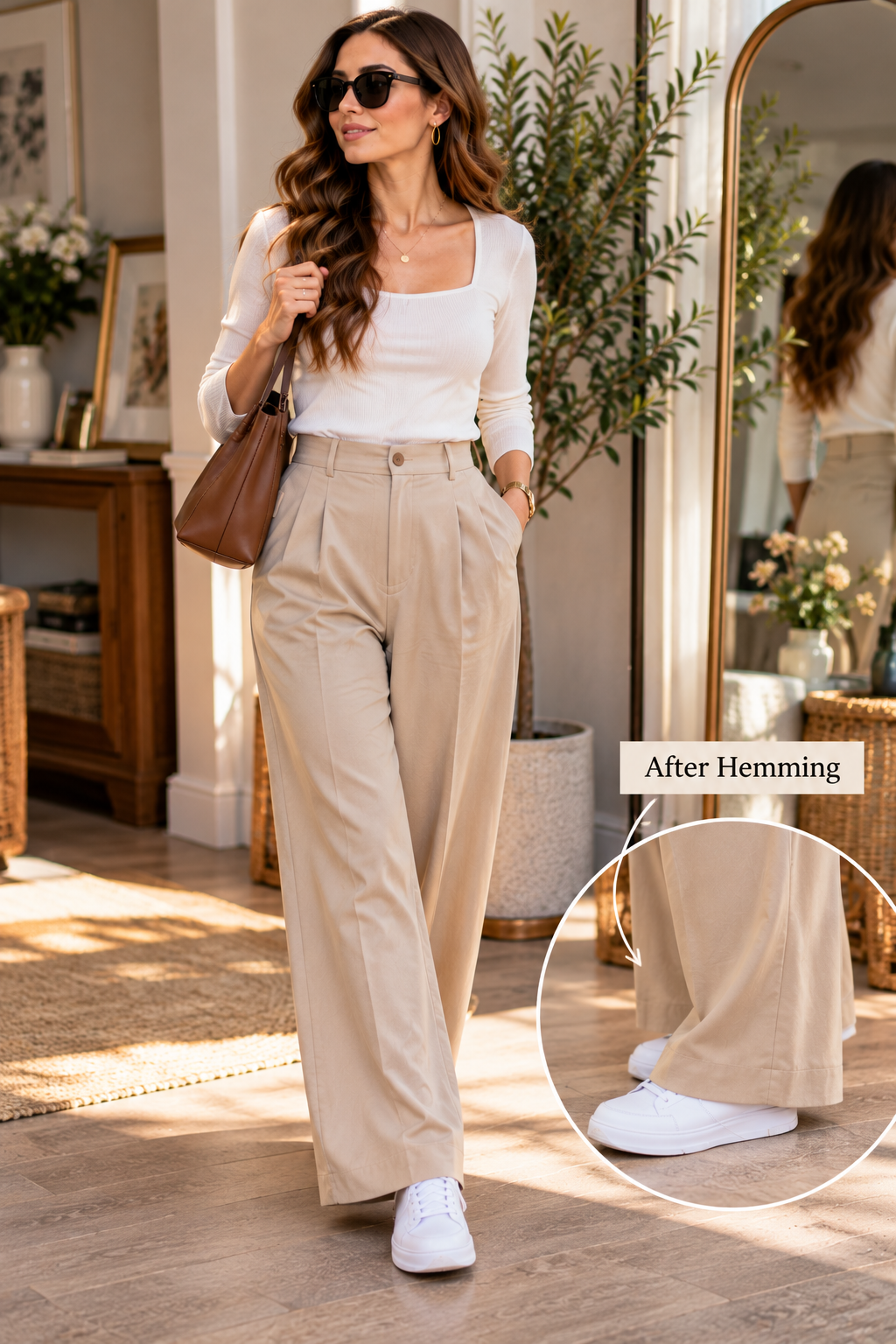
The trousers were a genuinely good cut, wide leg, nice fabric, but about three inches too long. Almost skipped entirely for that reason alone. A simple hem, done cheaply by someone local rather than attempted at home, turned them into one of the best-fitting pieces in the whole outfit. Altered secondhand pieces had been avoided before this, on the assumption it would cost more than the item was worth. It didn't, by a significant margin.
4. The piece that didn't make the cut
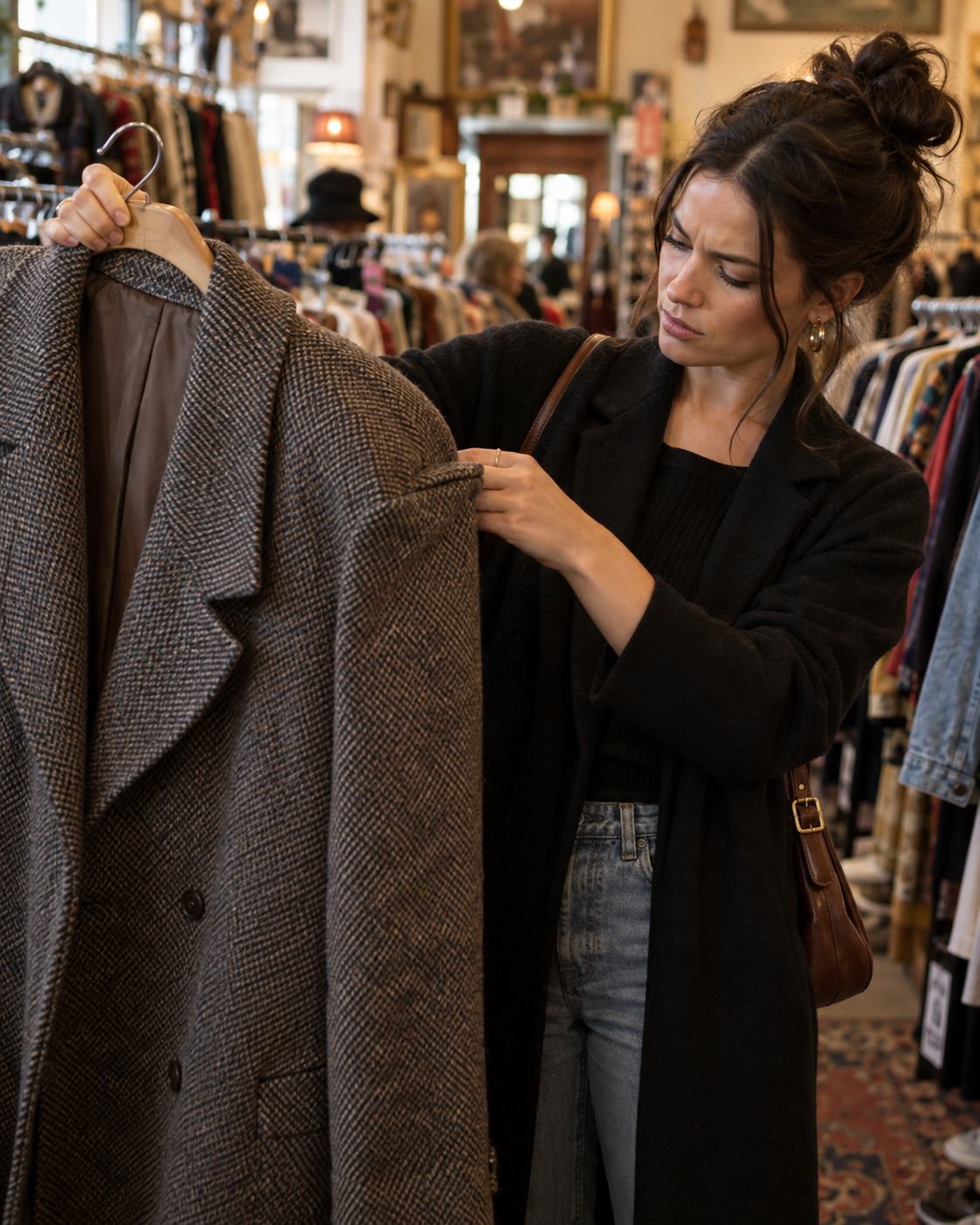
Not everything worked. A secondhand coat looked promising on the rack and turned out to have a fit issue through the shoulders that no alteration was going to fix cheaply. Thrifting content tends to only show the wins, but this part is a genuine piece of the process, trying things that don't work out is normal, not a sign anything was done wrong.
5. The full outfit, worn out of the house
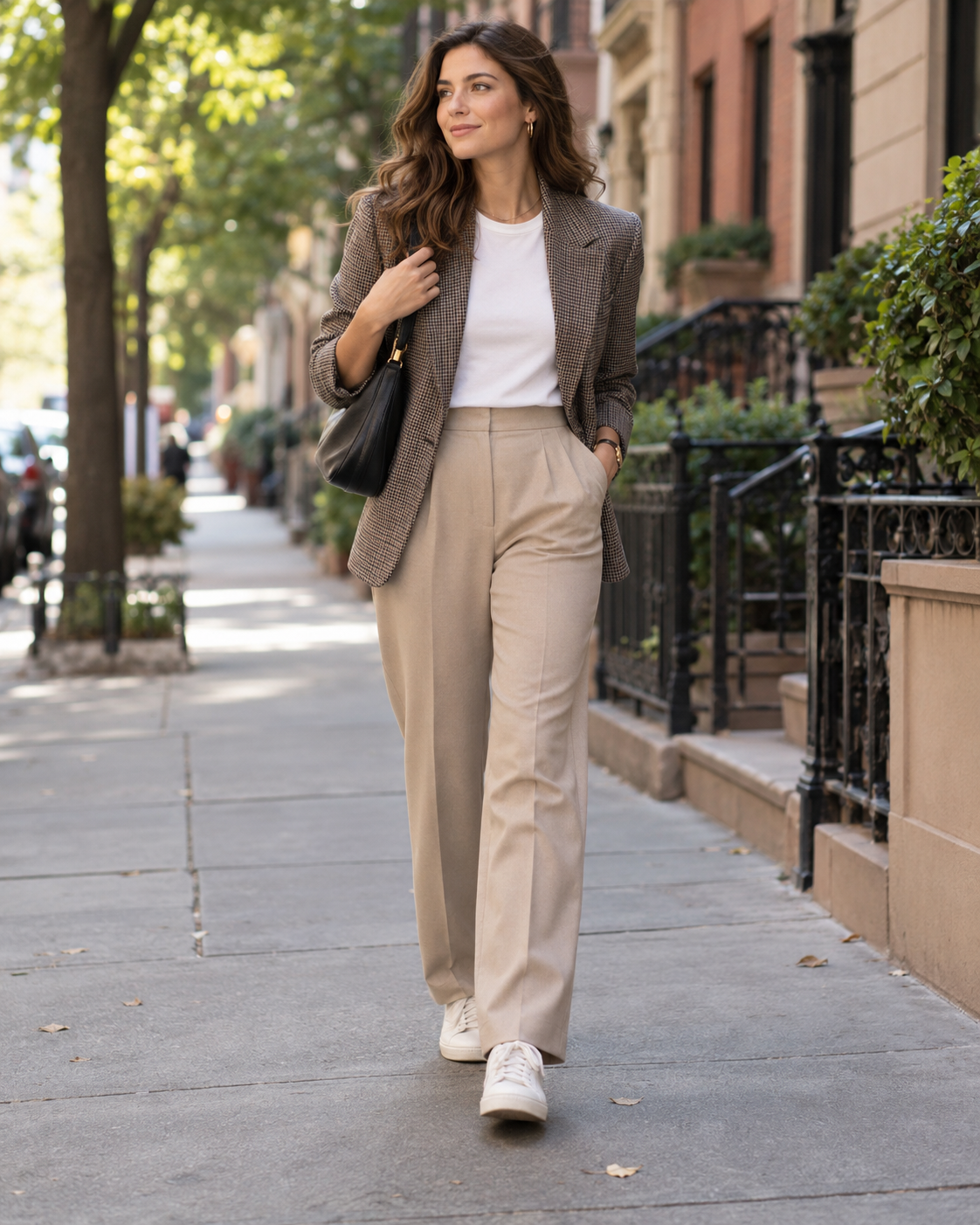
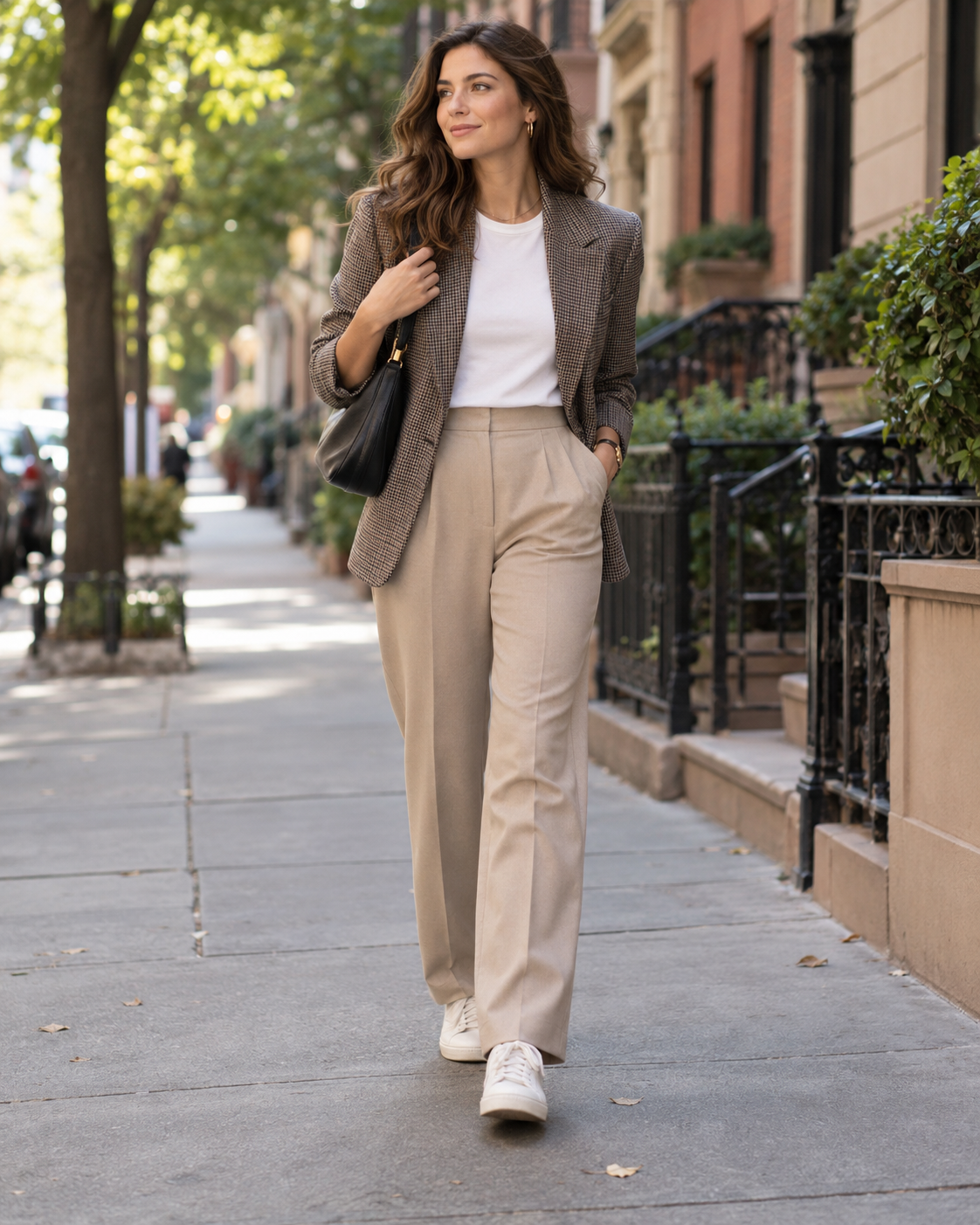
Blazer, trousers, and the cotton top, worn together for a full day rather than just for photos. Nothing about it looked obviously secondhand, which was the actual test. Nobody who saw it that day knew or asked, and the only piece that needed any adjustment through the day was the blazer sleeve, which stayed exactly where the hem had put it.
What the whole thing actually cost, and what it would have cost new
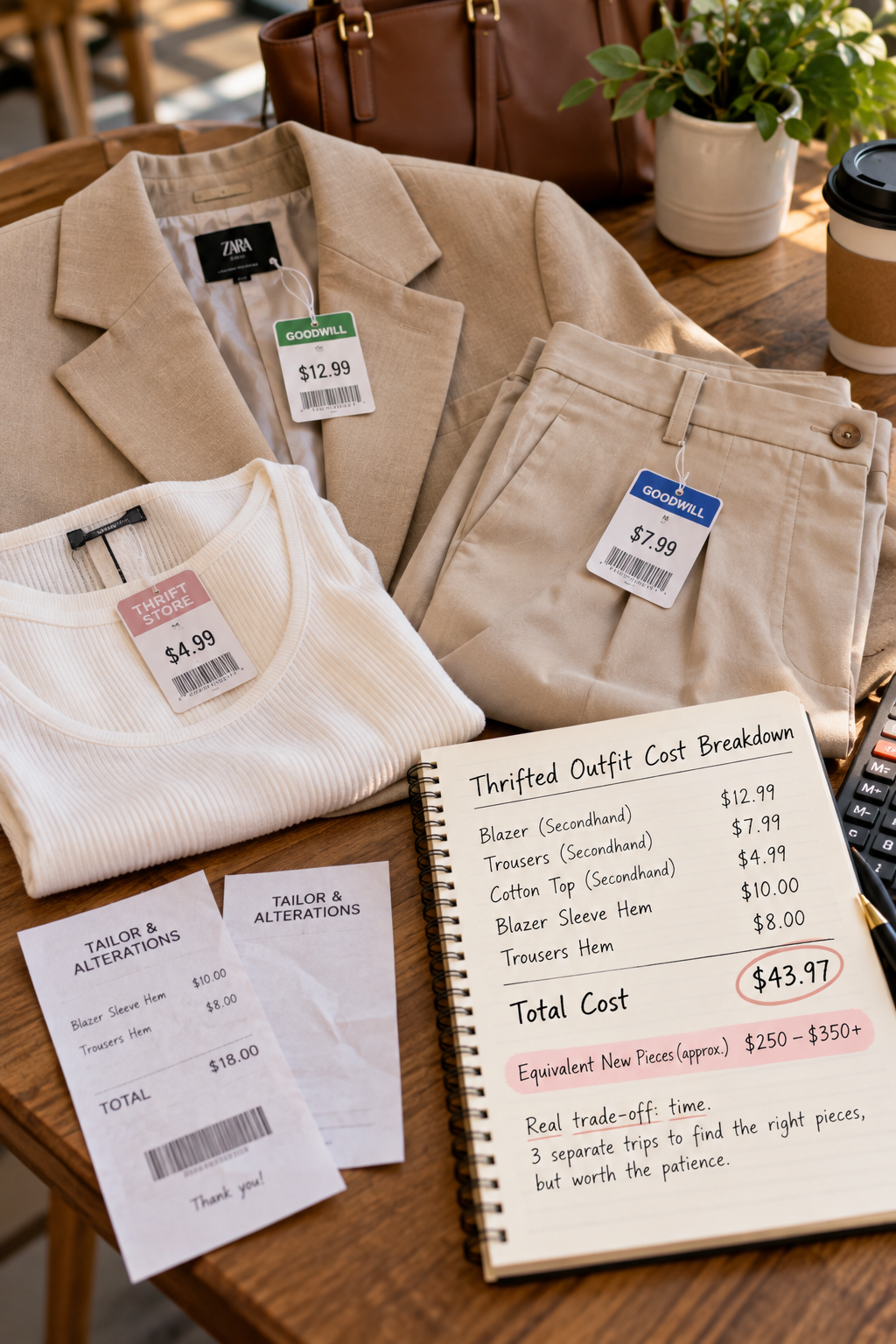
The blazer, trousers, and top together cost a fraction of what equivalent new pieces would have, even after paying for two small alterations. The honest trade-off was time, three separate trips to find pieces that actually fit and worked together, not one quick shopping run. That's the real cost of thrifting that doesn't show up in a single outfit photo: it's slower, and the pieces that work are the ones worth being patient for.
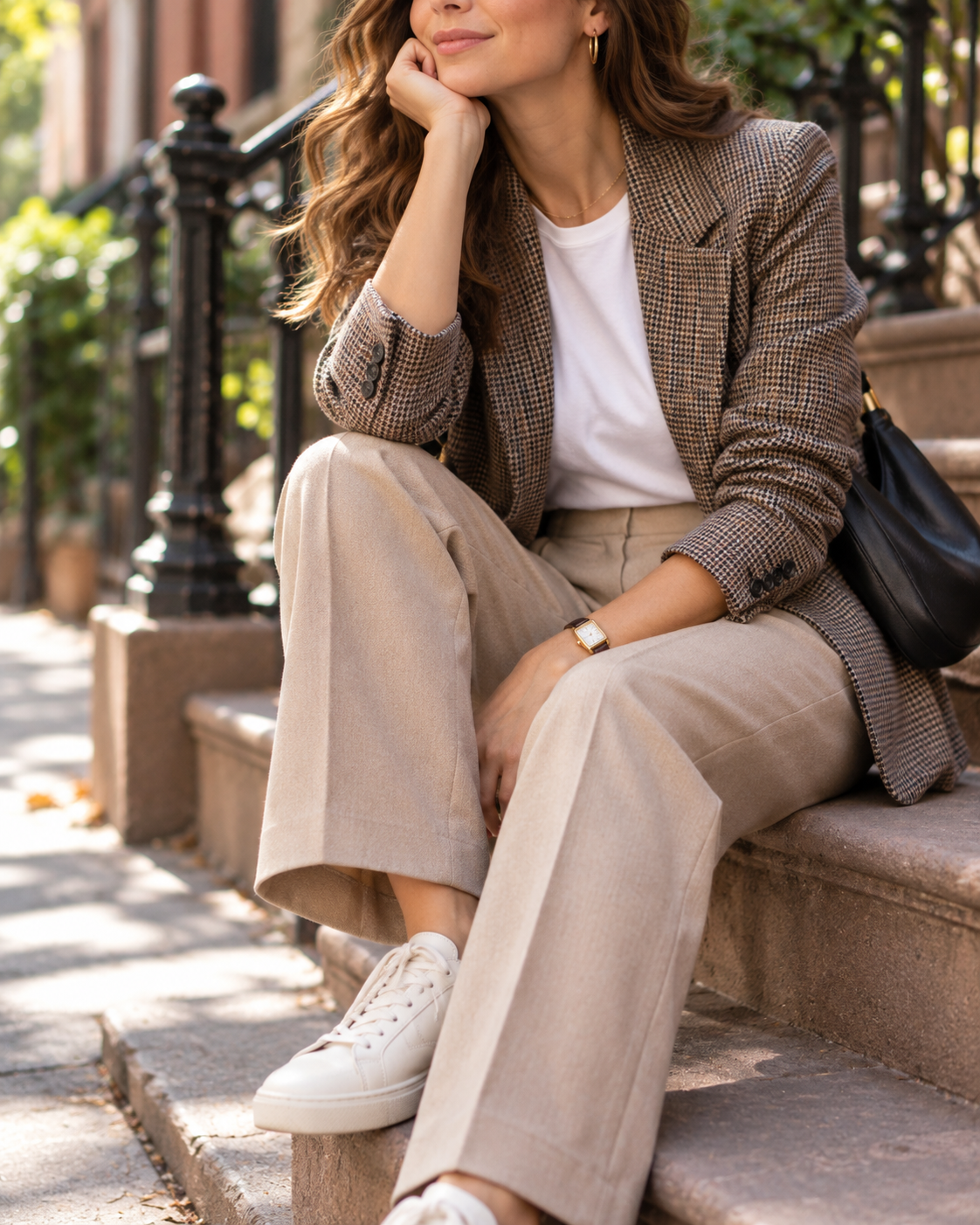
The whole outfit cost less than one new blazer would have on its own, and the two pieces almost left behind, the one with long sleeves and the one with a too-long hem, turned out to be the two reached for most since. That's the actual lesson here: the pieces worth taking a chance on are often the ones that need a small fix, not the ones that already fit perfectly off the rack.