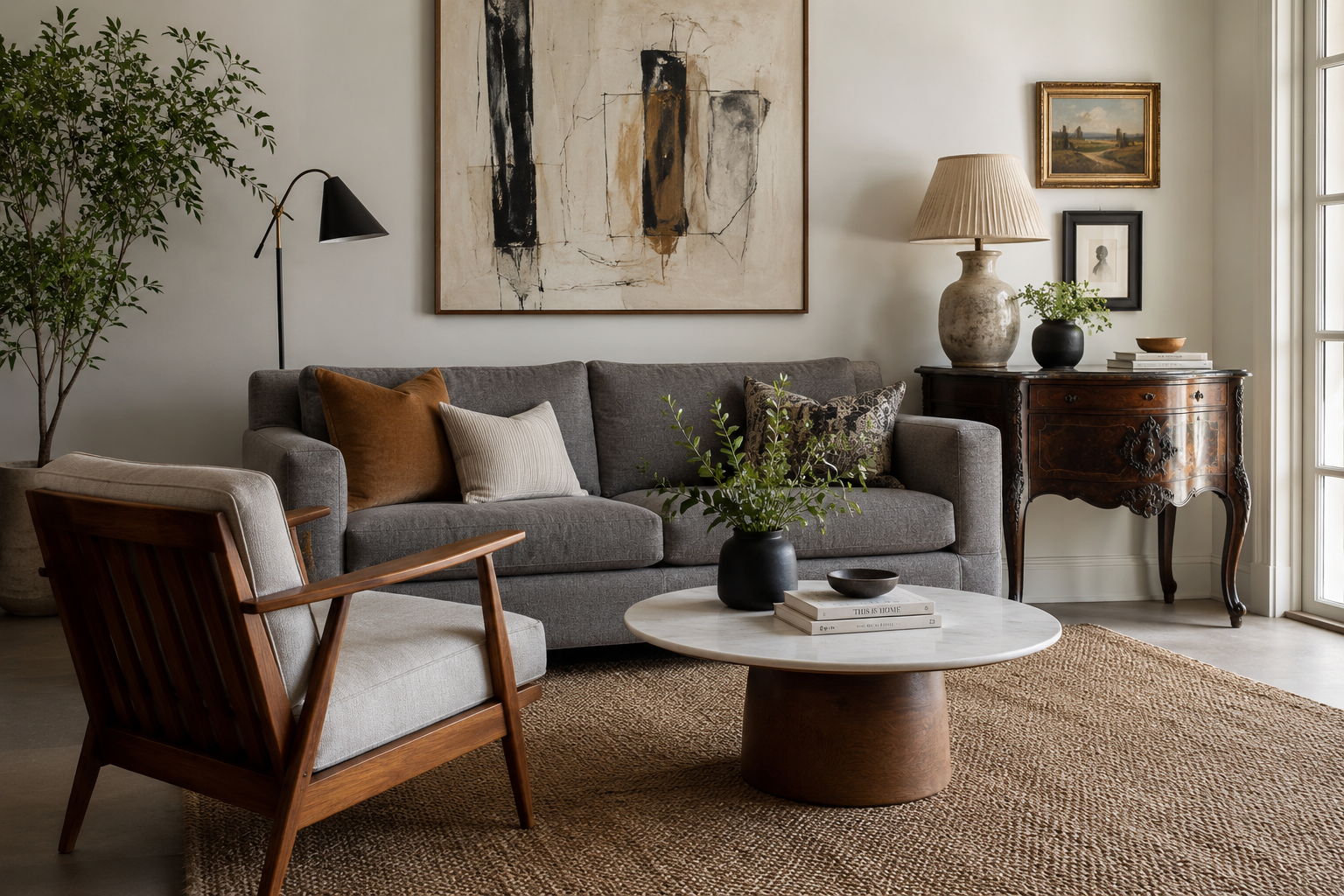
You Don't Need a Matching Furniture Set. Here's What You Actually Need
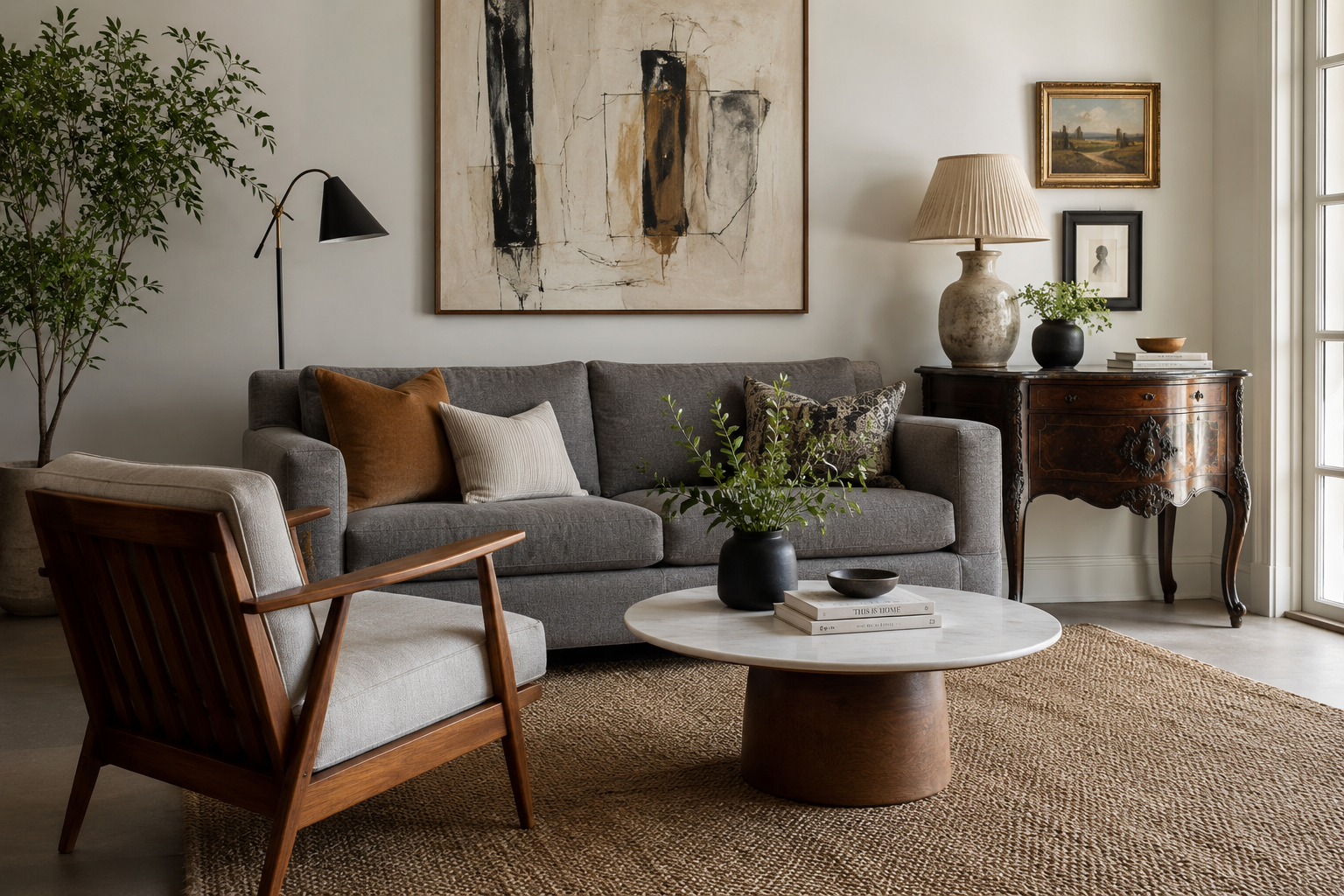
Disclosure: this post contains affiliate links. If you buy something through one, I may earn a small commission at no extra cost to you.
In my second flat I bought a matching three-piece set. Sofa, loveseat, armchair, all the same grey, all from the same page of the same catalogue. It arrived, I arranged it, I stood back, and the room looked like somewhere you wait for a dental appointment.
Everything matched. That was the problem.
I'd assumed for years that matching was the goal that the reason my rooms looked thrown together was that the pieces didn't agree with each other. So I fixed the disagreement, and ended up with a room that had nothing to say.
Where this idea came from (and why it's not really about you)
Furniture showrooms sell sets because sets are easier to sell. One decision instead of four. One delivery. One price. It's a good business model and a bad decorating principle.
Showrooms also look the way they do because they're arranged for a photograph, in a space with no walls, no radiators, no awkward corner where the door swings. Your home has all of those. A room that's been assembled over time, around actual constraints, is going to look different from a display floor and that's not a flaw to be corrected.
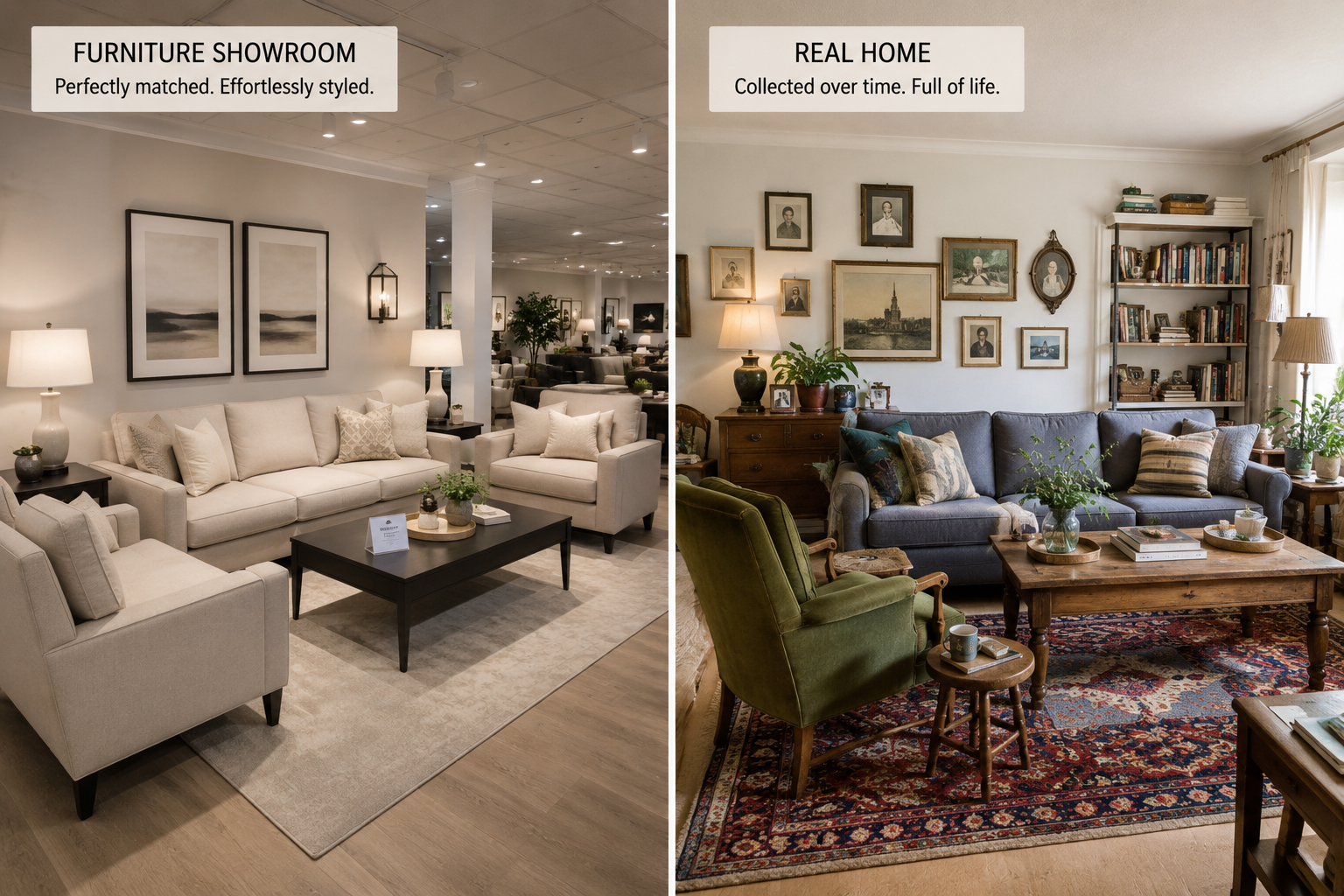
The homes I actually love the ones I save pictures of almost never contain a matching set. They contain things that arrived at different times, from different places, that somebody worked out how to put in the same room.
What creates cohesion instead: repetition
Here's the thing that took me four flats to understand. A room doesn't feel pulled together because things match. It feels pulled together because things repeat.
Pick one of each and echo it around the room:
One wood tone. Not the same wood the same tone. Warm mid-brown can be oak, walnut and a random thrifted pine piece you stained, and they'll read as a family. Warm brown next to grey-washed ash will always look like an argument.
One metal finish. Brass, or black, or chrome. Pick one and use it in the lamp, the curtain rod, the drawer pulls, the picture frames. This is the cheapest fix on the list spray paint counts.
One or two colours, appearing at least three times. Three is the number where a colour stops looking accidental and starts looking chosen. My living room has rust-orange in a cushion, a book spine and a small ceramic pot. Nobody would consciously notice. Everybody notices the effect.
One line or shape. If your sofa has square arms and straight legs, the room will feel calmer with more straight lines than curves in it. Not exclusively just more.
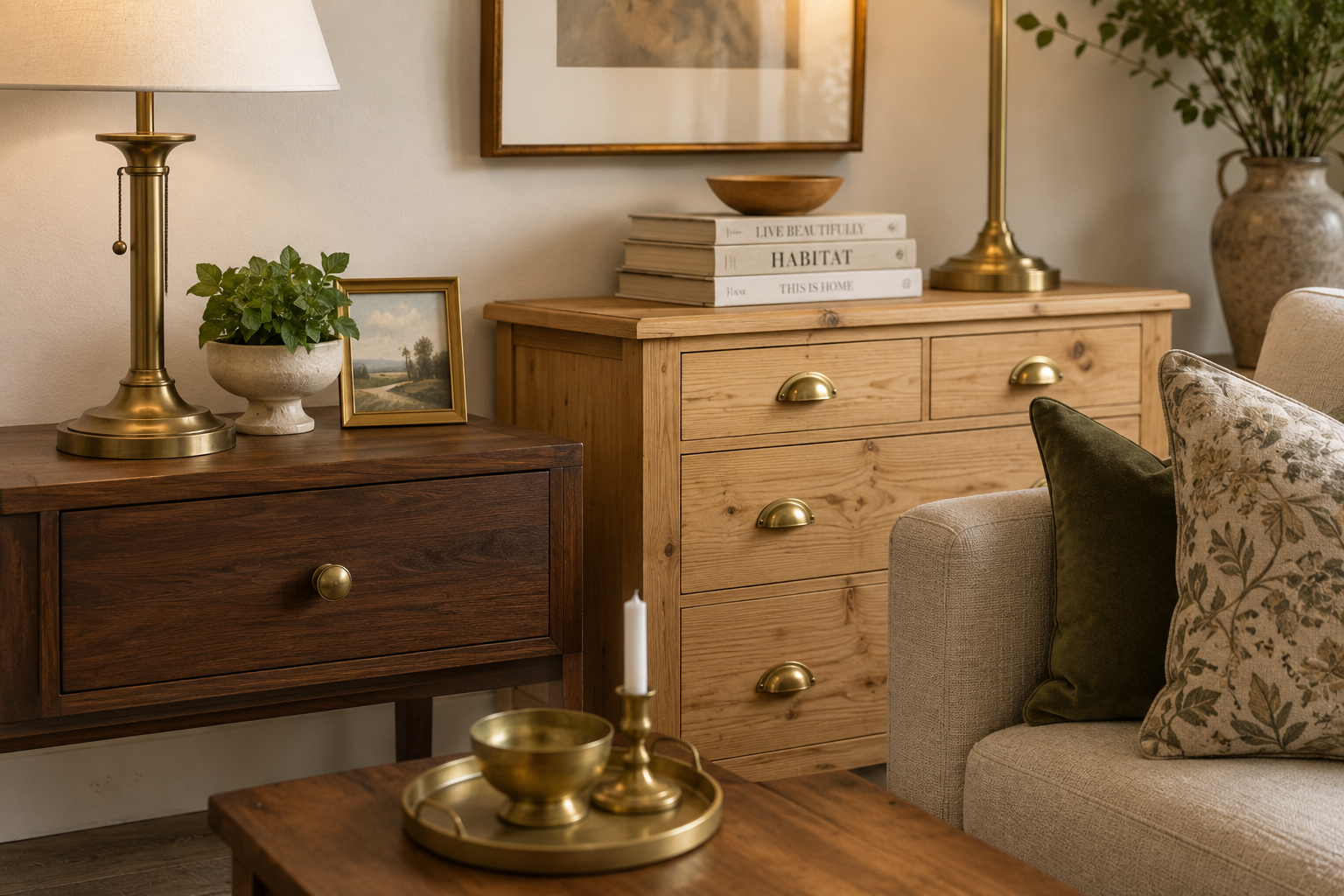
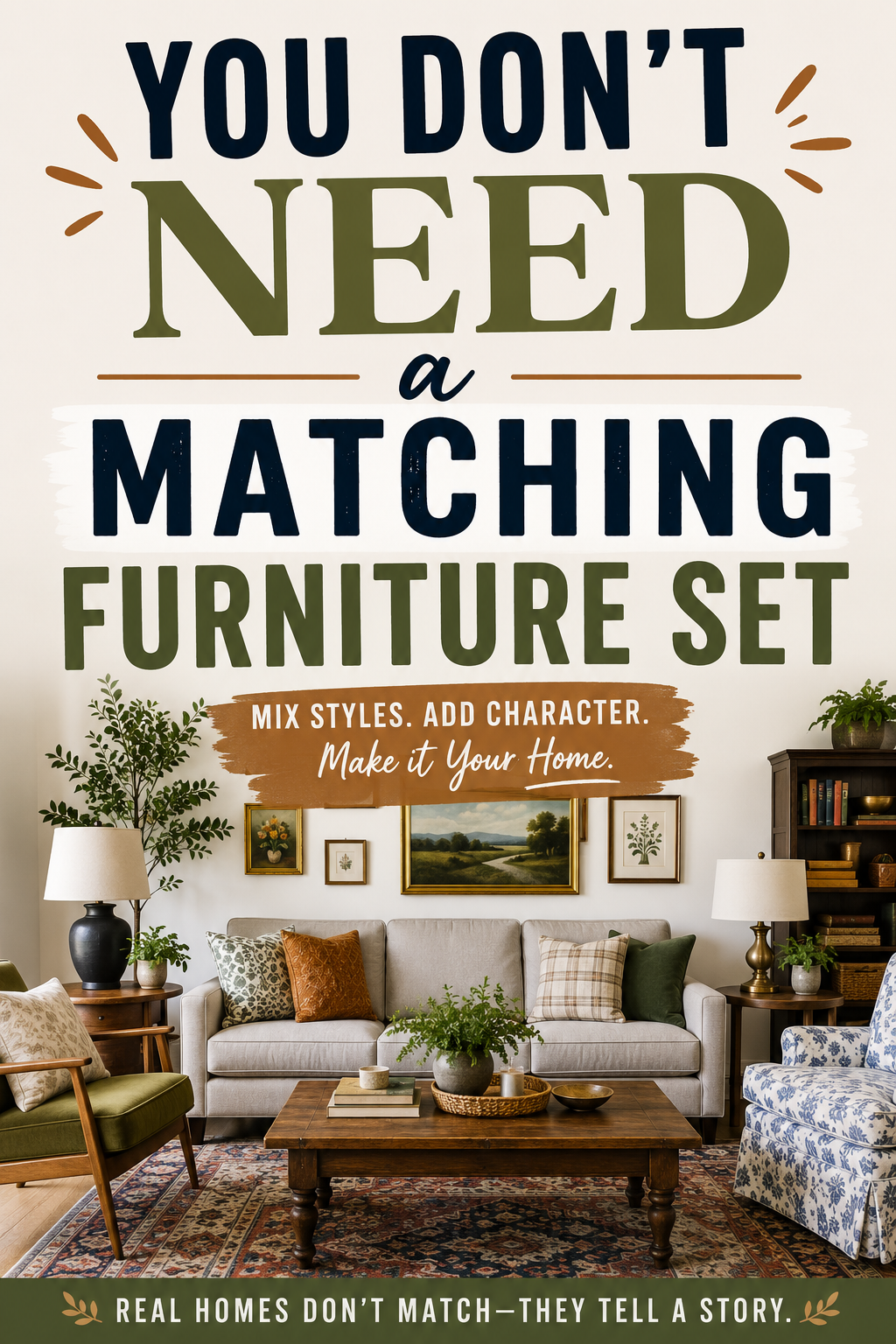
My current living room is a plain modern sofa, a mid-century armchair, and a side table that belonged to my grandmother and matches absolutely nothing. Wood tones all warm. Metal all brass. Rust-orange three times. It reads as deliberate, and it cost a fraction of a matched set.
The test that tells you if it's working
Stand in the doorway and take a photo on your phone. Then look at the photo, not the room.
A photograph flattens everything into shapes and tones, which is exactly what you need — it strips away the sentimental knowledge of where each thing came from. If the room looks busy in the photo, you have too many competing tones. If it looks flat and dull, you probably have too few.
This is the same trick I use for planning a gallery wall before hanging anything → 10 Home Décor Problems Almost Everyone Has, and it works for the same reason. Your eye lies to you in three dimensions.
When matching is fine because I don't want to overstate this
Some matching is genuinely useful, and I'd be pushing a point too far if I pretended otherwise.
Dining chairs. Six mismatched chairs is a look, but it's a difficult look, and it usually needs the chairs to share a colour or a height. Matching is the easier win.
Anything in a pair, flanking something. Two lamps either side of a bed, two chairs either side of a fireplace. Symmetry is doing the work there, and symmetry needs sameness.
Bedside tables sort of. They don't need to be identical, but they should be within a couple of inches of the same height. Wildly different heights on either side of a bed reads as a mistake rather than a choice.
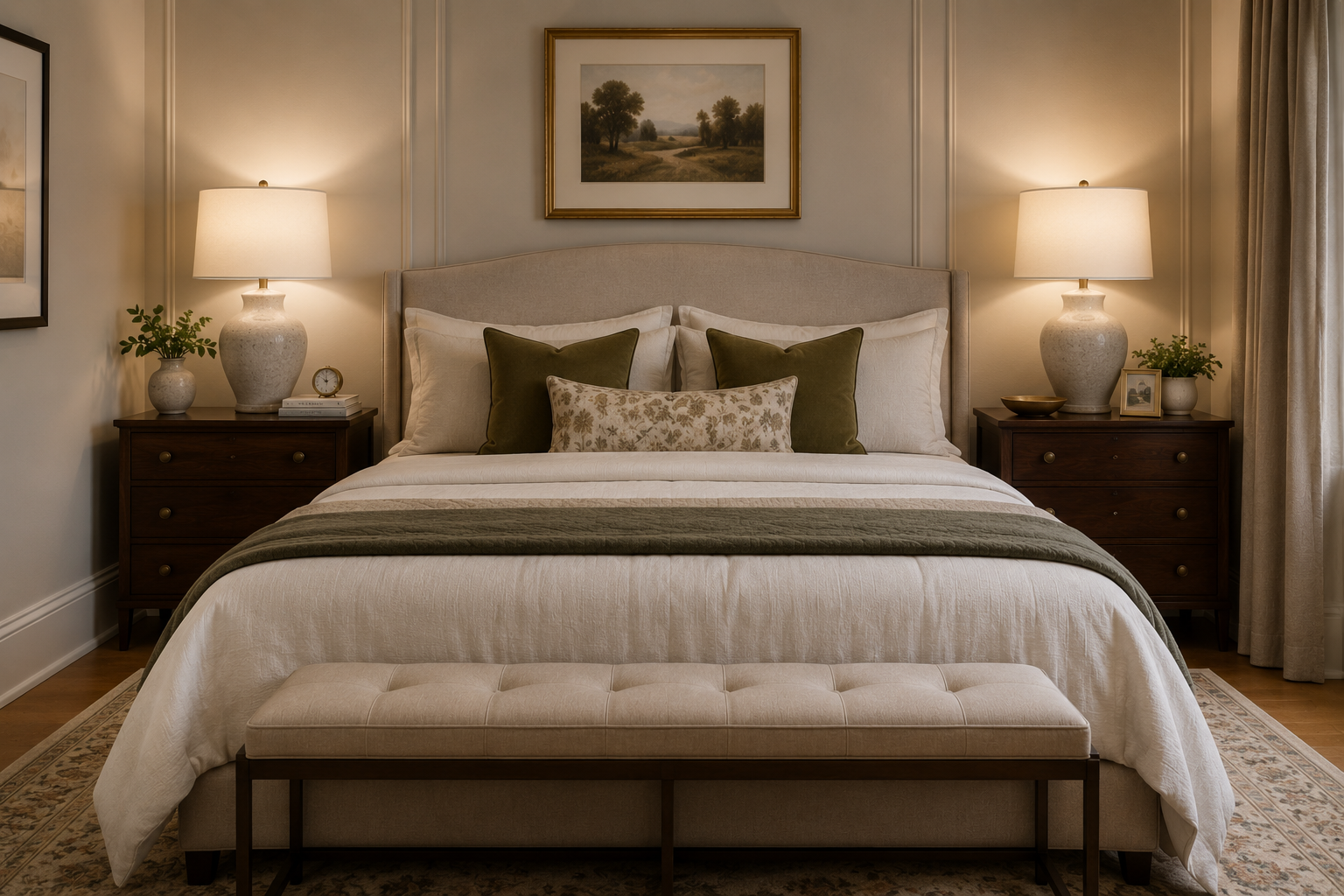
The rule I'd give: match things that sit beside each other doing the same job. Don't match things that sit across a room from each other doing different jobs.
Where to start if your room is currently a mess of styles
Don't buy anything yet. Do this first:
- Count your wood tones. If there are more than two, that's almost certainly your problem. One piece repainted or restained usually solves it.
- Count your metals. Same. A can of matte black spray paint and an afternoon can unify every lamp base, curtain rod and picture frame you own.
- Pick your third colour and put it in three places. A cushion, a small object, and something on the wall. This is the cheapest possible change and the one people notice most.
- Only then look at whether a piece genuinely needs replacing and if it does, measure the space properly first → Scale and Proportion: The Invisible Rules Behind Good Rooms.
If step 4 does turn out to be a rug, a large flat-weave rug in a tone that already appears in the room will pull mismatched furniture together faster than almost anything else. I learned that the expensive way, and wrote about it in the rug I regretted for two years Rug Sizing: The One Guide You Actually Need
The short version
Matching is a shortcut, and like most shortcuts it gets you somewhere adequate quickly. Repetition takes longer and gets you somewhere better.
Your grandmother's side table doesn't need to match your sofa. It needs to share a wood tone with something else in the room, and then it belongs there along with the story of how it got there, which no catalogue set will ever give you.
If you want the wider set of things that make rooms feel off, I've written up the ten problems I've hit in every home I've lived in → 10 Home Décor Problems Almost Everyone mismatched furniture is only number five on that list.
Affiliate Disclosure
Some links in this post are affiliate links. If you buy something through one, GlamNestStudio may earn a small commission it doesn't cost you anything extra. I only link to things I'd suggest to a friend, and I've used or genuinely researched everything mentioned here. It's what keeps the guides on this site free.
Before you go
Working through one specific room right now? There's a good chance I've made the same mistake in it have a look through the rest of the décor guides on GlamNestStudio.