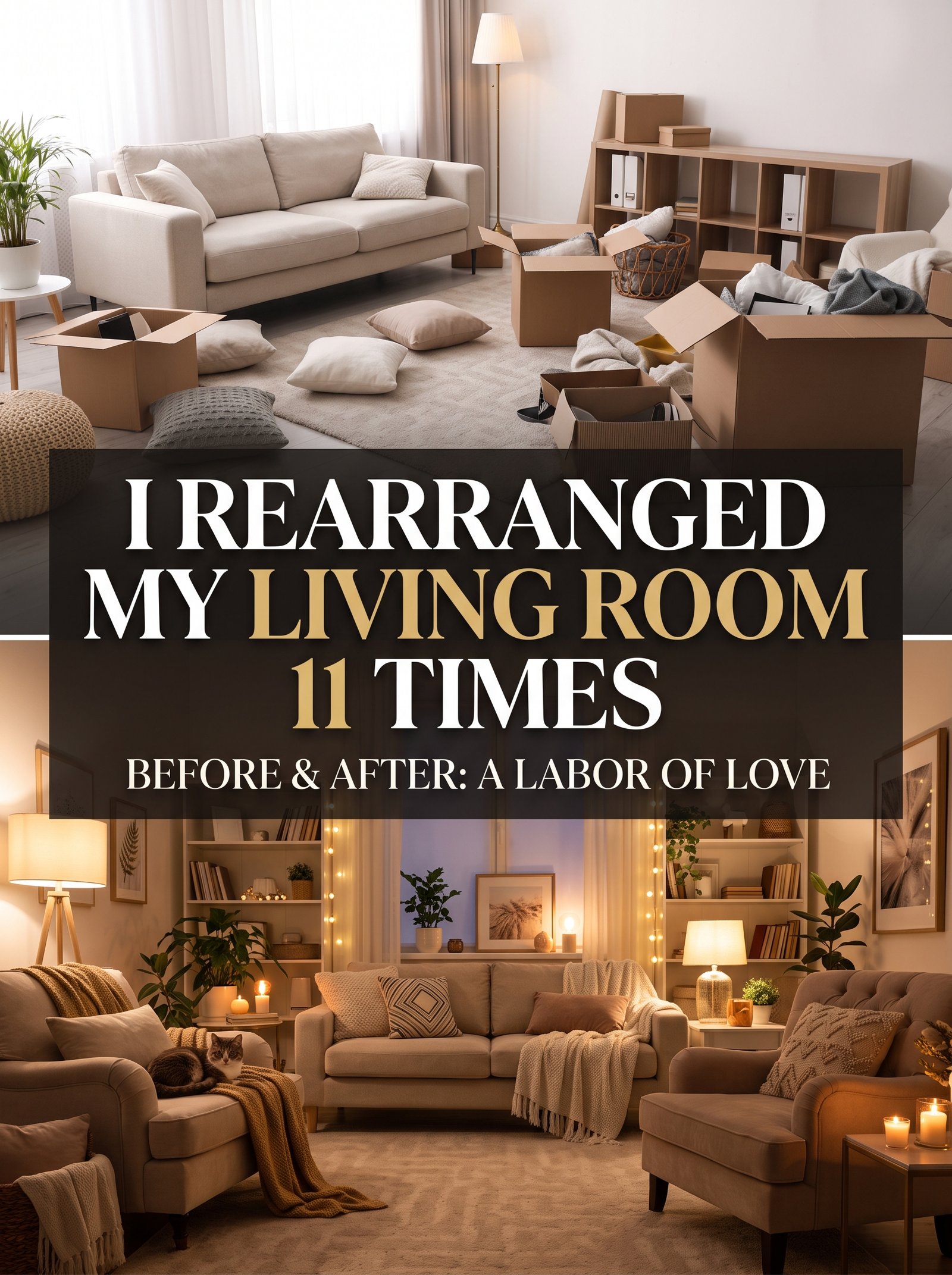
I Rearranged My Living Room 11 Times. Here's What Finally Worked
Disclosure: this post contains affiliate links. If you buy something through one, I may earn a small commission at no extra cost to you.
Eleven is not an exaggeration and it isn't a nice round number chosen for a headline. I counted, because at some point around attempt seven I started photographing each version so I could compare them, and the photos are still on my phone with the dates attached.
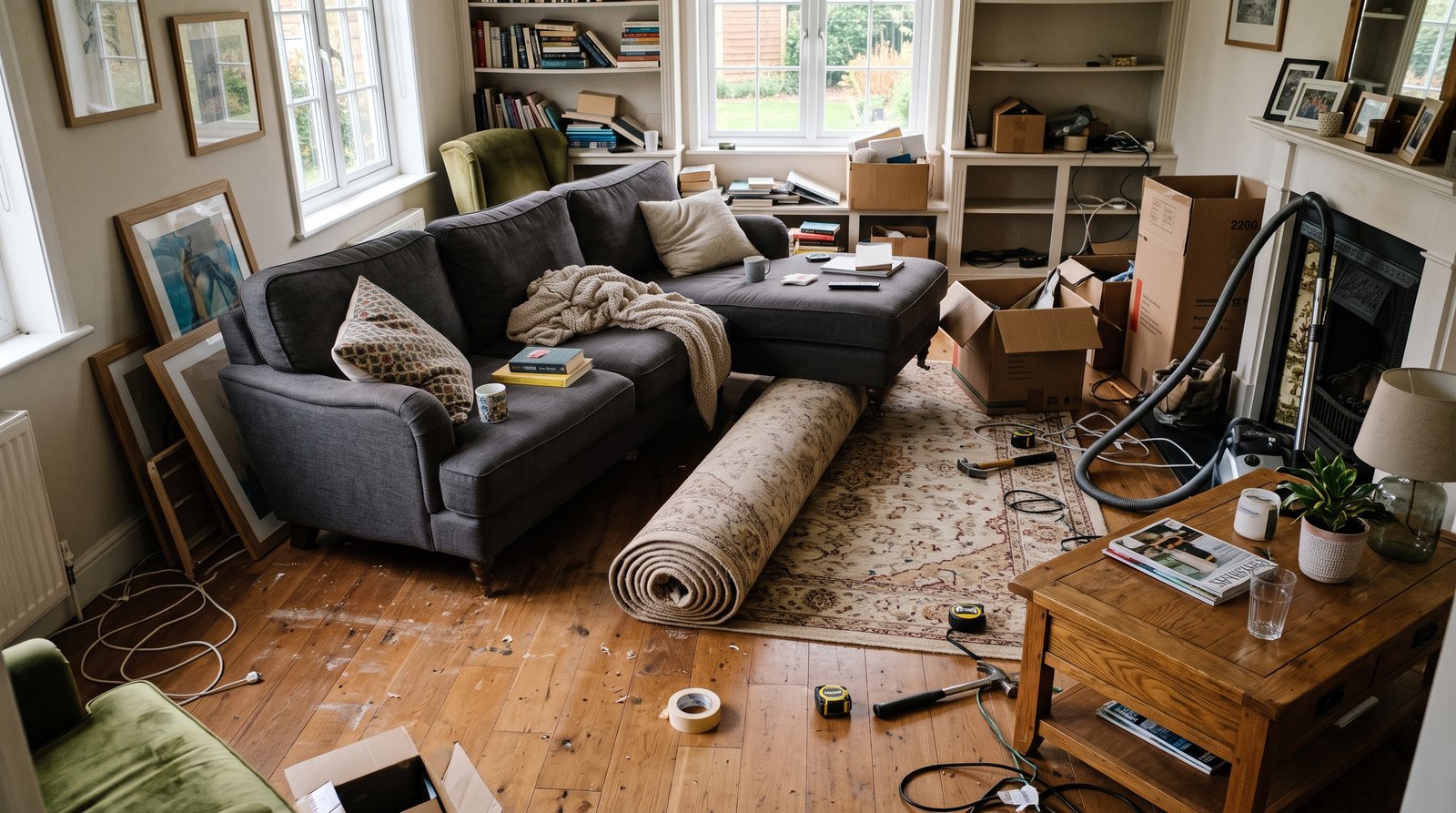
This was the flat I moved into after two rentals and a very small studio the first place where I was allowed to put nails in the walls, which I'd assumed would solve everything. It didn't. For about five months the room was fine in the way a hotel lobby is fine.
Here's the order I got things wrong in.
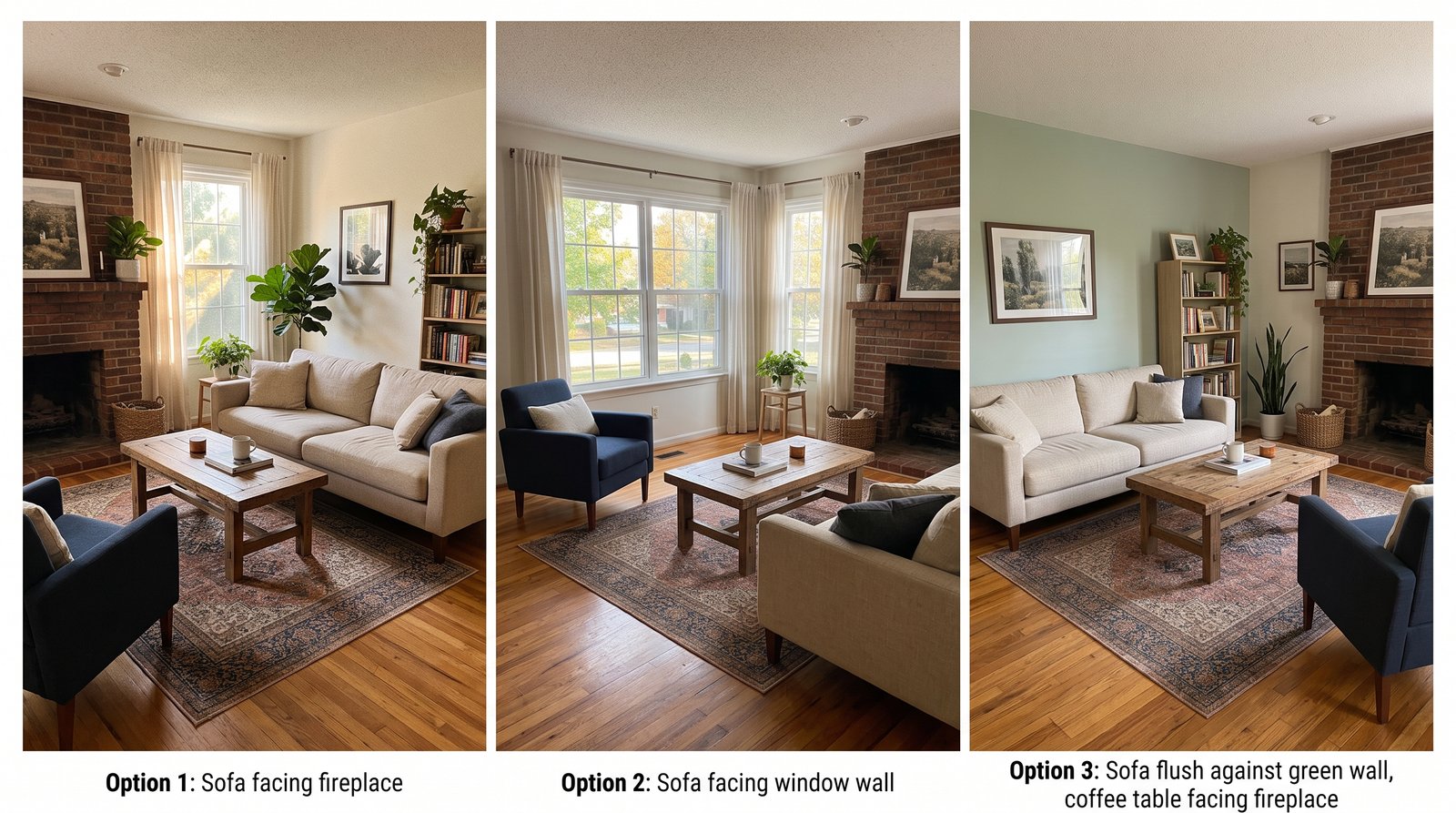
Attempts 1–3: Moving the sofa
The first three versions were all the same idea with the sofa in three different places. Long wall. Short wall. Under the window, briefly, until I remembered the radiator.
Nothing improved, and I couldn't work out why, because the sofa is the biggest thing in the room and moving the biggest thing should logically have the biggest effect.
It didn't, and I now think this is the most common trap in rearranging: you move the heaviest object because it feels like the most decisive action, but the sofa in a small-to-medium room usually has one sensible position. You're not solving anything, you're just getting a sore back.
Attempts 4–6: Buying things
Then I did what everyone does, which is decide the room needed something it didn't have. A new side table. A floor lamp . A large print for the wall above the sofa.
The lamp helped. The other two didn't, and the side table is now in my bedroom holding a plant, which is a polite way of saying it was a mistake.

What I'd tell myself: you cannot buy your way out of a layout problem. If the arrangement is wrong, a new object just becomes another wrong object in a wrong arrangement. Fix the geometry before you spend anything.
Attempt 7: Pulling the armchair off the wall
This was the first real change, and it took four minutes.
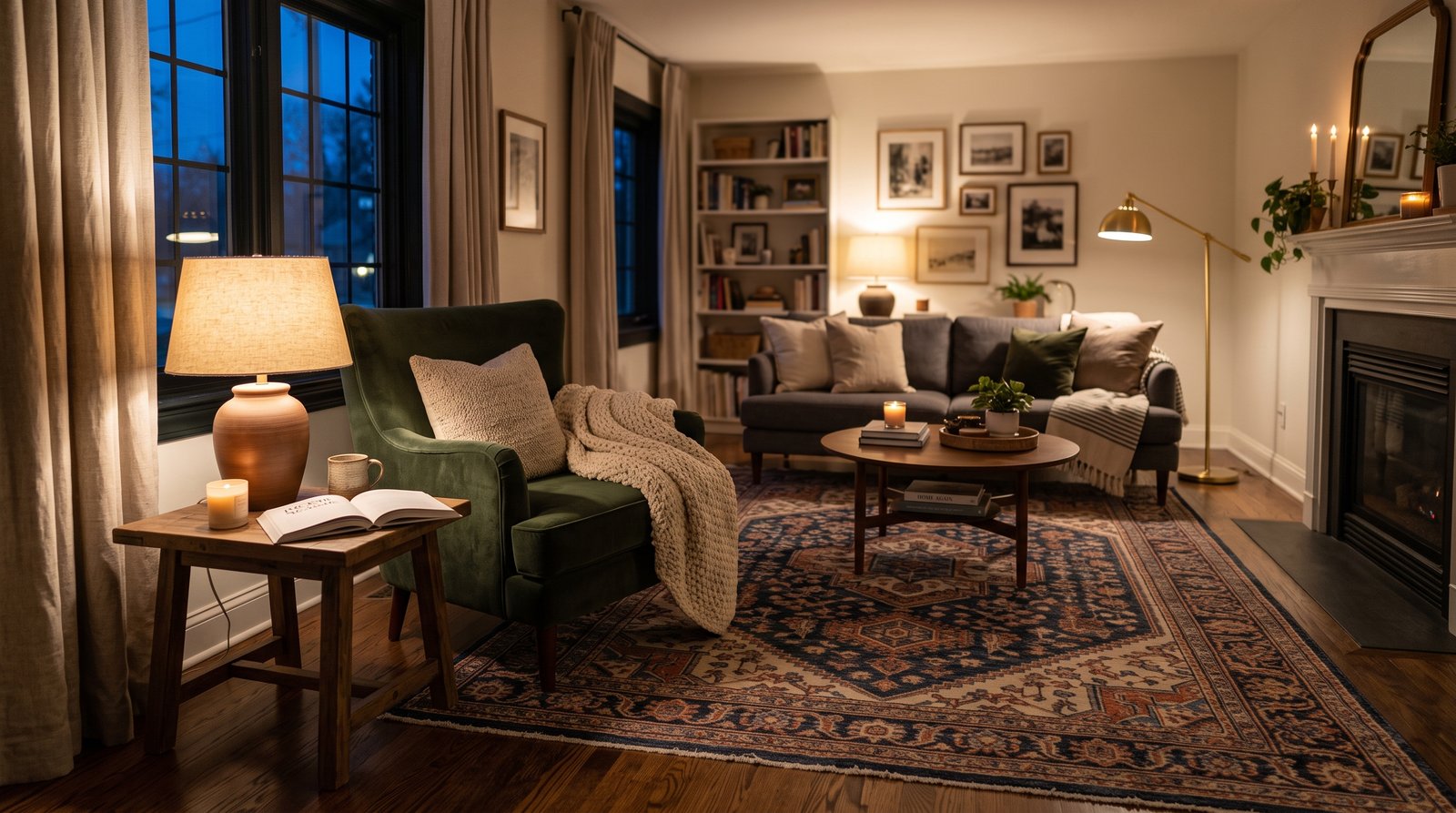
I'd had the armchair flat against the wall opposite the sofa, both of them backed up to plaster, a large empty rectangle of rug between them. I pulled it forward about 40cm and turned it maybe 30 degrees toward the sofa.
The room immediately looked like somewhere people talked to each other.
I've since learned the reason: furniture pushed against every wall creates a perimeter, and a perimeter reads as a corridor. Angling one piece breaks the ring. It's the single highest-return move in any awkward layout → How to Arrange a Living Room With One Usable Wall, and it's free.
Attempt 8: Admitting the rug was wrong
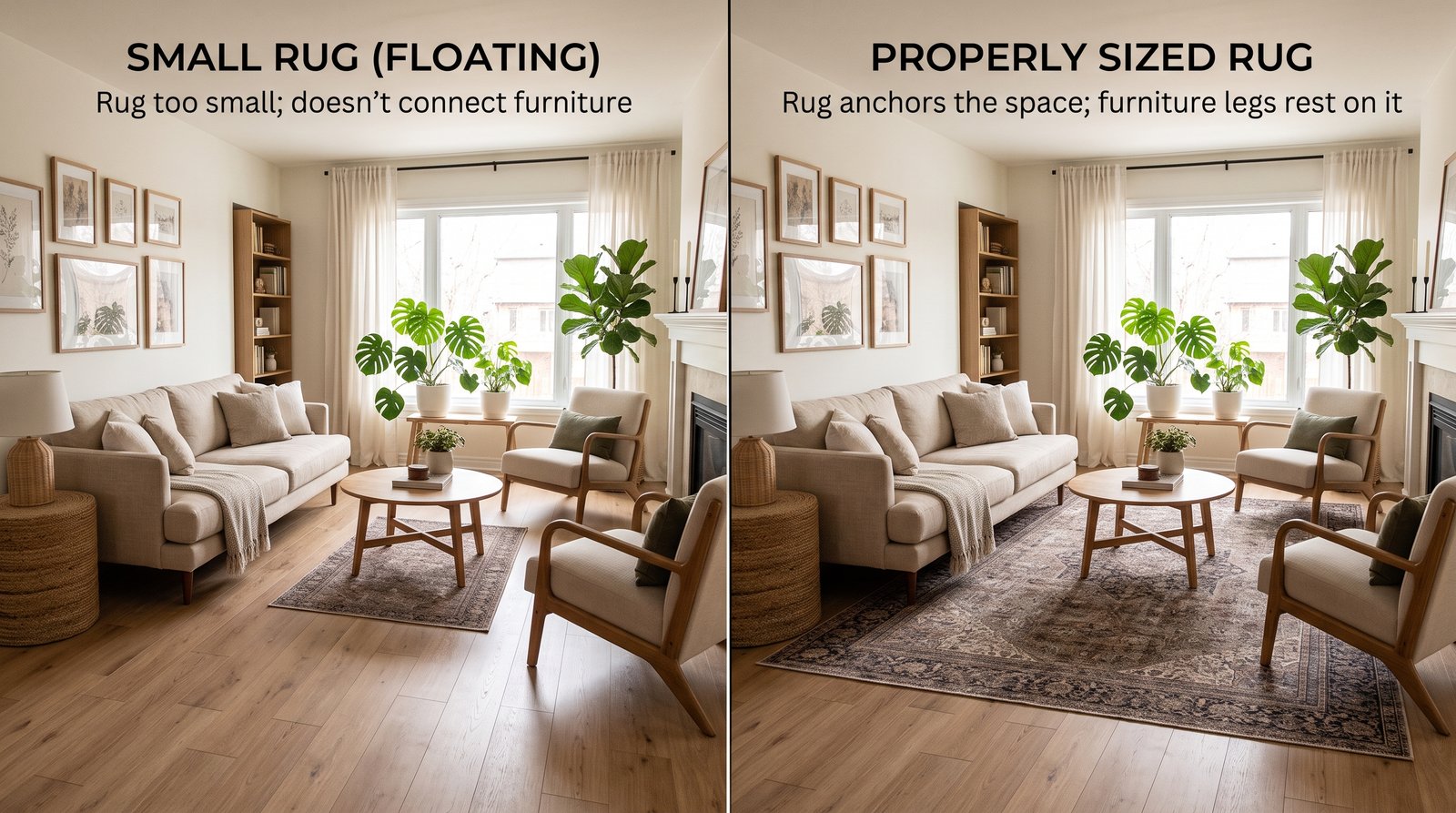
I'd been carrying a 4x6 rug from flat to flat for two years, telling myself it was fine. In this room it sat marooned in the middle of the floor with no furniture touching it, like a doormat that had lost its way.
Replacing it with something big enough that the front legs of both the sofa and the chair sat on it changed the room more than anything I'd bought.
It also cost more than anything I'd bought, which is why I'd avoided admitting it for two years. The full sizing guide is here Rug Sizing: The One Guide You Actually Need, including the tape trick that would have stopped me buying the wrong one in the first place.
Attempt 9: Lighting, finally
Ninth. It took me until the ninth attempt to touch the lighting, which in hindsight is absurd, because I'd already spent a year in a previous flat under a single cold ceiling light and knew exactly what that does to a room.
I added a table lamp at eye level and moved the floor lamp the one useful purchase from attempts 4–6 — into the corner behind the armchair. Turned the overhead off. Put a warm dimmable bulb in everything.
That was the evening the room stopped feeling like a lobby.
Attempts 10 and 11: Undoing things
Ten and eleven were both partial reversals. I'd overcorrected added a second plant that crowded the corner, moved the console table somewhere it blocked a walking route without me consciously noticing, just feeling vaguely irritated every time I crossed the room.
Both times I took something away rather than adding it. Both times the room improved.
This is the part I'd underline. Somewhere in the middle of a project like this you cross over from fixing to fiddling, and the tell is that changes stop being obvious improvements and start being lateral. When that happens, stop adding.
What I'd actually do, in order
If I could go back and skip the other seven attempts:
- Angle one piece off the wall. Free, four minutes, biggest single improvement.
- Check the rug is big enough. Front legs on it, minimum.
- Add two light sources at different heights and turn the overhead off.
- Take one thing out of the room. Any thing. Whatever you notice least.
Only then think about buying something. And when you do, measure the space with tape on the floor first Scale and Proportion I've never regretted the ten minutes that takes.
One more thing
Eleven attempts sounds like failure and I don't think it was. Each version taught me something the previous one couldn't have, and the room I have now is genuinely comfortable in a way that no first attempt would have been.
Rooms take time. The homes that look effortless in photographs are usually version nine of something. Nobody photographs versions one through eight.
Affiliate Disclosure
Some links in this post are affiliate links. If you buy something through one, GlamNestStudio may earn a small commission it doesn't cost you anything extra. I only link to things I'd suggest to a friend, and I've used or genuinely researched everything mentioned here. It's what keeps the guides on this site free.
Before you go
If your own room is on attempt three and going nowhere, the rest of the décor guides on GlamNestStudio might save you a few rounds.