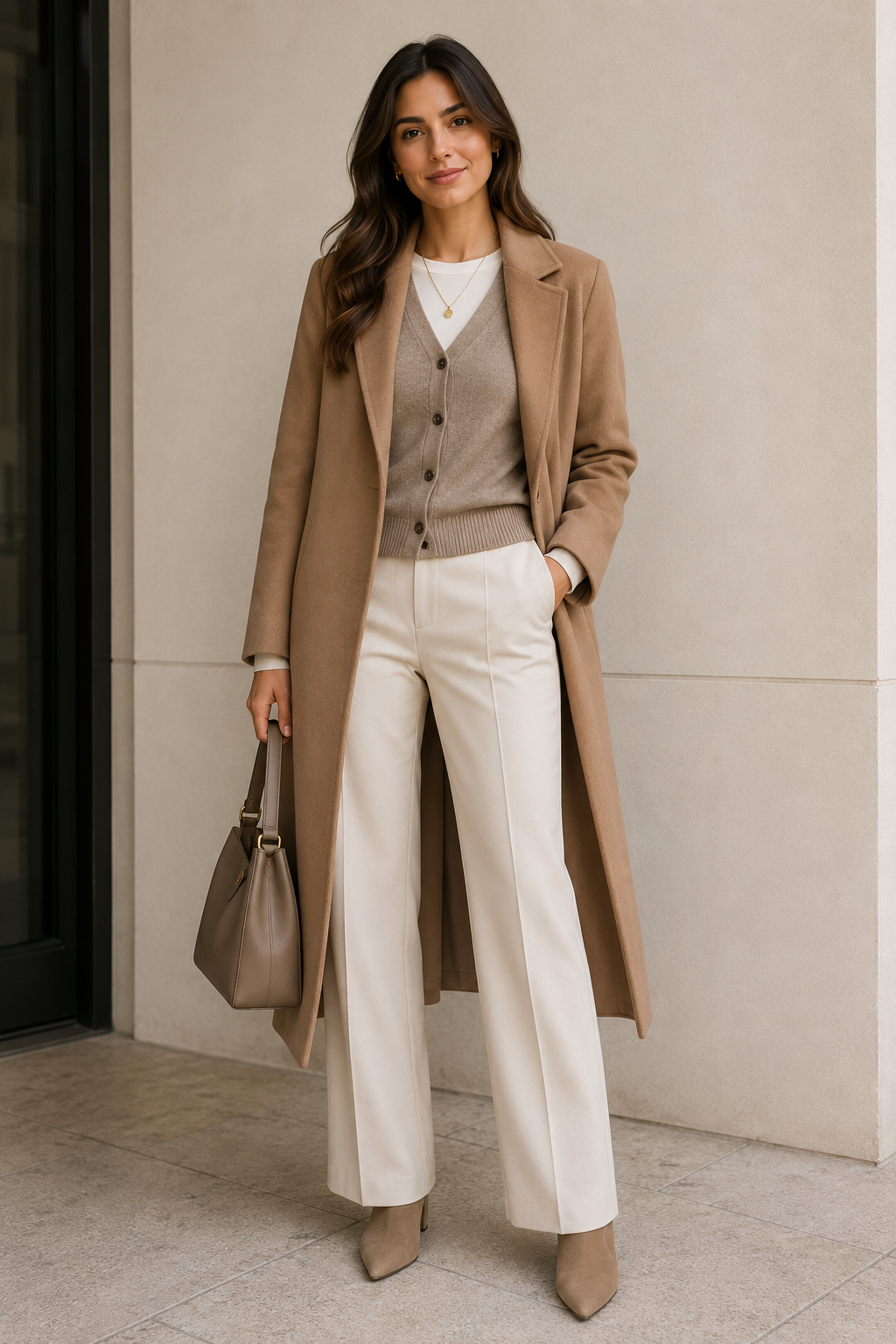
How to Layer Without Looking Bulky
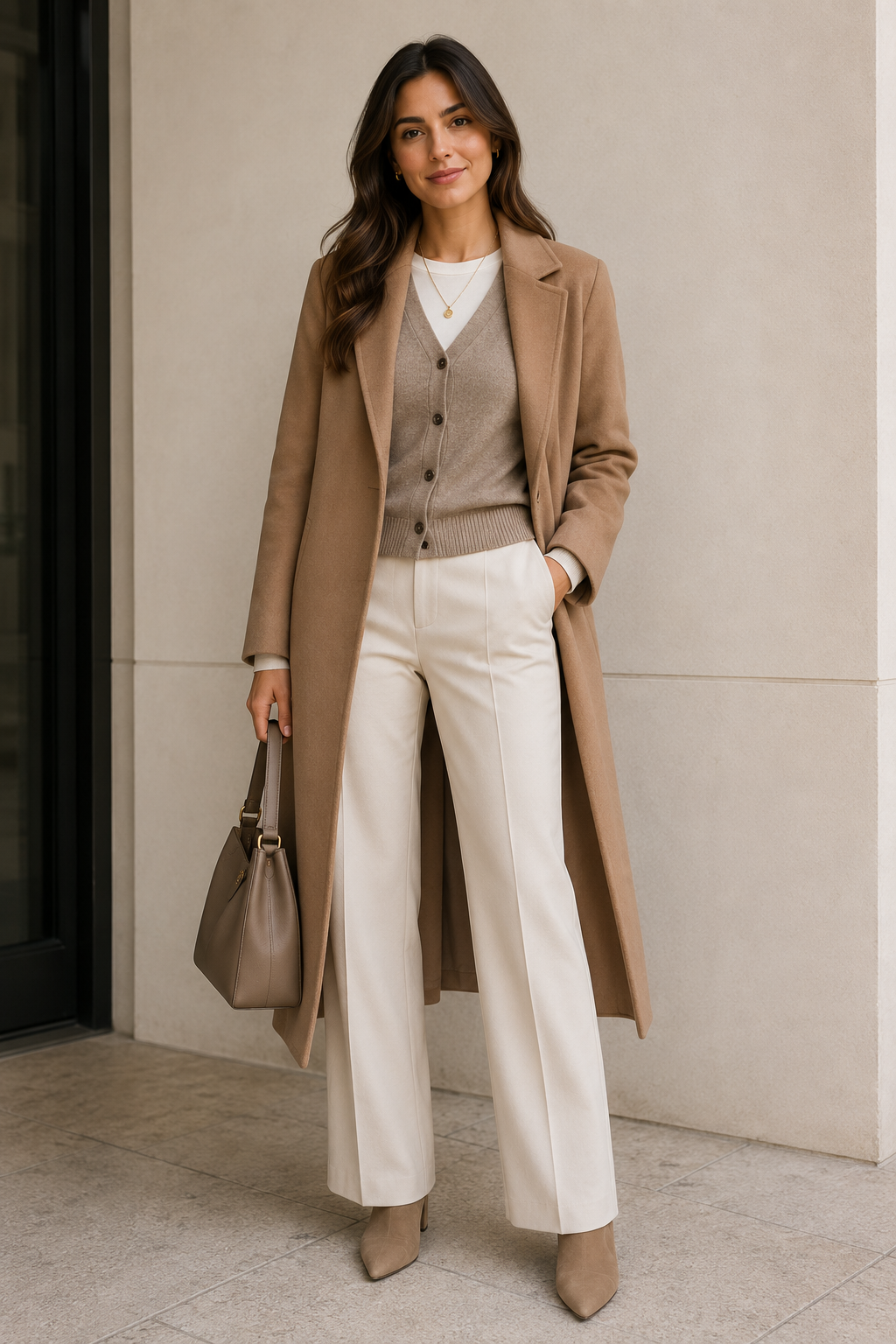
Disclosure: this post contains affiliate links. If you buy something through one, I may earn a small commission at no extra cost to you.
One January I put on three sweaters because I was cold and didn't own a decent coat yet, and by the time I left the apartment I looked less like a person and more like furniture that had been moved outdoors.
I was warm. I looked like an armchair.
The mistake wasn't wearing three layers. It was wearing three layers of the same weight and the same looseness, which stacks bulk in exactly the same place three times over. Layering works when each layer is doing a different job. It fails when every layer is doing the same job at once.
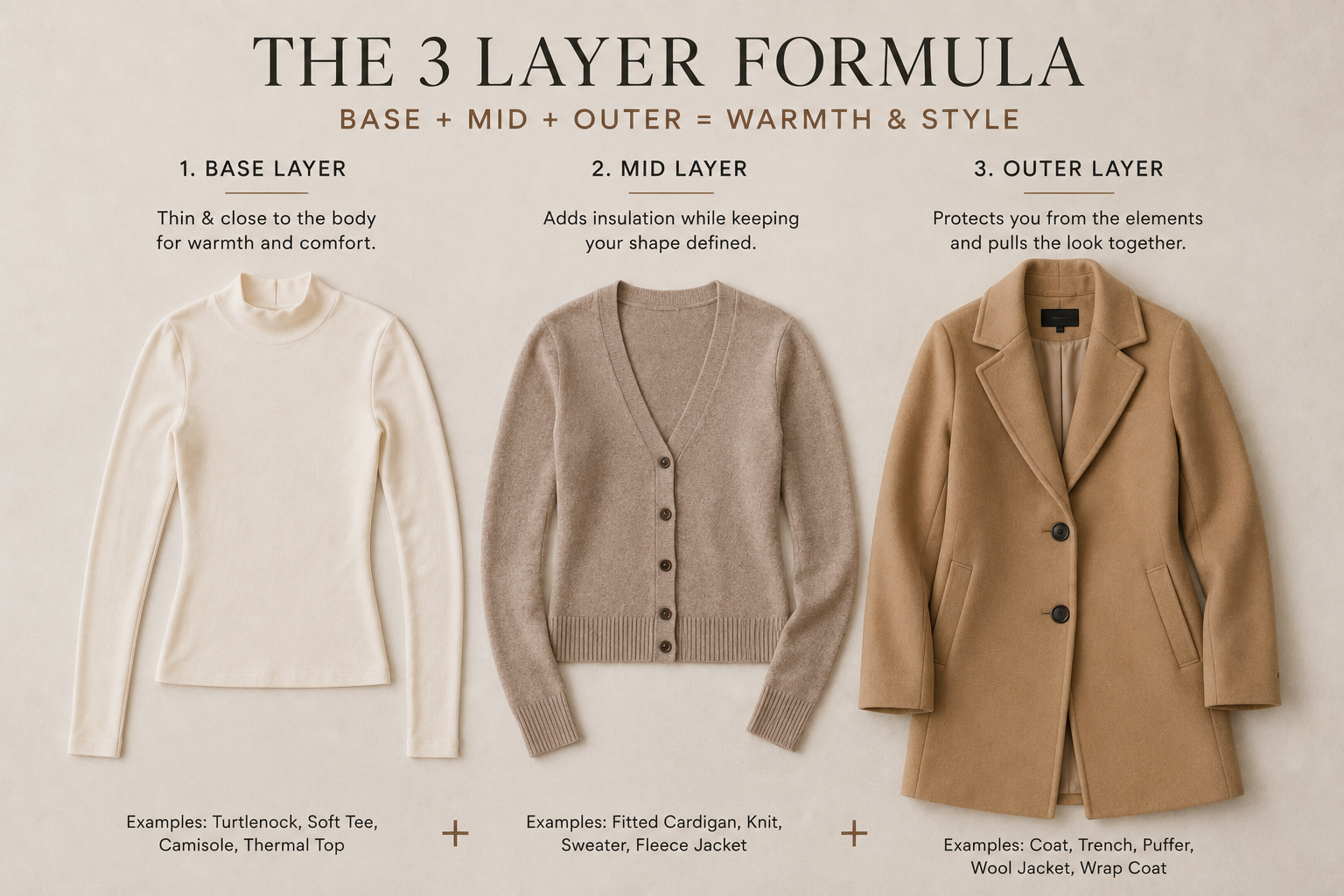
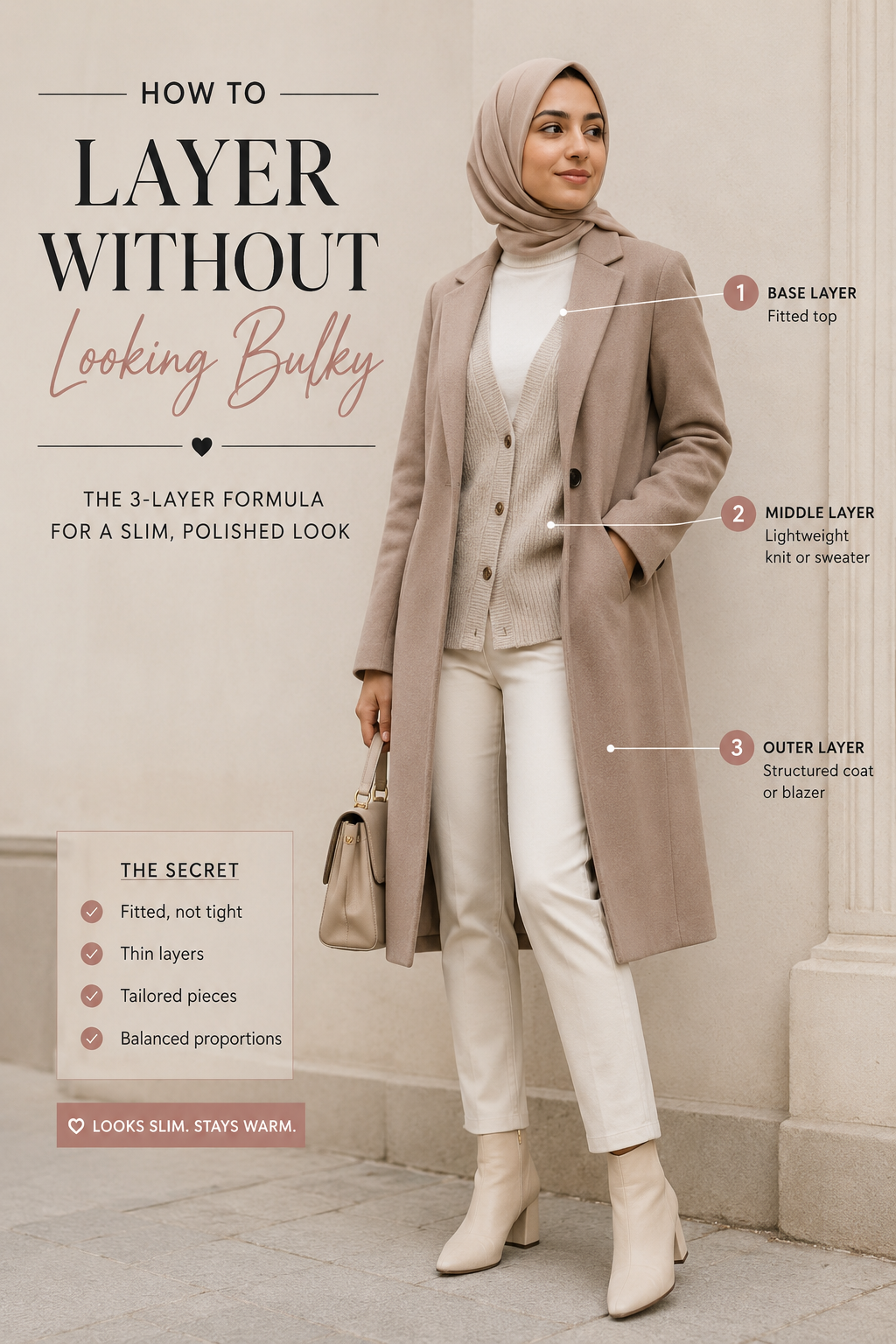
The rule: each layer has one purpose
Think of it as three jobs, not three sweaters.
Base layer — warmth without bulk. Thin, close to the body, does the actual insulating.
Mid layer — shape and structure. Adds visible warmth and defines the silhouette.
Outer layer — the finished line. Coat, blazer, or open cardigan. This is what people actually see first, and it should be the one piece with real presence.
Three thick layers all competing for "warmth" is how you end up upholstered. One thin, one structured, one with presence is how you end up dressed.
1. The base layer: thin is the whole point
This is the layer people get wrong most, because "warm" and "thick" feel like the same instruction. They aren't.
What actually works: a thin merino or silk base layer traps warmth against your skin far more efficiently than a bulky sweater does, because insulation comes from trapped air, not fabric thickness. A merino wool base layer top under everything else is doing more work than the visible sweater on top of it, and it adds almost no bulk.
What to avoid: cotton as a base layer in cold weather. It holds moisture rather than wicking it, and once it's slightly damp from body heat it stops insulating and starts feeling clammy.
Where it shows: a base layer with a fitted crew or scoop neck can peek out under a cardigan or blazer neckline and read as a deliberate styling choice rather than an extra garment.
2. The mid layer: this is where shape happens
The mid layer is doing double duty real warmth, and defining the silhouette everything else hangs off.
Fitted beats loose here, which surprises people. A fine-knit fitted sweater or cardigan adds warmth without adding width, and it gives your outer layer something defined to close around. Bulky knitwear belongs on the outside, not stacked in the middle.
Tuck it. The same ratio rule that applies to any outfit → Proportion: The Reason Some Outfits Look Expensive applies doubly under layers a mid layer tucked into a high-waisted skirt or trousers keeps a waistline visible even under a coat.
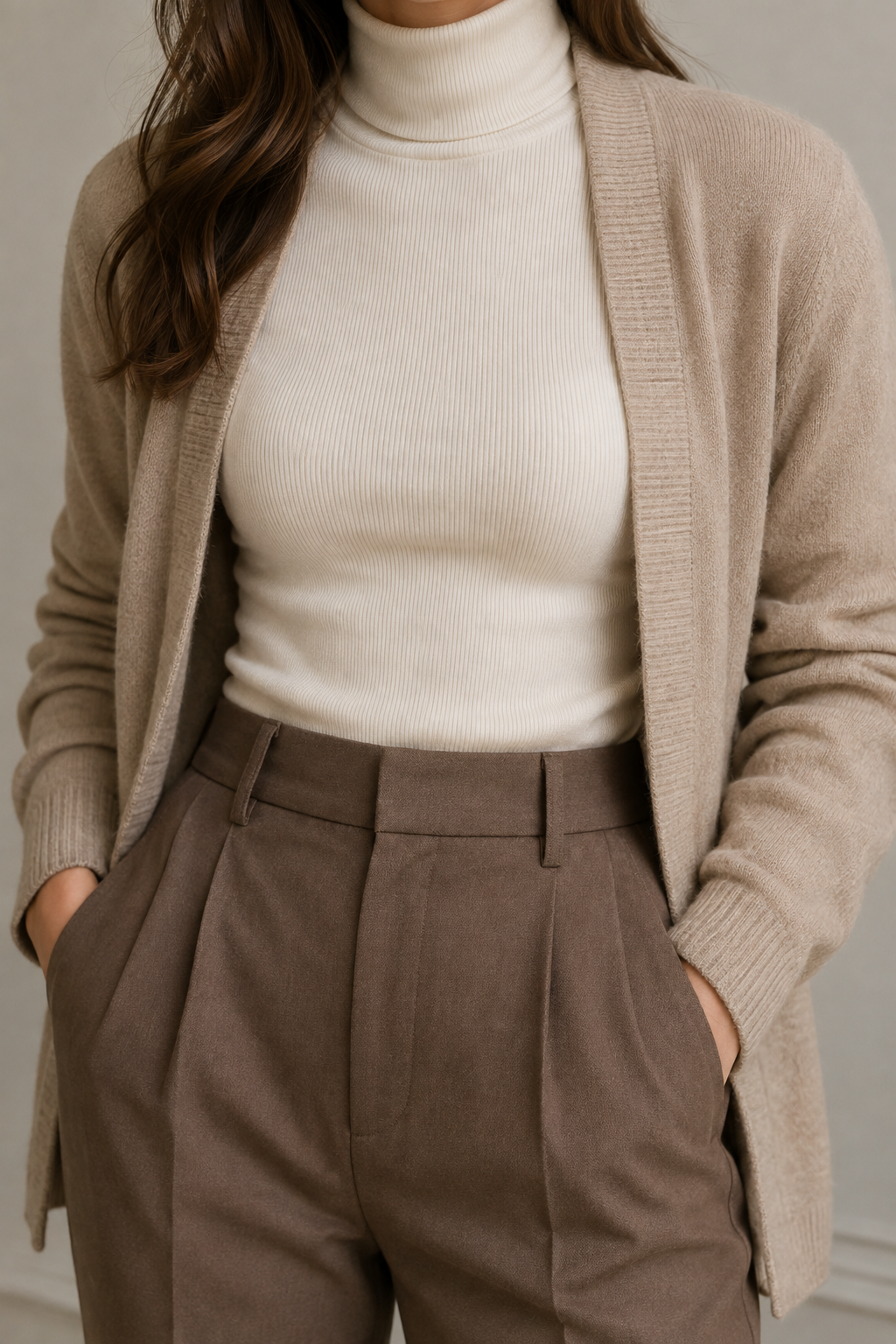
A fitted turtleneck is close to the most useful single layering piece there is. Warm, slim, works under blazers, dresses, coats and cardigans without adding bulk anywhere.
3. The outer layer: this is the one that gets to be big
Here's the trick that makes the whole system work: volume belongs on the outside layer only.
A generously cut coat, an oversized blazer, a long open cardigan these can be as voluminous as you like, because they sit over a slim base and mid layer rather than adding to a pile of loose things.
If your outer layer is oversized, everything under it should be close to the body. That's the volume-balance principle again — one loose, one fitted, and it applies vertically through layers just as much as it applies to a single outfit → Proportion: The Reason Some Outfits Look Expensive]].
A wool wrap coat with a defined waist tie does something a straight boxy coat can't it re-establishes your shape on top of everything else, which means the layers underneath can be as warm as they need to be without the whole outfit reading as shapeless.
Where people actually go wrong
Doubling up on chunky knits. One chunky sweater is a statement. Two is insulation, and it looks like insulation. If you love a bulky knit, make it the only bulky thing you're wearing that day.
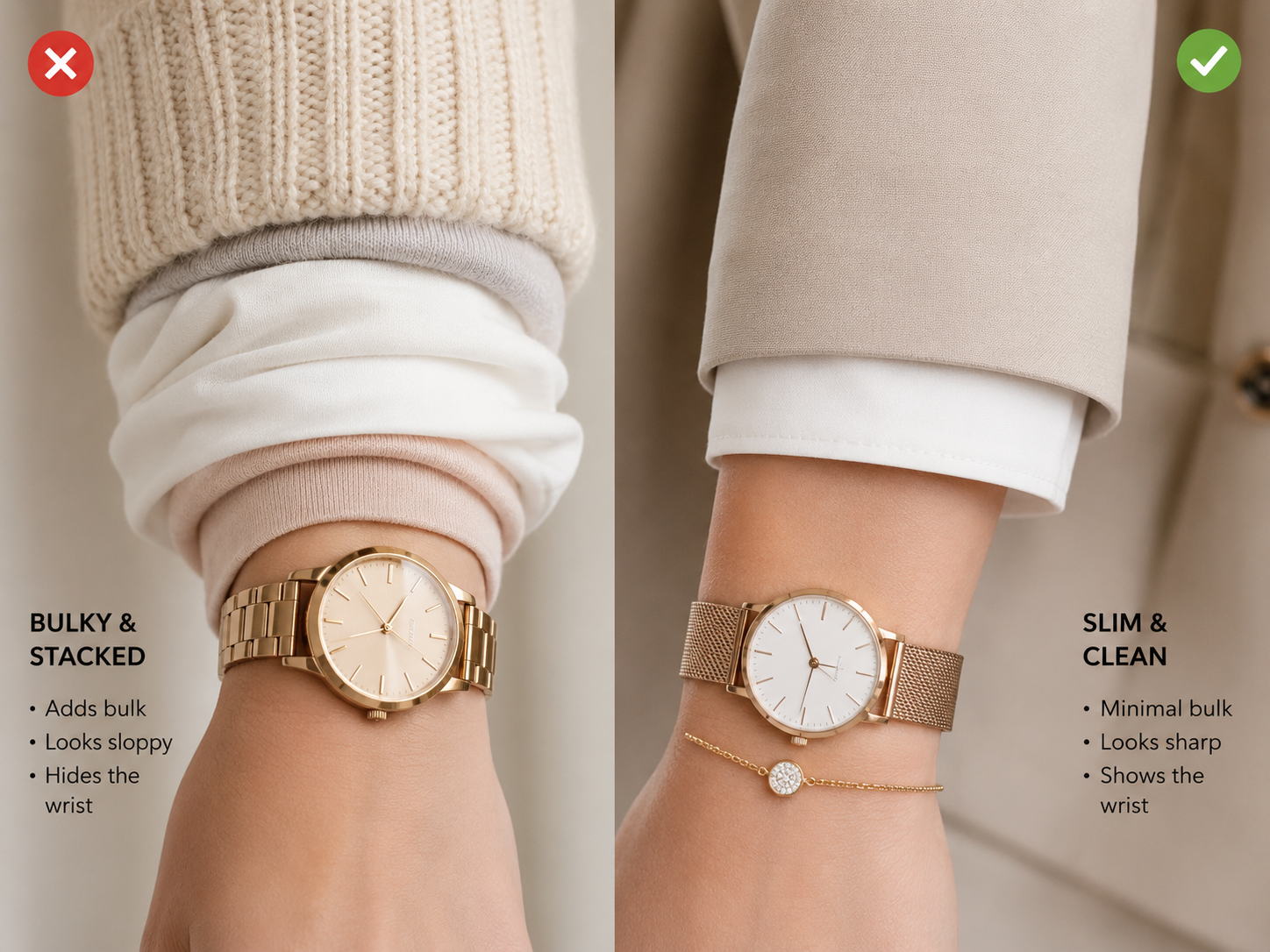
Ignoring sleeve stacking. Three sets of sleeves at the wrist is the most common bulk failure and the easiest one to miss, because you're not looking at your own wrists in a mirror. Push a base-layer sleeve up under a mid-layer cuff so it doesn't bunch, or choose a sleeveless mid layer under a sleeved outer one.
A coat that won't close. If your coat is fighting to zip over your layers, the layers have already lost the battle before you're even outside the coat is straining, the silhouette is lost, and you're cold anyway because compressed insulation doesn't work as well as loose insulation. Size the base and mid layers to the coat, not the other way round.
Same color, same weight, all the way through. Ironically this can look bulkier than mixing textures, because there's no visual break to show where one layer ends and the next begins. A lightweight scarf in a contrasting tone at the neckline does more to define the layers than almost anything else it draws a line exactly where the eye needs one.
The color and texture rule
Same principle as repetition anywhere else → Does Furniture Have to Match?: pick one color or tone that runs through all three layers, and let texture do the contrast instead of color doing it.
A cream base, a cream-and-oat cardigan, a camel coat different textures, related tones, and the whole thing reads as one considered outfit rather than three separate decisions stacked on top of each other.
Mixing wildly different colors across layers is what makes an outfit look accidental, even when every individual piece is nice.
Building it, in order
- Base: thin, close-fitting, merino or silk if the budget allows, never cotton in real cold
- Mid: fitted, tucked if possible, this is where the waistline lives
- Outer: the one piece allowed real volume, with its own shape
- One accessory that draws a line where the layers meet a scarf, a belt over the coat, a contrasting collar
Test it the same way as any outfit → Proportion: The Reason Some Outfits Look Expensive: photograph the full look before you leave. Bulk that's invisible in a mirror shows up immediately in a photo.
What I wear now, in genuinely cold weather
Merino base layer, a fine-knit fitted turtleneck tucked into high-waisted trousers, and a wool wrap coat with the tie cinched. Three real layers, actually warm, and it photographs like one outfit instead of three sweaters having an argument.
The armchair years are over.
Affiliate Disclosure
Some links in this post are affiliate links. If you buy something through one, GlamNestStudio may earn a small commission it doesn't cost you anything extra. I only link to things I'd recommend to a friend, and I've used or genuinely researched everything mentioned here. It's what keeps the guides on this site free.
Before you go
More on proportion, fit and getting dressed without overthinking it, across the guides on GlamNestStudio.