8 Laundry Mistakes That Are Aging Your Clothes
Disclosure: this post contains affiliate links. If you buy something through one, I may earn a small commission at no extra cost to you.
I once put a gray wool-blend sweater through a hot dryer and pulled out something that would have fit a large child. It had cost more than anything else in the load, which is generally how this works.
That was the expensive lesson. The cheap ones took longer to notice the shirts that went thin at the shoulders, the black jeans that turned charcoal, the sweaters that pilled at the sides within a season.
Most clothes don't wear out from being worn. They wear out from being washed, and specifically from a handful of habits that are easy to change and cost nothing.
1. Washing everything on hot
Heat is the single most destructive thing in a laundry room. It breaks down elastane, sets stains permanently, fades dye, and shrinks natural fibers.
Cold water washes nearly as well for normal clothing. Modern detergents are formulated to work at low temperatures that's what "cold water" formulations mean.
Use warm or hot only for: bedding, towels, underwear, workout clothes that hold odor, and anything genuinely soiled.
Everything else on cold. It's also cheaper, since heating water is most of what a washing machine costs to run.
2. The dryer, generally
The lint in your dryer filter is your clothes. That's what it is fibers pulled off your garments by heat and tumbling. Every cycle takes a little more.
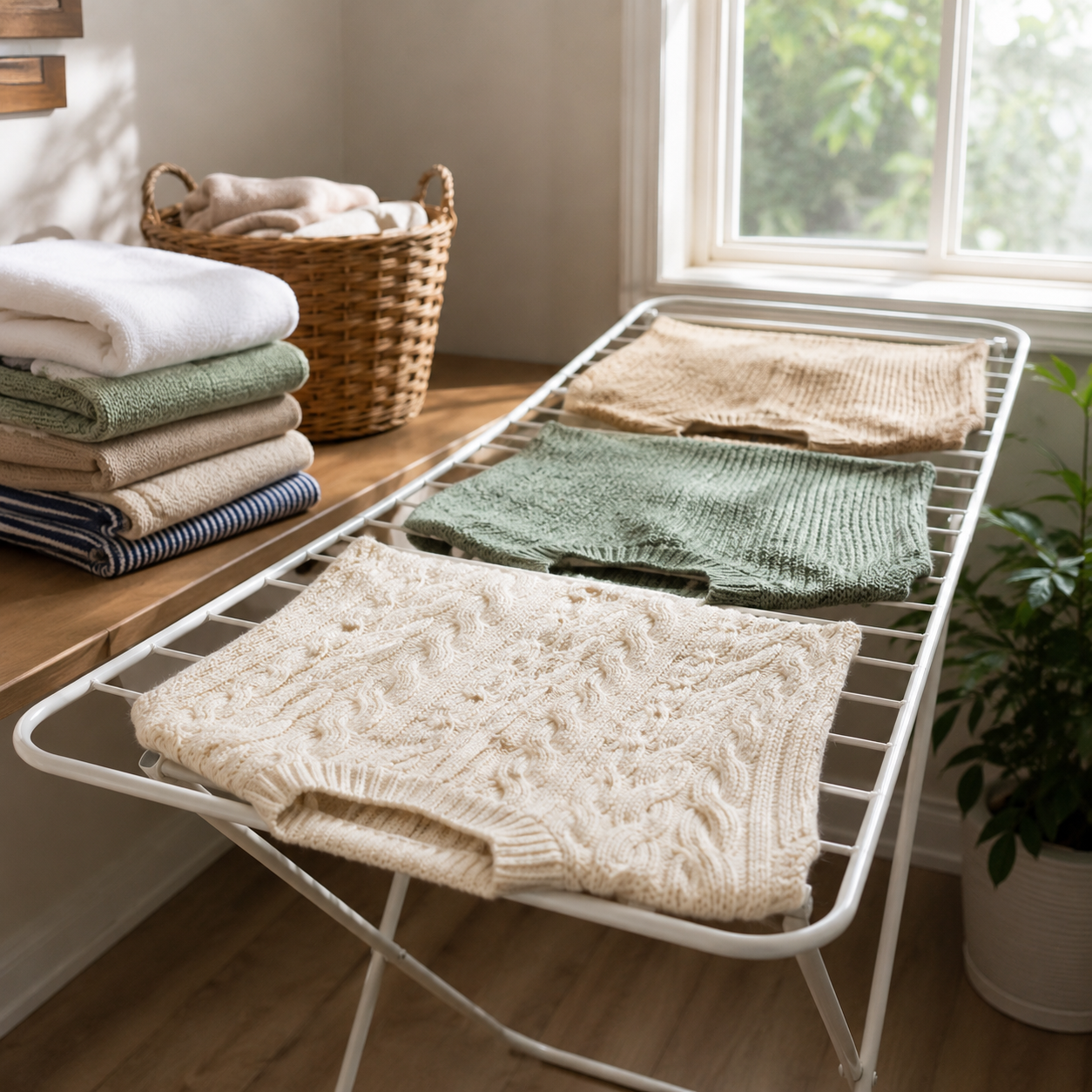
You don't have to give up the dryer, but the things worth air-drying are:
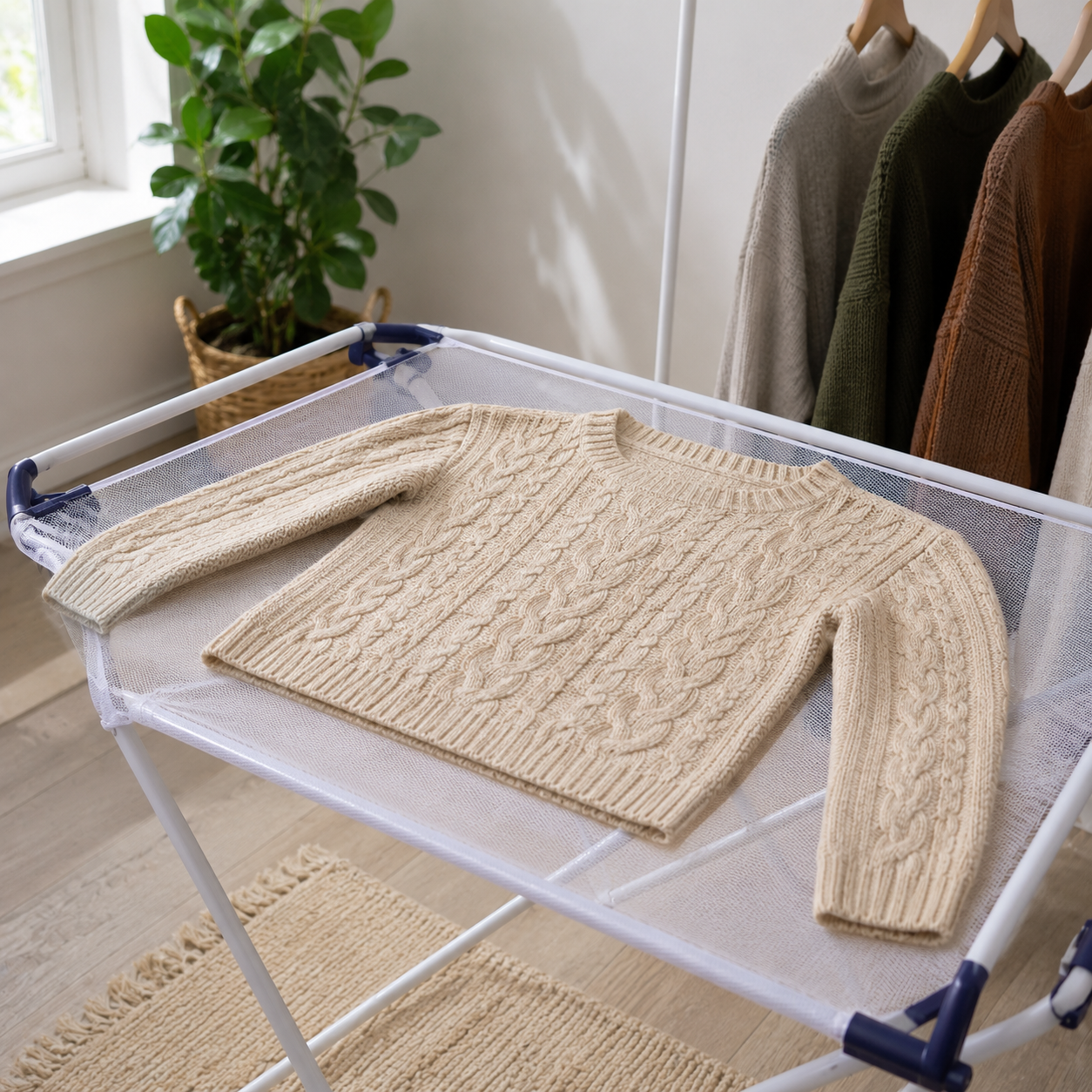
- Knitwear and anything wool dried flat, never hung, or it stretches out of shape
- Denim heat is what kills stretch denim, and it's why jeans get baggy then never recover
- Anything with elastane or spandex activewear, stretch shirts, most modern jeans
- Bras heat destroys the elastic faster than anything else
- Printed shirts dried inside out, low heat, or the print cracks
If you use the dryer: lower heat, shorter cycle, take things out slightly damp and hang them. Over-drying is what does the real damage.
A folding drying rack that lives in a closet is the whole fix for most of this. Mine cost about $35 and has probably saved several times that in clothes.
3. Washing things too often
Most clothes are washed far more than they need to be, and every wash costs you a little life.
Rough guide:
- Jeans: every 5–10 wears. I washed mine after every wear for years, which is why they always went baggy and then faded. Air them out overnight instead.
- Sweaters and knitwear: every 3–5 wears unless visibly dirty
- Wool anything: wool is naturally odor-resistant. Airing usually works.
- Bras: every 2–3 wears
- Shirts worn against skin, underwear, socks, activewear: every wear, obviously
Spot-clean a mark rather than washing the whole garment. It's a small habit and it adds up over years.
4. Too much detergent
Almost everyone overdoses detergent, partly because the cap markings are generous and partly because more feels like it should be better.
Excess detergent doesn't rinse out. It stays in the fibers, attracts dirt, stiffens fabric, and dulls color. If your towels have stopped absorbing water, this is usually why.
Use about half what the cap suggests for a normal load. If your machine is high-efficiency, less again. Clothes coming out stiff or slightly filmy is the sign you're using too much.
5. Fabric softener on things that shouldn't have it
Fabric softener works by coating fibers. That's the mechanism.
Which means it should never go anywhere near:
- Towels — it's why they stop absorbing
- Activewear — it clogs the moisture-wicking that you paid for
- Anything water-resistant
- Microfiber
Wool dryer balls do most of what softener does for regular clothes without the coating, and they cut drying time. Distilled white vinegar in the rinse works too, and no, it doesn't leave a smell.
6. Friction, and why things pill
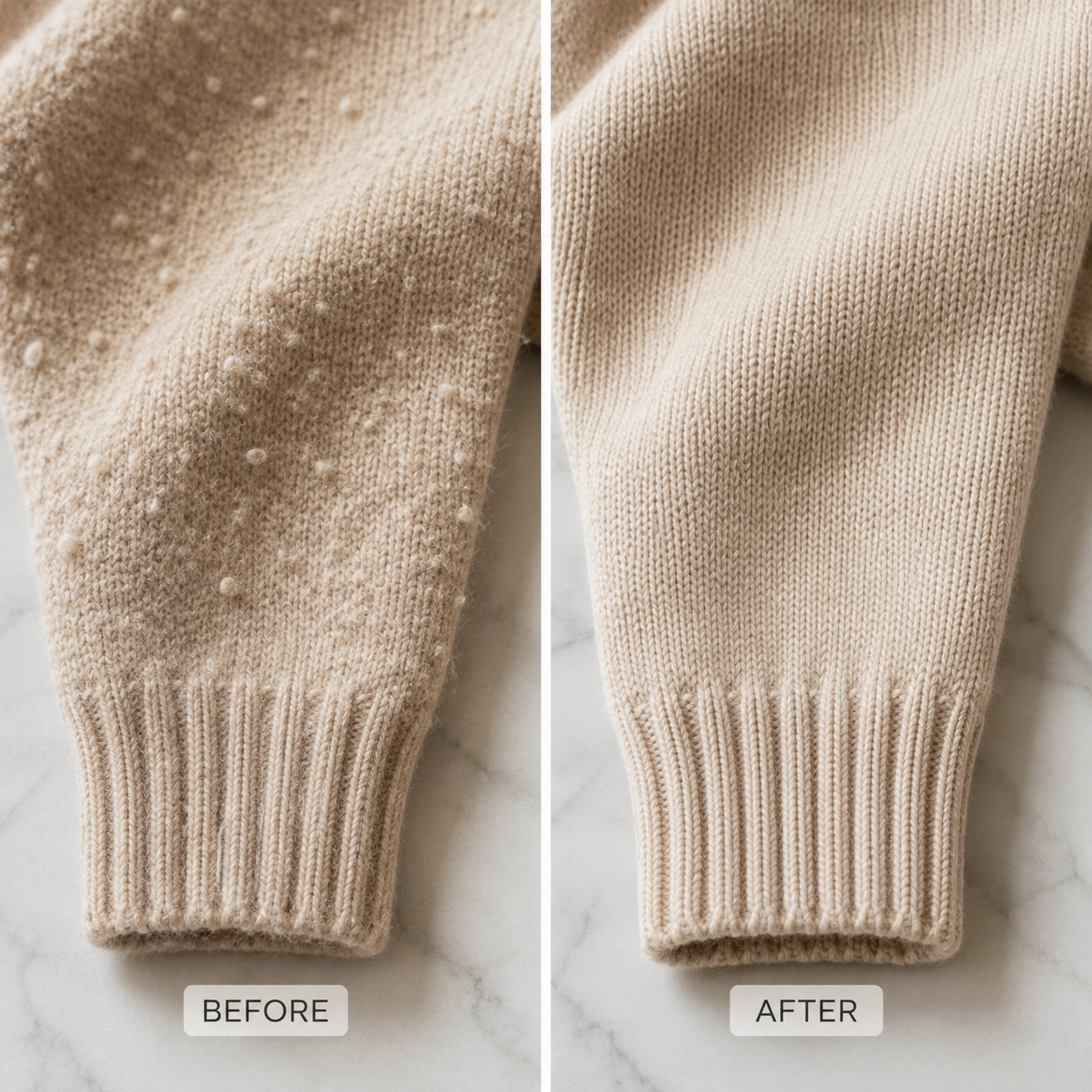
Pilling is friction. Fibers rub, break, and tangle into little balls most often at the sides where your arms move against the body of a garment, and wherever a bag strap sits.
Some pilling is unavoidable on short-fiber and blended fabrics. But you can reduce it a lot:
- Wash inside out. The friction happens on the inside instead.
- Use mesh laundry bags for knits and delicates. A few dollars, disproportionately effective.
- Smaller loads. Overpacked machines mean more rubbing.
- Separate rough from smooth. Denim and towels against knitwear is the worst combination in the machine.
To remove existing pills: a fabric shaver, or a disposable razor used carefully and flat. Never pull them off you're pulling fiber out of the weave and thinning the fabric.
7. Hanging things that should be folded
Knitwear hung on a hanger stretches. Gravity pulls it down and you get the shoulder bumps that never come out, plus a garment that's grown two inches longer than it started.
Fold: sweaters, knits, t-shirts, jeans, anything heavy or stretchy. Hang: shirts, blazers, jackets, dresses, tailored trousers.
And use decent hangers for the hanging half. Wire hangers from the dry cleaner distort shoulders on anything structured which matters, because the shoulder line is what makes clothes look right → Why Your Clothes Fit But Don't Look Right. Wooden or thick velvet hangers for jackets, at minimum.
8. Storing things dirty
Moths are attracted to body oils, sweat and food residue, not to clean wool. Storing a sweater unwashed at the end of the season is what causes holes.
Wash or dry-clean before storing anything for months. Store in breathable cotton bags rather than plastic plastic traps moisture and can yellow fabric over time.
Cedar and lavender help somewhat. Neither is as effective as putting things away clean.
The realistic version
You're not going to do all eight. Here are the three with the best return:
- Wash cold. Free, one setting change, protects color and elastic.
- Air-dry knits, denim and anything stretchy. One rack, $35.
- Wash jeans and sweaters less often. Free, and it's the one that changes the most.
That's most of the benefit for very little effort.
It's the same logic that runs through everything else I write about buying: fewer, better things, looked after properly → Why Your Clothes Fit But Don't Look Right beats constantly replacing cheap ones. That applies to furniture just as much as clothes → 10 Common Home Decor Problems — the maintenance is what makes the "buy less, buy better" advice actually work, and it's the part nobody writes about.
Affiliate Disclosure
Some links in this post are affiliate links. If you buy something through one, GlamNestStudio may earn a small commission it doesn't cost you anything extra. I only link to things I'd recommend to a friend, and I've used or genuinely researched everything mentioned here. It's what keeps the guides on this site free.
Before you go
More on buying fewer things and making them last for your closet and your rooms across the guides on GlamNestStudio.