Why I Stopped Buying Ready-Made Curtains
Disclosure: this post contains affiliate links. If you buy something through one, I may earn a small commission at no extra cost to you.
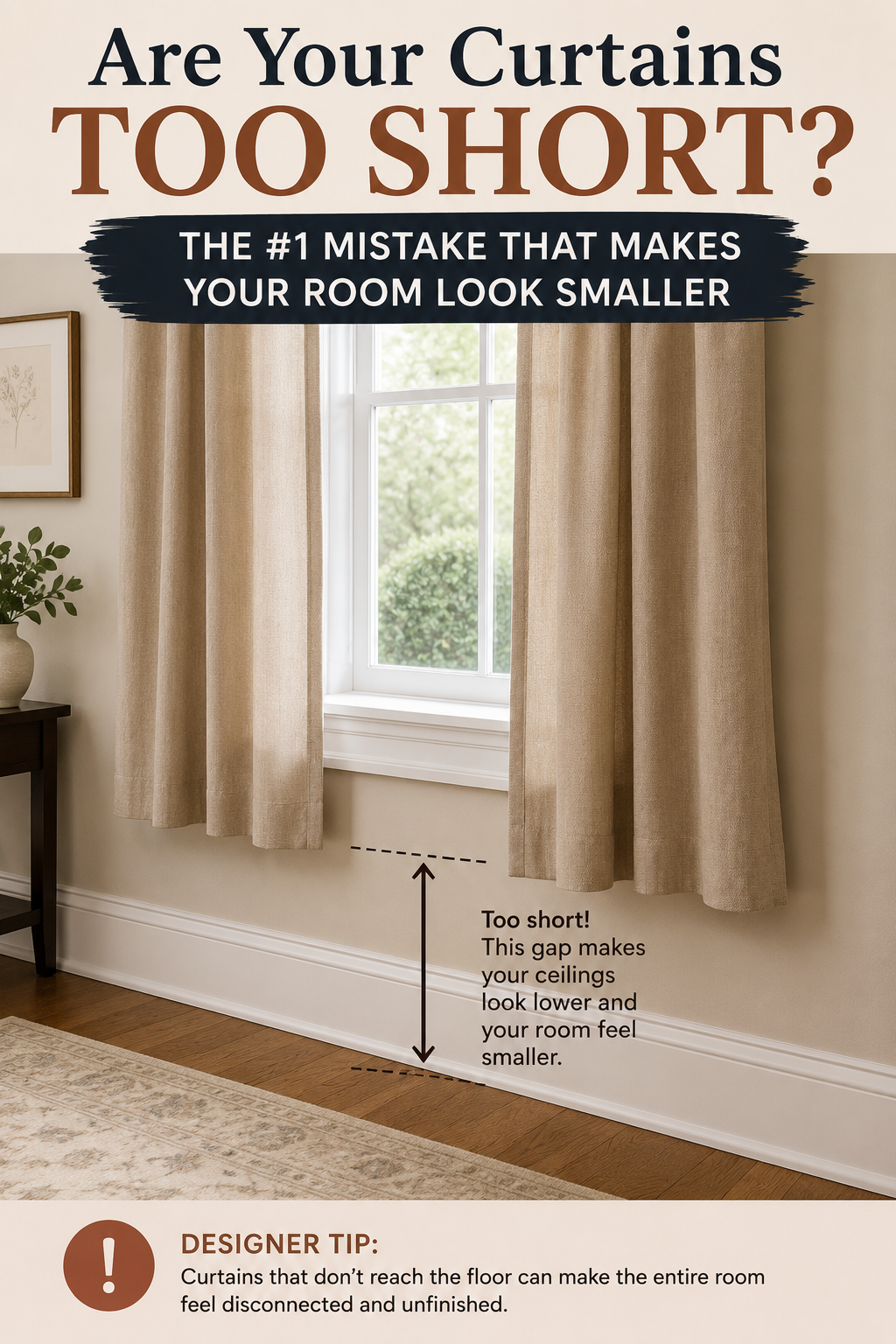
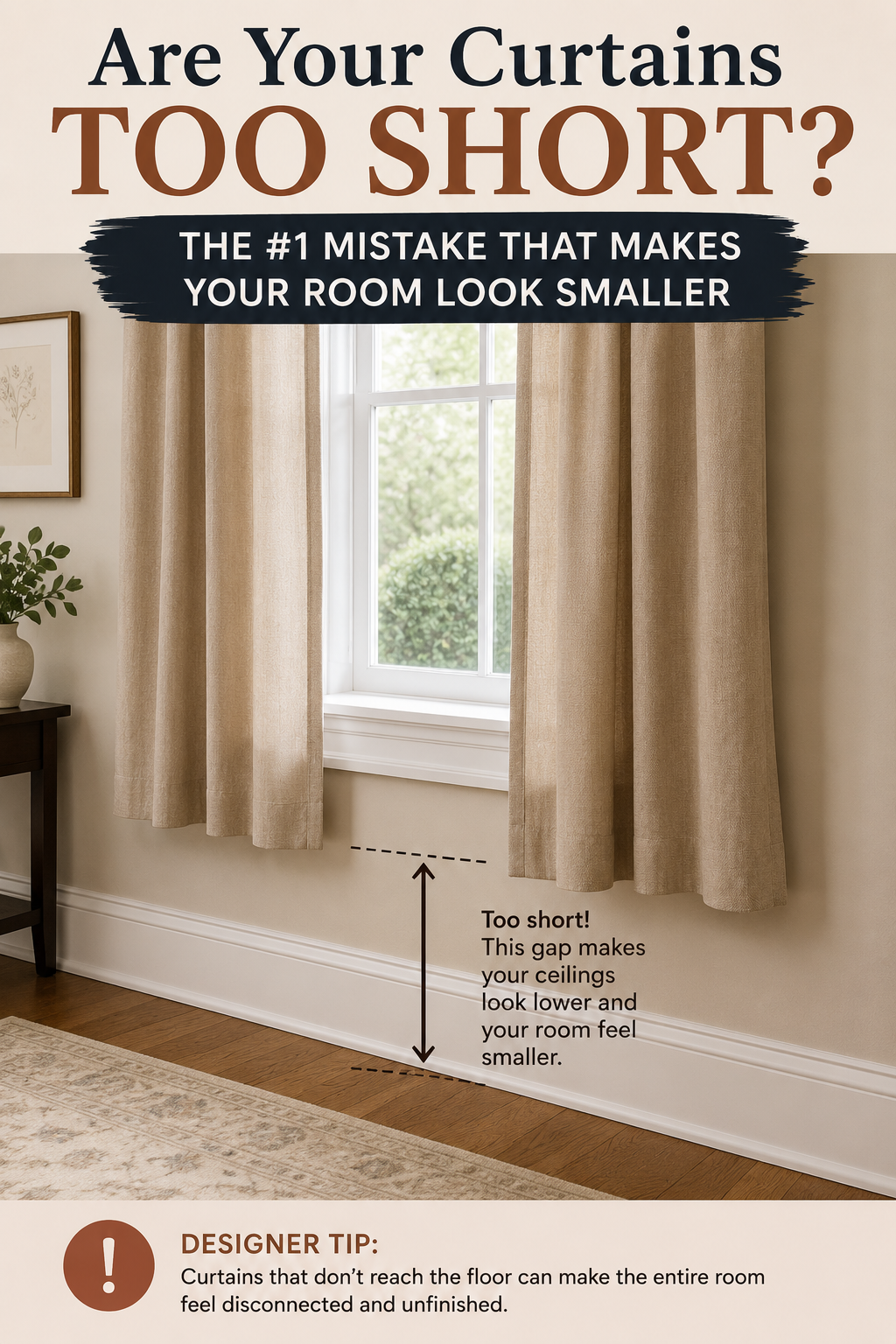
I bought 84-inch curtain panels three separate times, in three different apartments, and every single time they were too short.
Not dramatically. Four inches, five inches enough that they hovered above the floor like they'd been washed hot. Enough to look wrong without being obviously wrong, which is the most annoying category of wrong there is.
It took me until the third time to understand that the problem wasn't me picking badly. The problem is that standard curtain sizes are built for a room configuration that almost nobody actually has.
The math that nobody does before buying
Ready-made panels in the US come in three lengths: 84, 96 and 108 inches.
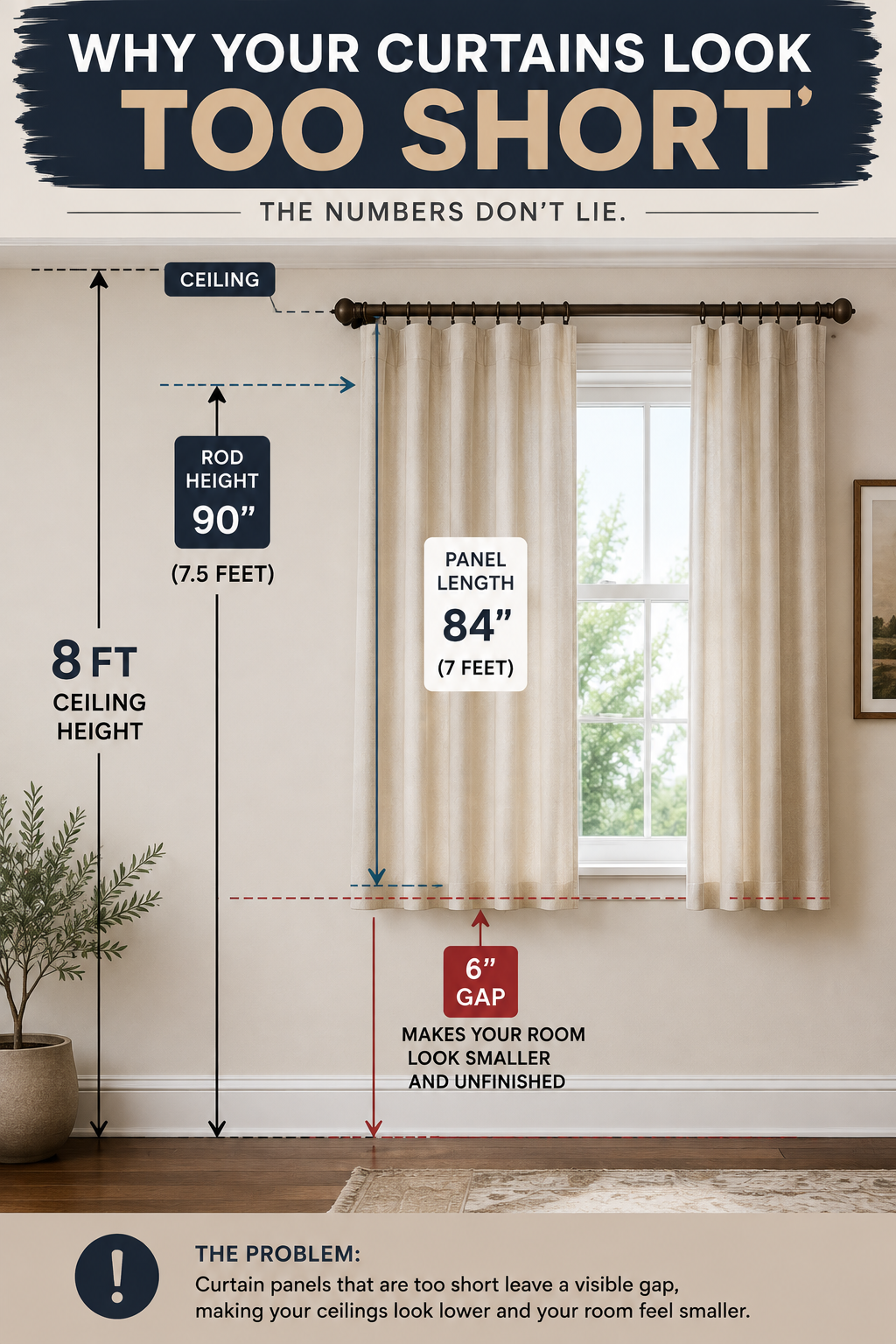
Now do the arithmetic on a standard 8-foot ceiling, which is 96 inches from floor to ceiling.
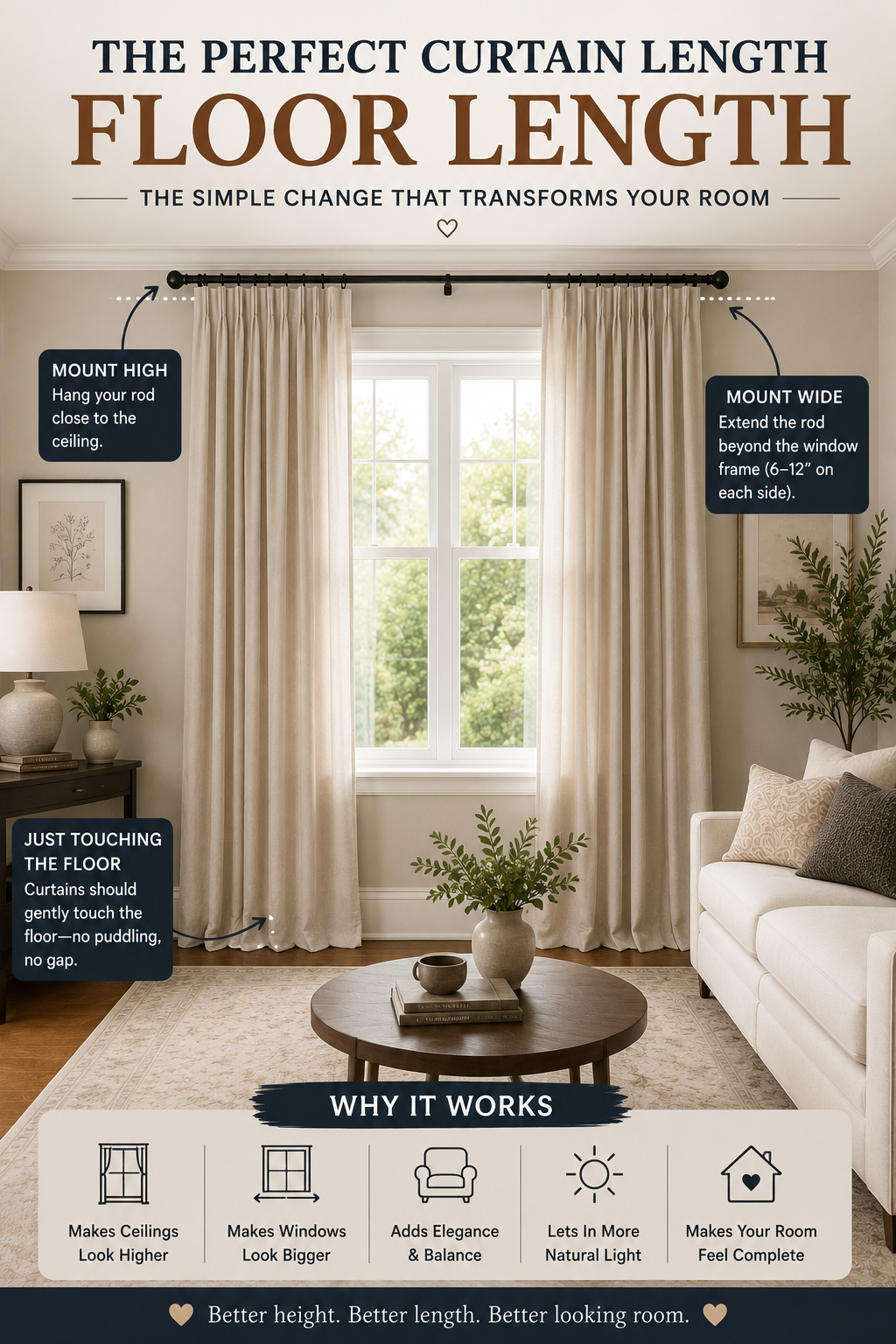
If you hang the rod correctly — 4 to 6 inches below the ceiling → How to Hang Curtains So Your Ceilings Look Taller — the rod sits at roughly 90 inches. Subtract about an inch and a half for rings or hooks, and your panel needs to be around 88 inches to reach the floor.
84 inches is four inches short. 96 inches is eight inches too long.
There is no correct option. The 84-inch panel is sized for a rod hung just above the window frame, which is exactly the mistake the whole hanging guide is about. Standard sizing is designed around the way most people hang curtains, not the way curtains look best.
The second problem: width
Ready-made panels are usually 50 inches wide.
For proper fullness you want total panel width of about 2 to 2.5 times the window. On a 36-inch window, two 50-inch panels gives you 100 inches, which is fine. On a 60-inch window, two panels gives you 100 inches against a 120–150 inch target — so they hang flat and stretched when closed.
The fix is buying four panels instead of two, which doubles the cost and is the point at which custom starts looking reasonable.
Nobody mentions this on the product page. The listing says "fits windows up to 60 inches," which is technically true in the sense that the fabric will physically span the gap.
The workarounds, cheapest first
I used all of these before I gave up, and they genuinely do work.
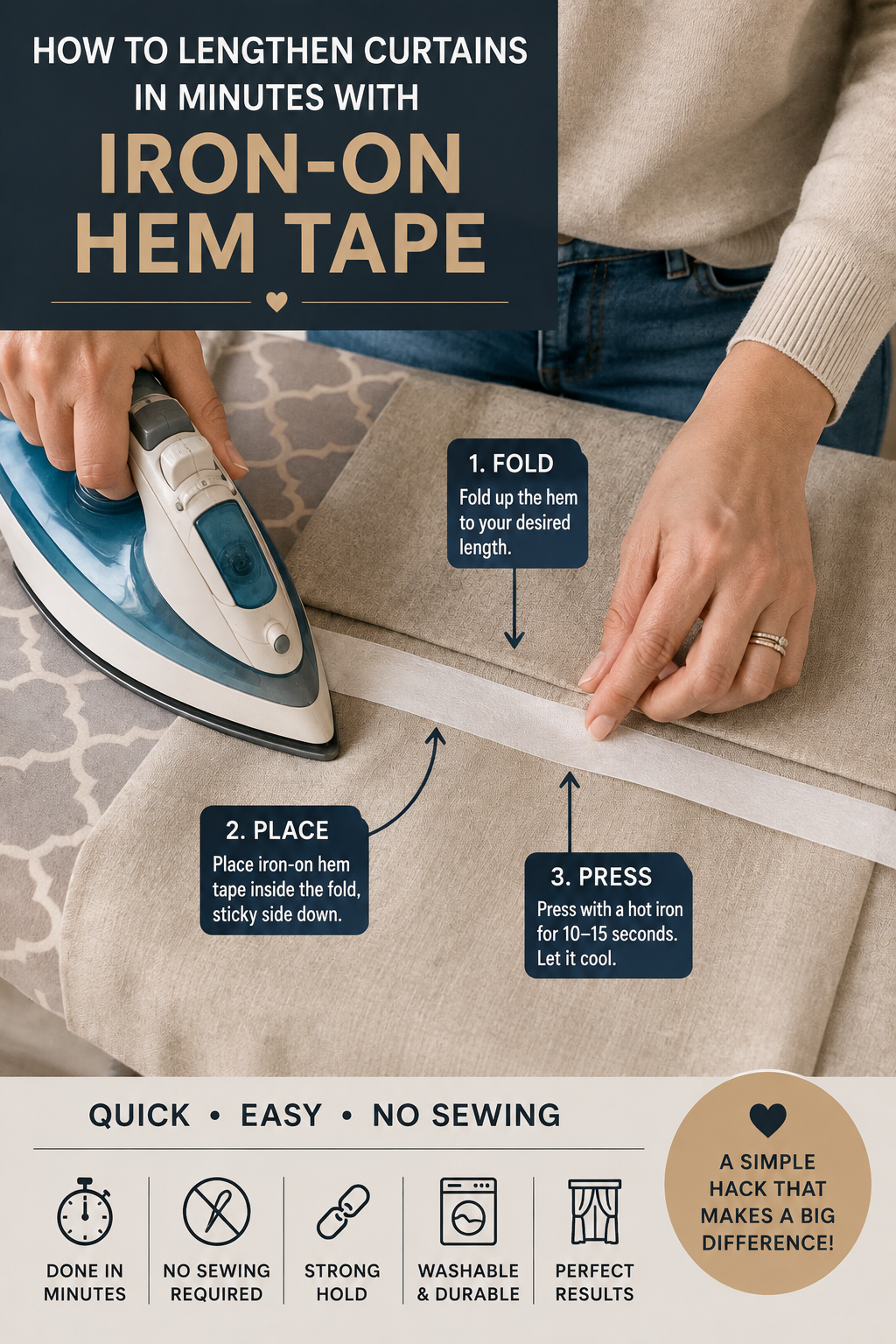
Iron-on hem tape. For panels that are too long. Around $8, takes an hour for two panels, and the result is invisible from more than two feet away. This is the single best fix on the list and I wish I'd found it three apartments earlier.
Let the hem down. Most panels have 3 to 4 inches folded up inside the hem. If yours are slightly short, unpicking and re-pressing gets you a few inches back. Check before you buy — hold the hem and feel how much fabric is folded in there.
Add a contrast band at the bottom. A strip of different fabric sewn or hem-taped to the bottom of a too-short panel. Adds length, looks deliberate, and it's a common trick in expensive interiors rather than a cheat.
Clip rings. Curtain clip rings add about an inch and a half of drop, which is the wrong direction if your panels are short — but they let you hang panels from any header type and adjust the height precisely. Useful more often than you'd think.
Lower the rod. The worst option, listed for completeness. You're trading the height illusion for a correct hem, and the height illusion is worth more.
When custom is actually worth it
Custom curtains cost roughly two to four times ready-made, depending on fabric. That's a real amount of money and I don't want to hand-wave it.
It's worth it when:
- Your windows are non-standard — very tall, very wide, arched, or floor-to-ceiling
- You're staying put. Custom panels are made for your walls and rarely fit the next place.
- You want a specific fabric that nobody sells ready-made
- You'd otherwise need four panels per window anyway, which closes most of the price gap
It's not worth it when:
- You rent and expect to move within a couple of years
- Your windows are close to standard and hem tape solves it
- The room is a spare bedroom or somewhere you spend little time
For the current apartment I ordered custom panels for the living room only, and used ready-mades with hemmed bottoms everywhere else. That's the split I'd recommend to most people: one room done properly, the rest done adequately.
A middle option worth knowing about: several retailers now sell semi-custom panels where you pick from a set of lengths in 2-inch increments, at closer to ready-made prices. Worth searching for before committing to full custom.
What I'd tell someone starting out
Measure first, then shop. Not the other way around.
Work out where the rod will go, measure from there to the floor, subtract the ring drop, and write the number down. Then go looking. If nothing standard matches, hem tape closes the gap for eight dollars.
The pattern here is the same one that runs through most of what I write: measure the space before you buy anything → Scale and Proportion. I've made the reverse mistake with a rug, a sofa, and now three sets of curtains, and it's cost me more than measuring ever would have.
Affiliate Disclosure
Some links in this post are affiliate links. If you buy something through one, GlamNestStudio may earn a small commission it doesn't cost you anything extra. I only link to things I'd recommend to a friend, and I've used or genuinely researched everything mentioned here. It's what keeps the guides on this site free.
Before you go
More on the measurements that quietly decide how a room reads — rugs, layout, proportions — across the guides on GlamNestStudio.