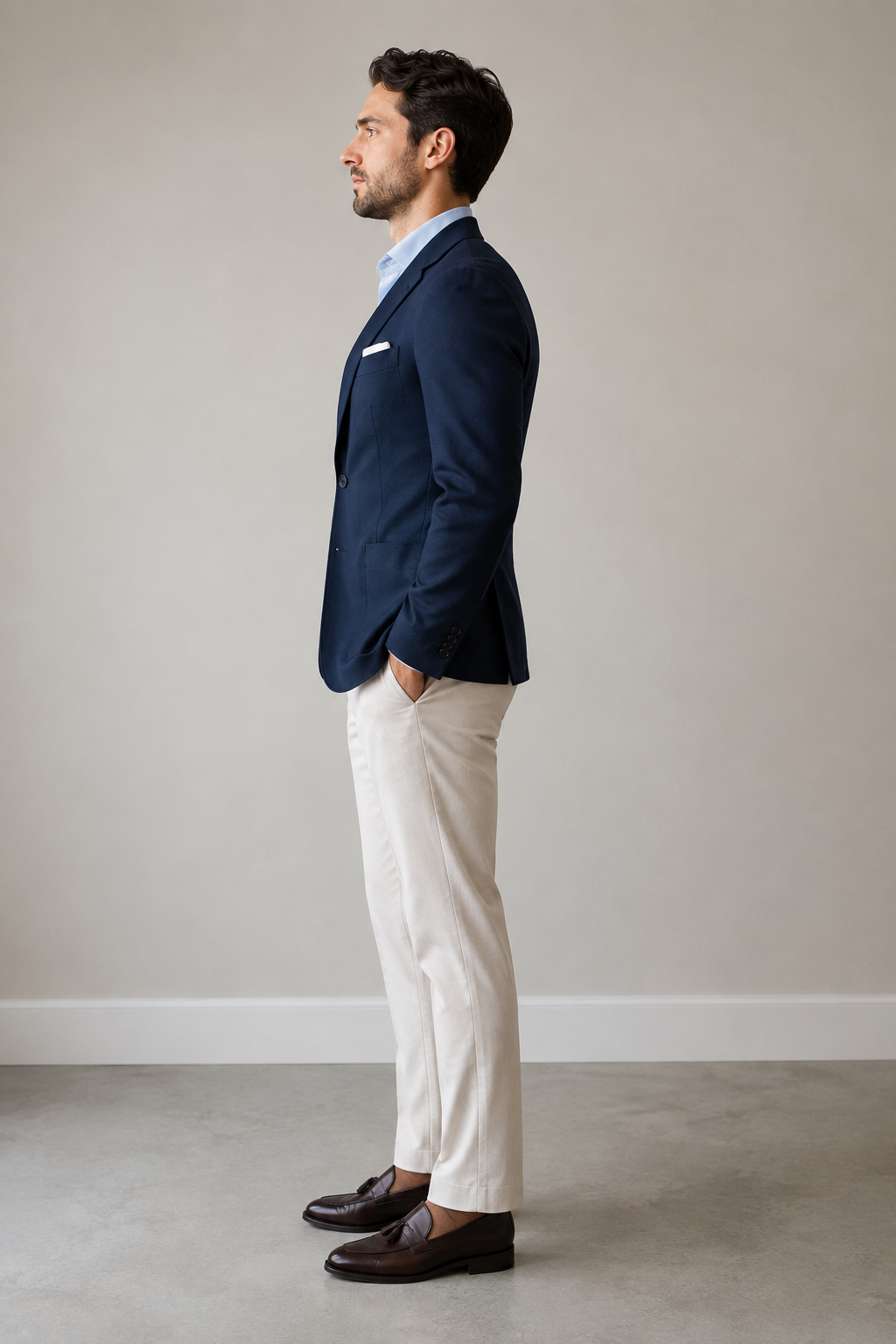
Why Your Clothes Fit But Don't Look Right
Disclosure: this post contains affiliate links. If you buy something through one, I may earn a small commission at no extra cost to you.
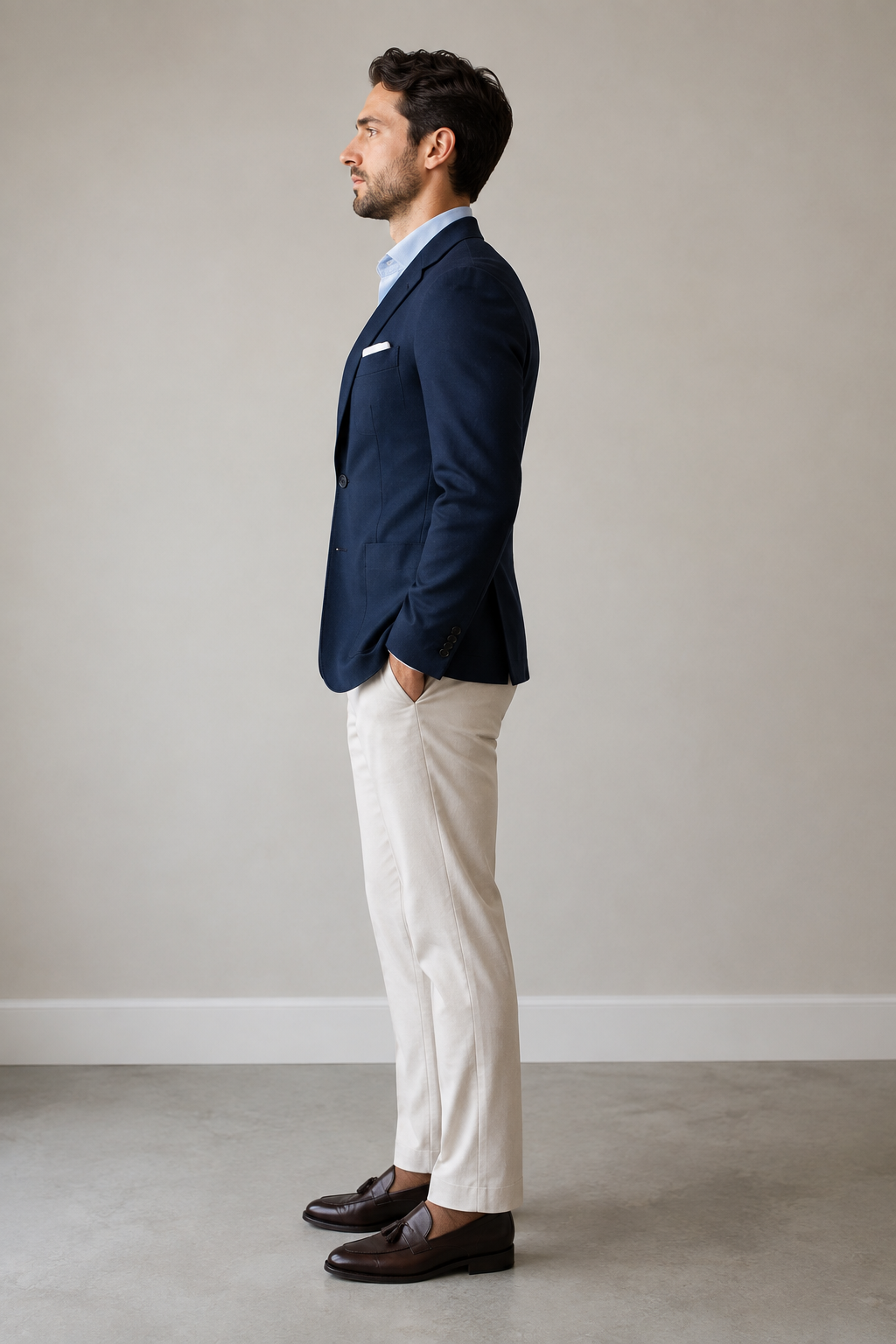
I owned a navy blazer for three years that I wore twice.
It was the right size. It buttoned, the sleeves ended near my wrists, nothing pulled anywhere. Every time I put it on I looked slightly like I was wearing someone else's jacket to a job interview, and I could never explain why, so I'd take it off and wear something worse.
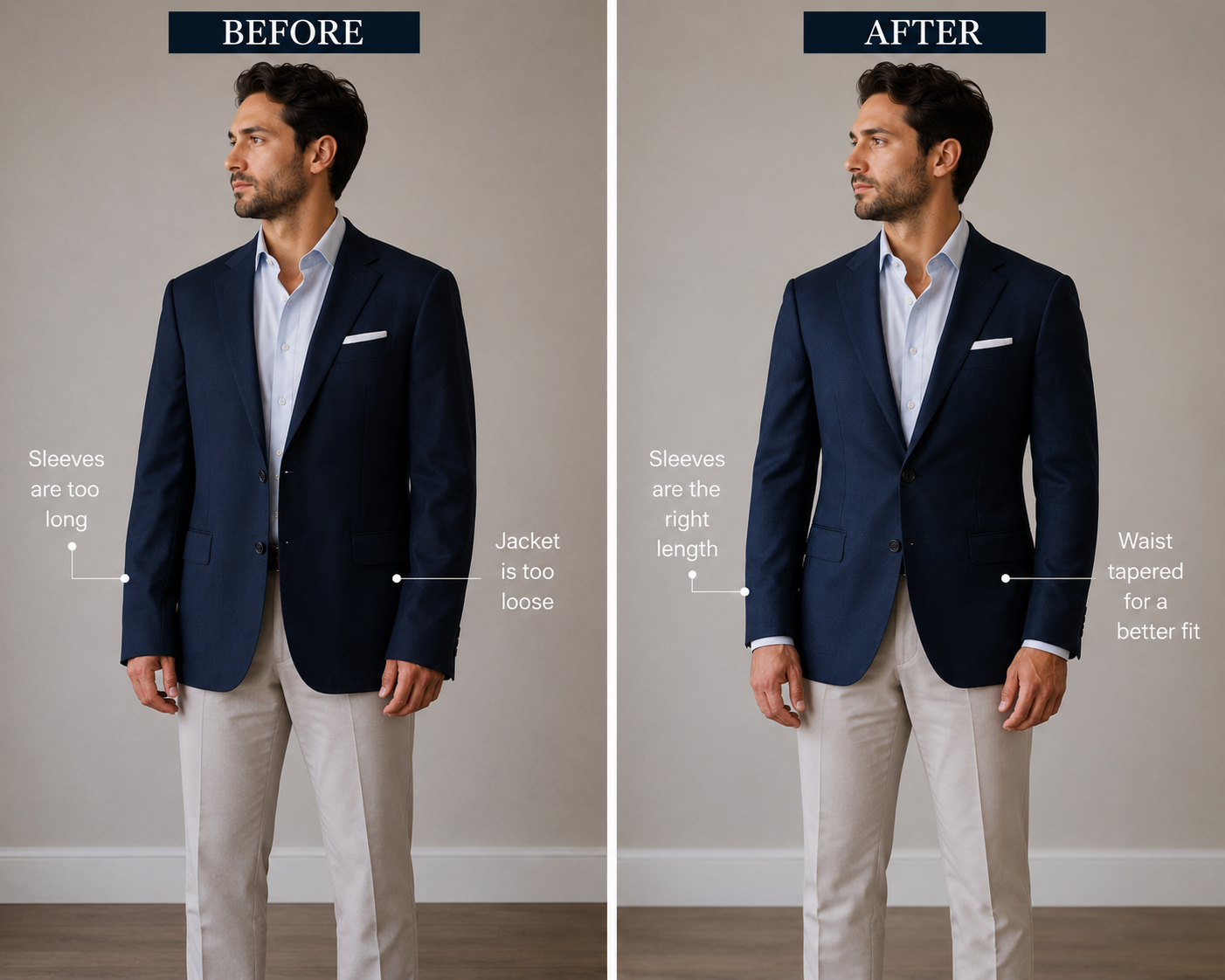
Eventually I brought it to a tailor, mostly to justify having bought it. He looked at it for about eight seconds and said the shoulders were half an inch too wide and the sleeves were an inch and a half too long. Both fixable. The whole thing came to somewhere around $60.
I wore it constantly after that. Same jacket. Same size on the label.
That's the gap this post is about the space between fits and looks right. They're different things, and almost nothing in a store will tell you the difference.
The general principle
Clothes look expensive when the seams line up with your actual body, and cheap when they don't. That's most of it.
Your eye is extremely good at reading these lines even when your conscious brain isn't. When a shoulder seam sits an inch past your shoulder, you don't think "that seam is misplaced" you think the outfit looks sloppy, or that you look tired, or that the color is wrong. You blame the wrong thing and buy something else.
This is exactly the same problem I write about with rooms. A space feels off and people blame the furniture, when the real issue is that nothing in the room is anchored to anything → Living Room Focal Point: Why Your Room Feels Unfinished. Same failure of diagnosis, different subject.
So here are the six lines that decide it.
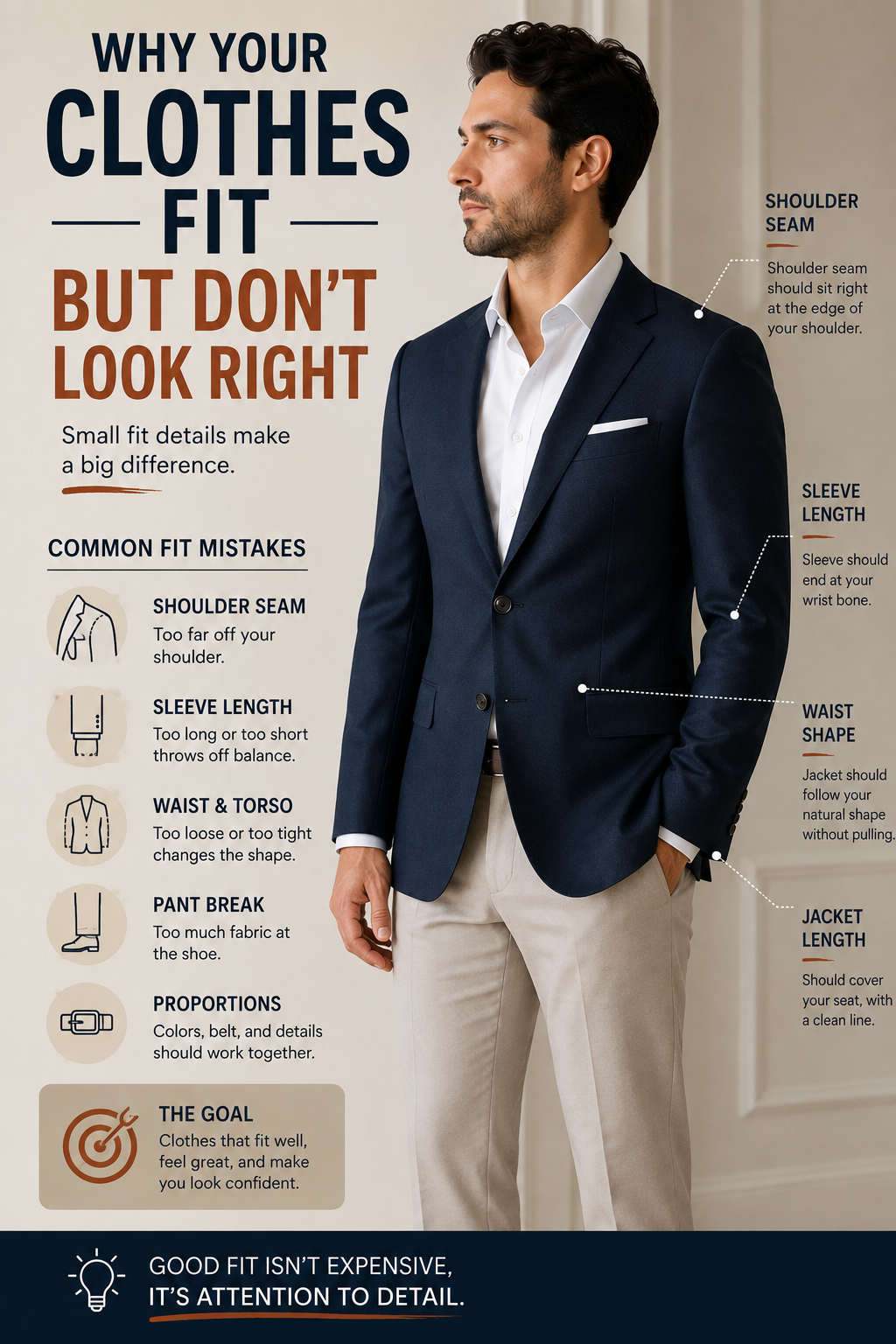
1. The shoulder seam
The single most important fit point on anything with sleeves, and the one thing a tailor genuinely struggles to fix cheaply.
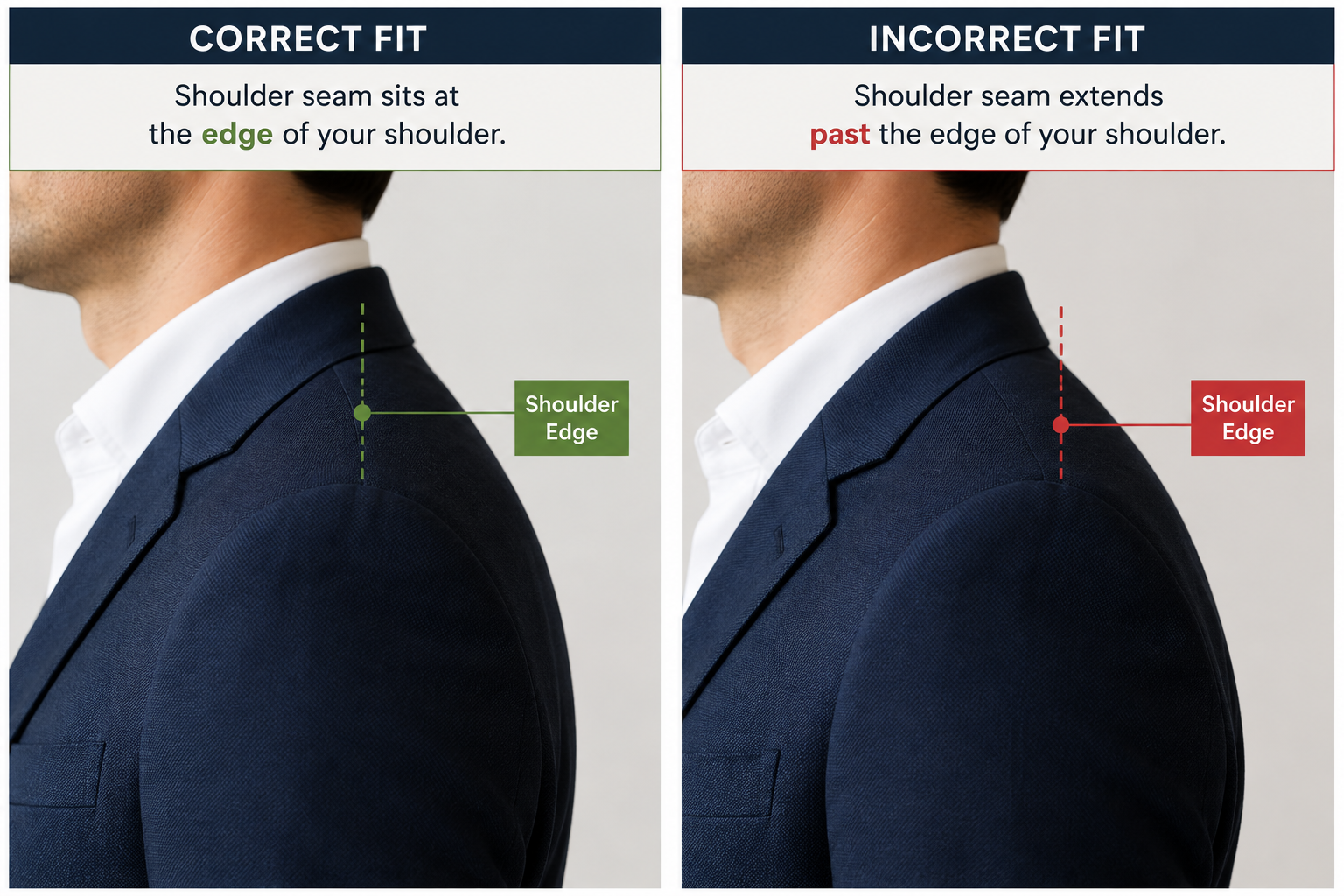
The seam where the sleeve joins the body should sit at the edge of your shoulder right where the flat top of your shoulder starts to curve down into your arm. Put two fingers on that bony point. That's where the seam goes.
Too wide and the sleeve head collapses into a soft dent just below the seam. This is the thing that made my blazer look borrowed. It reads as "not mine" instantly.
Too narrow and you get diagonal pull lines across the upper back, and you can't raise your arms properly.
Buy for shoulders first. Everything else on a jacket or structured shirt can be altered. Shoulders can technically be reset, but it's expensive enough that it's usually not worth it.
2. Sleeve length
Sleeves should end at the wrist bone the knob on the outside of your wrist. On a jacket, about half an inch shorter, so a bit of shirt cuff shows.
Everyone's arms are a different length from everyone else's, and sleeve length on mass-produced clothing is set to an average that almost nobody actually is. Long sleeves are the most common single fit problem I see, and they're cheap to fix. Usually $15–25.
Why it matters so much: a sleeve that covers part of your hand makes your hands look smaller and the whole garment look oversized, even when nothing else is wrong. It's the fastest way for good clothes to look like hand-me-downs.
3. Where the hem lands
This applies to almost everything, and it's the one people fix last because it feels fussy.
Untucked shirts: should cover your waistband and stop somewhere around mid-fly. Longer and it looks like a tunic; shorter and it rides up when you move.
Jackets and blazers: roughly cover your seat, ending around where your thumb knuckle sits when your arms hang.
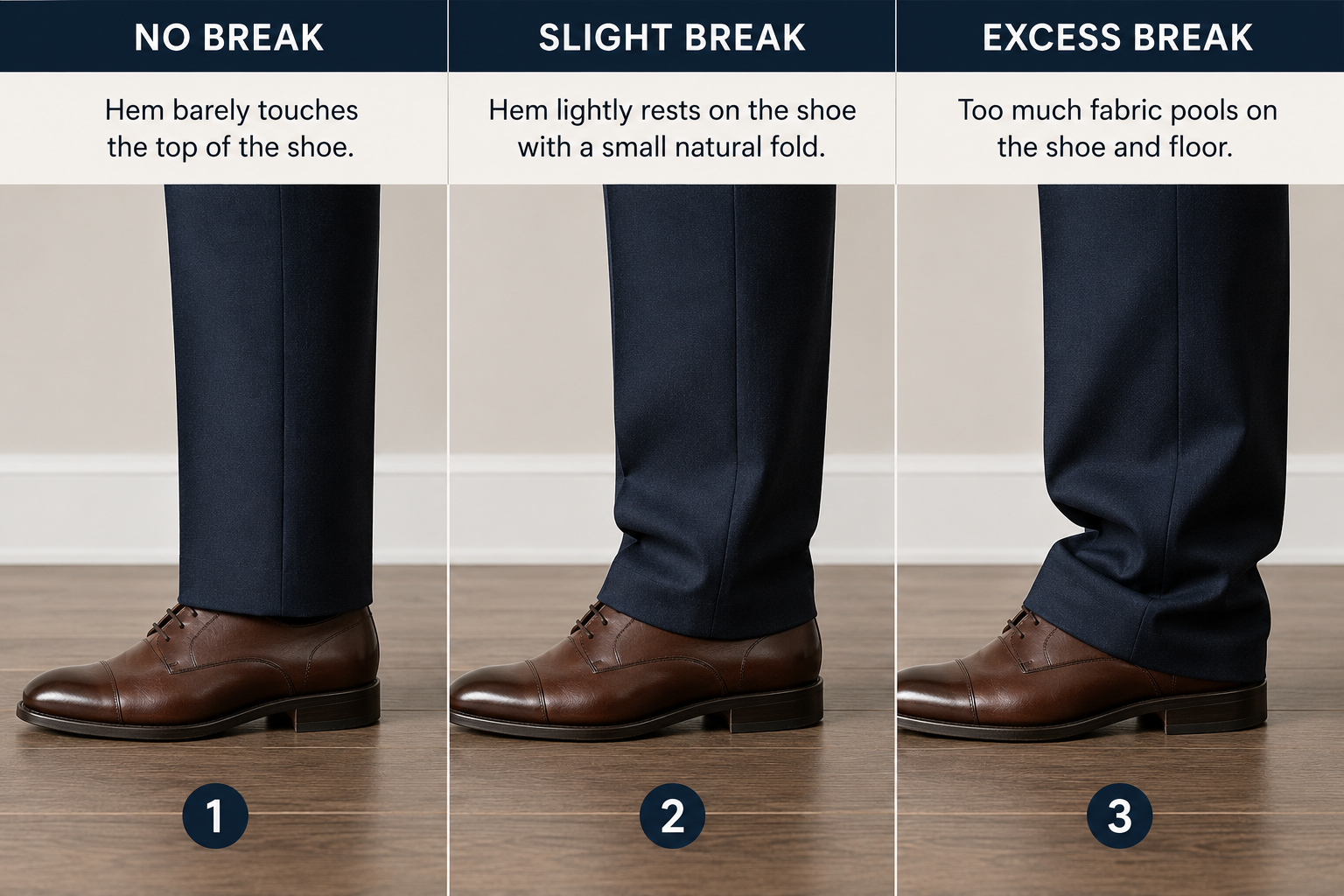
Pants: this is the one that changed most in the last decade, and it's genuinely a matter of preference now. A slight break (the fabric touching the shoe and folding once) is classic. No break is cleaner and more modern. A full puddle of fabric at your ankle isn't a style choice unless it's clearly deliberate across the whole outfit.
I cuffed my pants for two years rather than spend the $20 to hem them. The cuffs looked like what they were, which was a workaround.
4. The armhole (the one nobody mentions)
The armhole on cheap clothing sits low down toward your ribs. It's cut that way because a low armhole fits a wider range of body types, which means fewer size complaints and fewer returns.
It also means that when you lift your arm, the entire garment lifts with it. Your shirt hem rides up, your jacket shifts, and the whole outfit resettles every time you move.
Higher armholes sitting closer to your armpit look and move better. The garment stays where you put it. This is one of the more reliable differences between expensive and inexpensive clothing, and it's something you can check in a fitting room in three seconds: put the thing on and raise both arms. Watch what the hem does.
Nothing to be done about this by a tailor. It's a buying decision.
5. Rise, on pants
Rise is the distance from the crotch seam to the waistband, and it determines where the pants sit on your body.
Get this wrong and nothing else about the pants can be right. Too low and the waistband sits below your natural waist and you're pulling them up all day. Too high and the crotch sits below where your body actually is, which creates that horizontal sag between the thighs that no amount of tailoring fixes.
How to check: the crotch seam should sit close to your body without pressing. If there's a visible gap or a fold of fabric hanging below it, the rise is wrong for you.
Rise varies wildly between brands, more than any other measurement. This is the main reason you can be three different sizes in three different stores and none of them are lying.
6. Repetition — the same rule as everything else
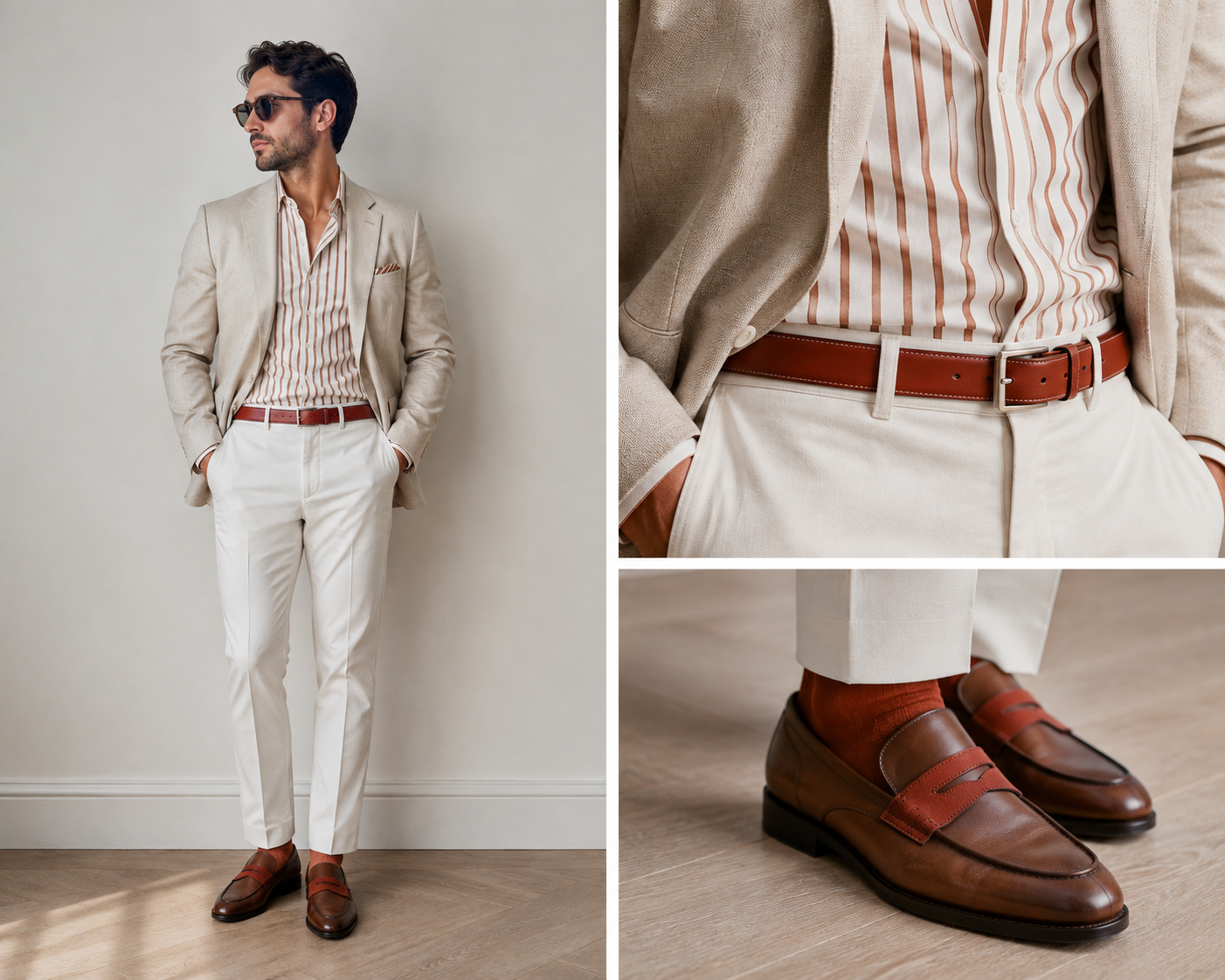
Once fit is right, the thing that pulls an outfit together isn't matching. It's repetition.
One color appearing two or three times a belt, a stripe in the shirt, the sole of a shoe. One texture echoed. Metals consistent, if you wear any.
I've written this exact paragraph about furniture: rooms don't need matching pieces, they need repeated ones → Does Furniture Have to Match?. It's the same principle and it works for the same reason the eye is looking for evidence that decisions were made on purpose.
Matching head to toe reads as a uniform. Nothing repeating reads as an accident. Two or three echoes reads as intentional.
What's actually worth tailoring
Most people never take anything to a tailor, and it's the single largest gap between a wardrobe that looks good and one that doesn't. Rough US prices, which vary a lot by city:
| Alteration | Typical cost | Worth it? |
|---|---|---|
| Shortening sleeves | $15–25 | Almost always |
| Hemming pants | $15–20 | Almost always |
| Taking in a shirt or jacket at the waist | $25–40 | Usually |
| Moving buttons | $10–18 | Yes, and nobody thinks to |
| Narrowing pant legs | $25–35 | If the shape is otherwise right |
| Resetting shoulders | $75+ | Rarely worth it |
The math is straightforward. A $60 alteration on a $150 jacket you'll wear for five years is obviously worth it. The same $60 on a $40 jacket is not.
Where this fits with budget: it's the same logic as spending on what you touch every day → 10 Common Home Decor Problems. Buy fewer things, then spend a little more making them fit. Three jackets that fit beats seven that don't, and it costs less.
The fitting room checklist
Four things, thirty seconds:
- Find the shoulder seam. Is it at the edge of your shoulder? If not, put it back.
- Raise both arms. Does the hem climb? Low armhole.
- Check the sleeve at the wrist bone. Long is fixable, short is not.
- Sit down. A surprising number of things fit standing up and not sitting.
If it passes all four, the size is right. Anything else length, waist, taper is a $20 problem, not a reason to leave it.
The short version
Size and fit aren't the same thing, and the label is only telling you about size.
Buy for shoulders, because that's the one that can't be fixed. Ignore the number on the tag, because it means something different in every store. Then spend a little on making things sit where your body actually is.
The blazer I almost gave away is still the best thing I own. It didn't need to be a different jacket. It needed to be an inch and a half shorter in the sleeve.
Affiliate Disclosure
Some links in this post are affiliate links. If you buy something through one, GlamNestStudio may earn a small commission it doesn't cost you anything extra. I only link to things I'd recommend to a friend, and I've used or genuinely researched everything mentioned here. It's what keeps the guides on this site free.
Before you go
More on building a wardrobe that actually gets worn and the same thinking applied to rooms across the guides on GlamNestStudio.