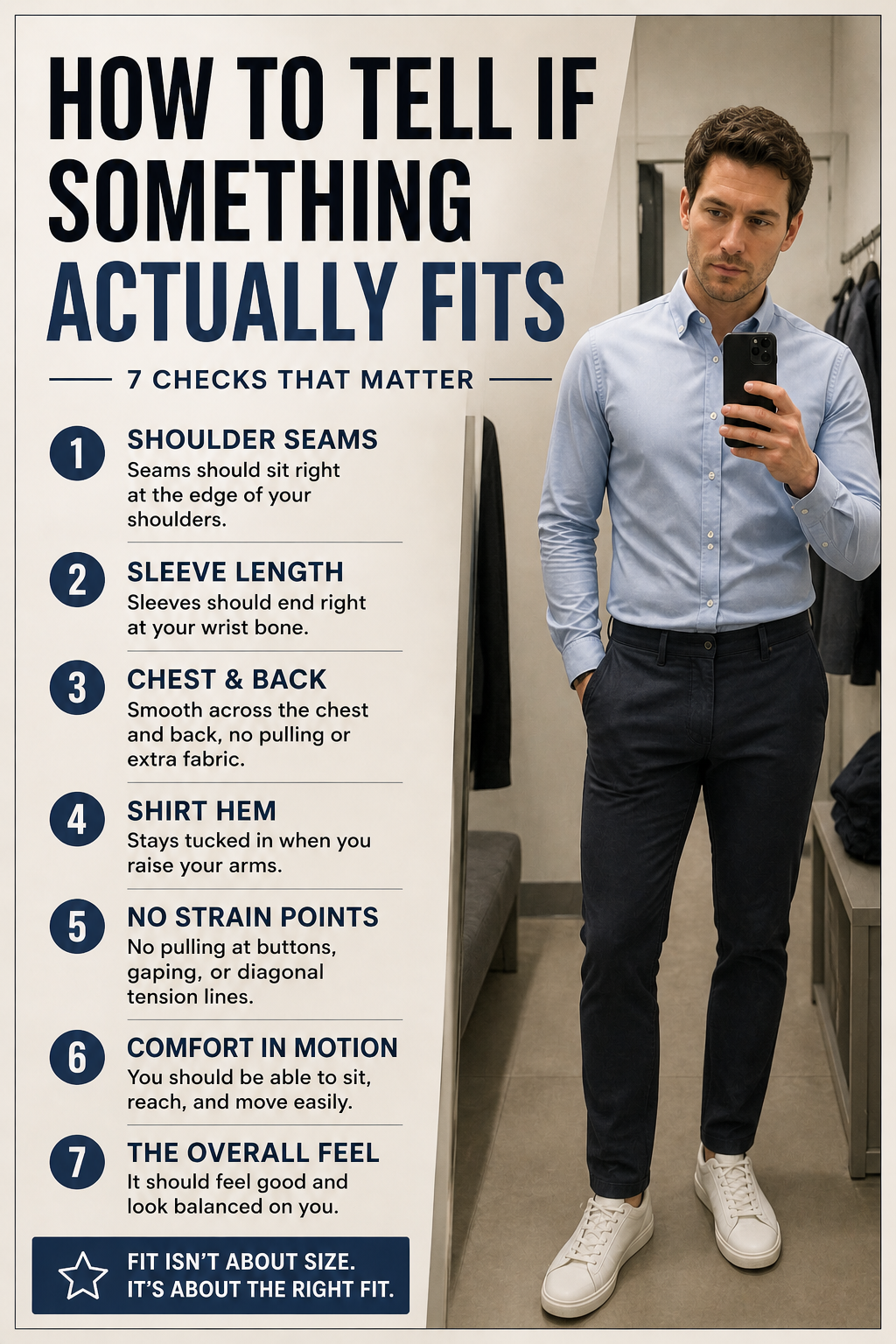
How to Tell If Something Actually Fits in the Store
Disclosure: this post contains affiliate links. If you buy something through one, I may earn a small commission at no extra cost to you.
I once tried on three pairs of pants in one afternoon, in three stores, and was a size 30, a 32 and a 33. Same body, same hour, same person.
None of the stores were wrong, exactly. Sizing isn't a standard it's a marketing decision each brand makes independently, and it drifts year to year. Which means the number on the tag tells you almost nothing, and the only useful information comes from the ten minutes you spend in the fitting room.
Most people spend about ninety seconds in there. That's roughly what I gave the sofa I ended up regretting, and clothes work the same way — the mistakes are all knowable in advance → The Sofa I Regret Buying if you know what to look for.
So here's the routine, in the order I'd run it.
Before you leave the house
Know three of your own measurements. Chest or bust, waist, and inseam. Take them once with a soft tape, write them in a note on your phone, and update once a year.
This sounds fussy and it saves an enormous amount of time, because most brands publish a size chart with actual inches on it. Matching your numbers to the chart beats guessing at a letter or a number every time and it makes online shopping possible rather than a lottery.
Wear the right layers. If you're shopping for a jacket, wear the kind of shirt you'd wear under it. If you're shopping for pants, wear shoes with the heel height you'd normally pair them with. Trying a jacket on over a bulky hoodie tells you nothing.
Go later in the day if you can. Most people's bodies are slightly larger in the afternoon than first thing in the morning this is normal and it affects waistbands. Buying at 9am for a body you have at 6pm is how you end up with pants you unbutton at dinner.
The order to check things
Run these in sequence. The first two are the deal-breakers, so do them first and save yourself the rest.
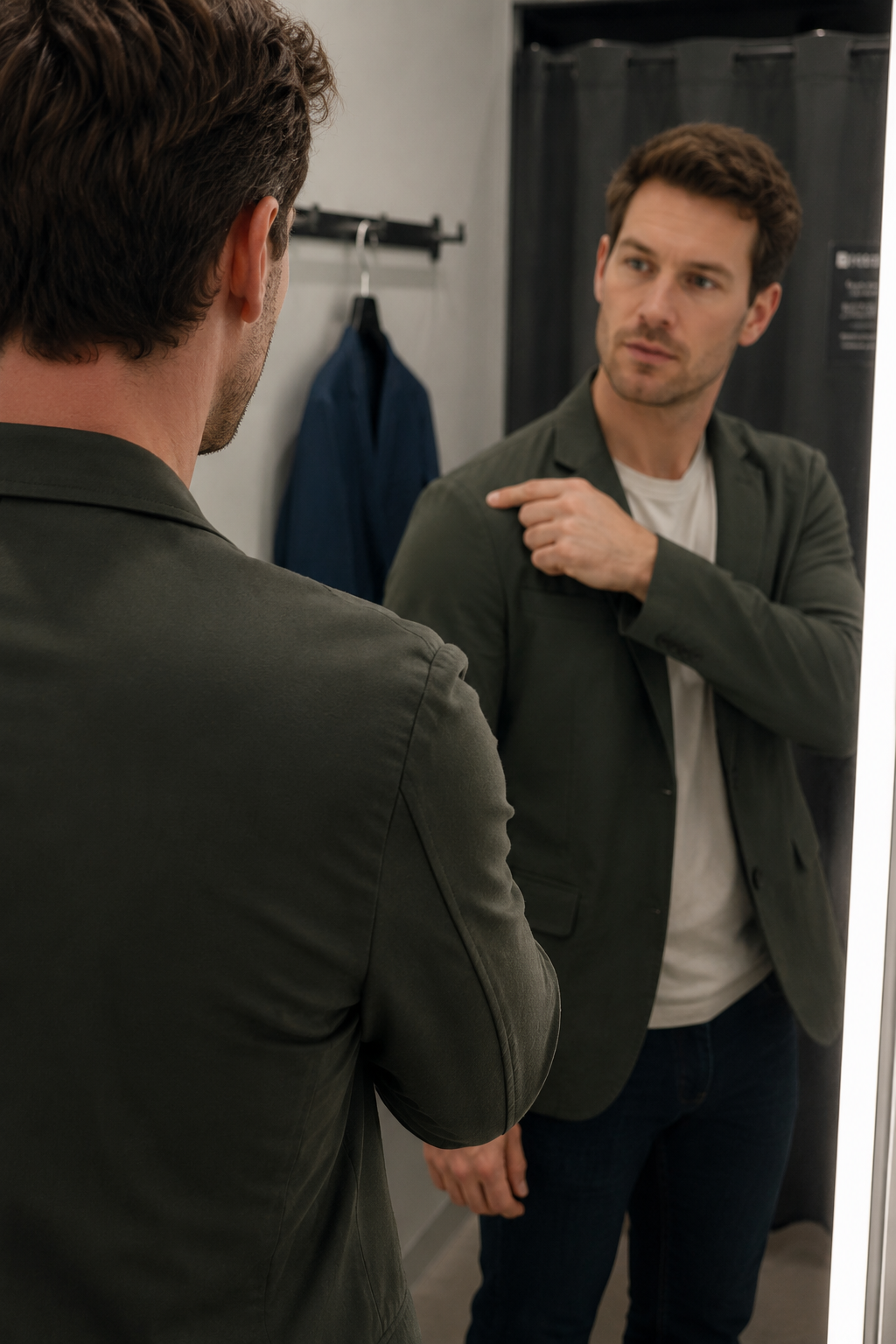
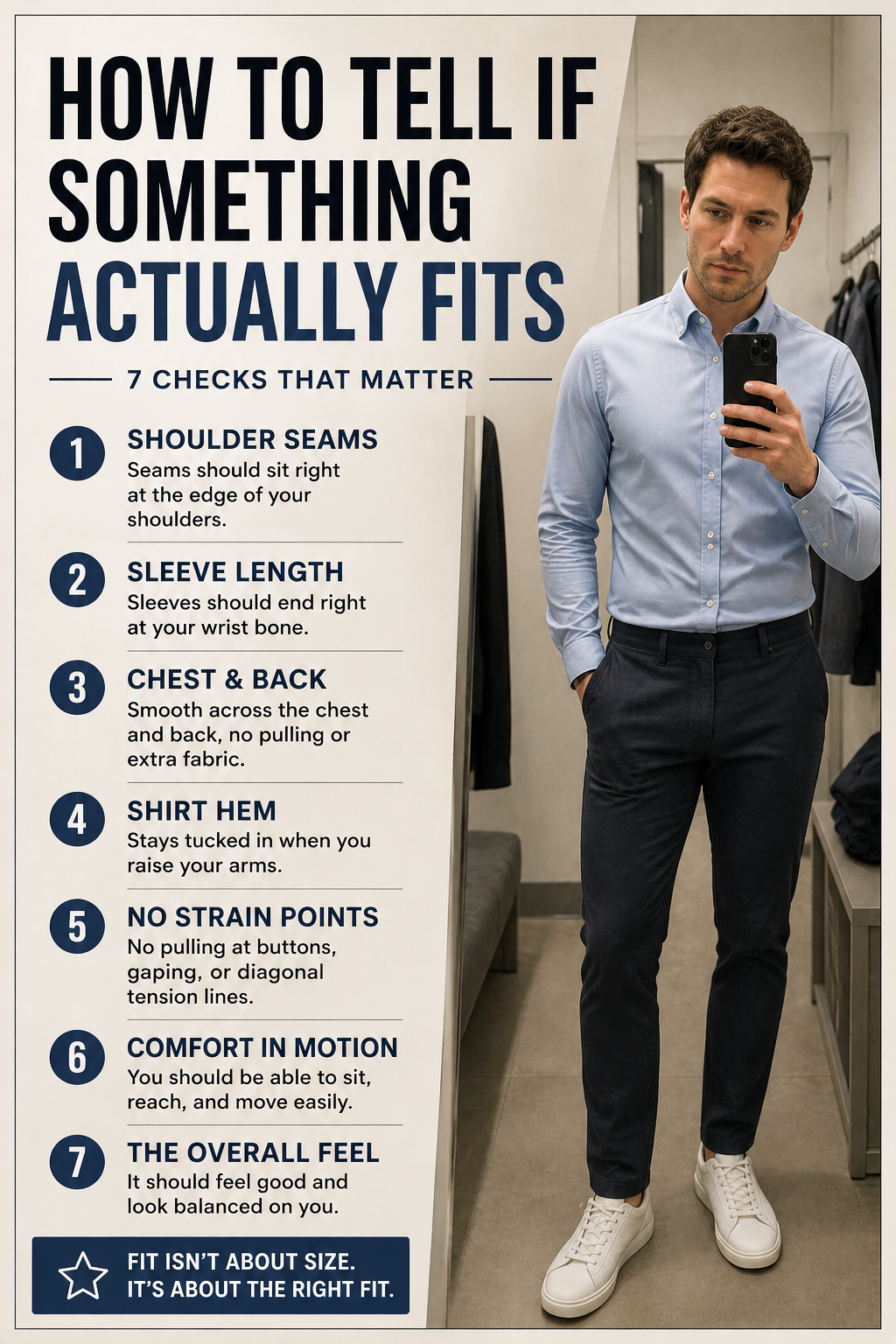
1. Shoulder seam (anything with sleeves)
The seam where the sleeve joins the body should sit at the edge of your shoulder, right where the flat top starts curving into your arm.
If it's past that point, put it back. Shoulders are the one thing a tailor can't fix cheaply resetting them costs more than most garments are worth. Everything else on this list is a $20 problem.
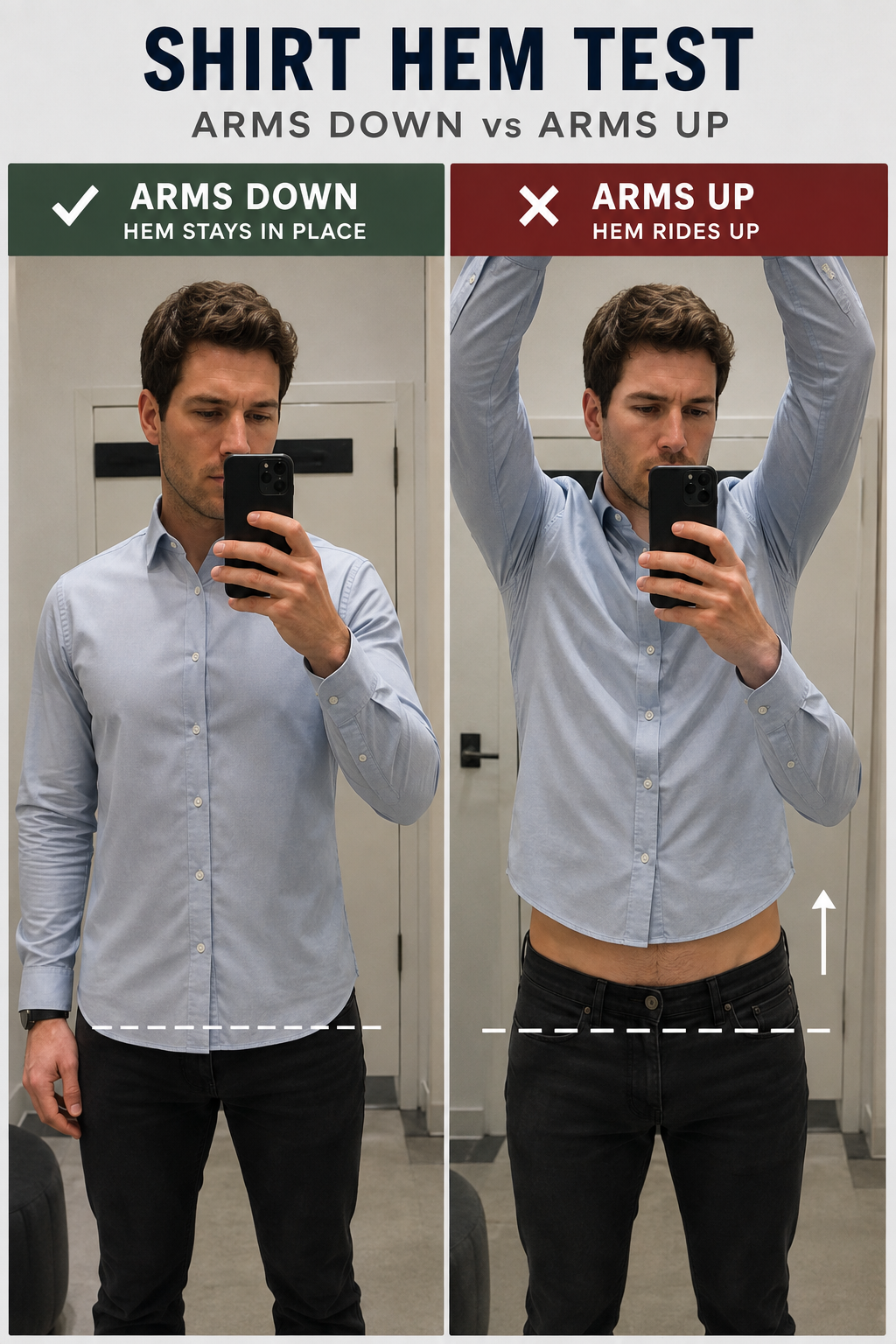
2. Raise both arms
Watch what the hem does in the mirror.
If the whole garment climbs and then doesn't settle back down, the armhole is cut low. That means the thing will shift every time you move all day. It's a construction choice, not a sizing issue, and going up or down a size won't fix it.
3. Sit down
A surprising number of things fit standing and not sitting. Waistbands dig in, jacket buttons pull, pants ride up at the calf.
Sit properly on the fitting room bench, not perched. If there's no bench, do a slow squat. You'll feel it.
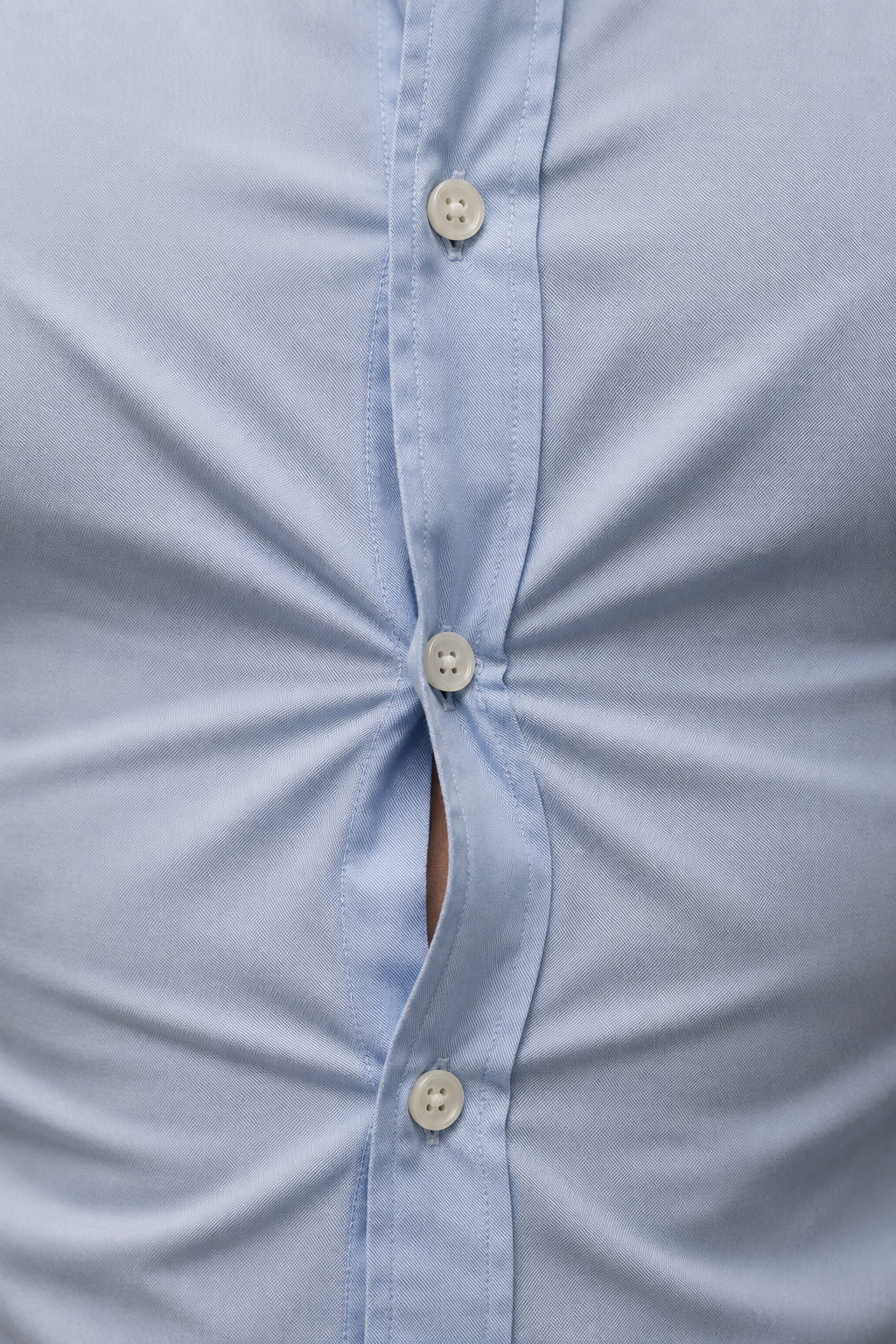
4. The button and seam check
Look for X-shaped pull lines. Anywhere fabric strains across a fastening chest button, waistband, hip you'll see diagonal creases forming an X. That's the garment telling you it's too small at that point, even if it closes.
Check the back too. Turn around and use the second mirror, or take a photo. Most fitting room decisions are made looking only at the front, and the back is where jackets and shirts most often go wrong.
5. Sleeve length and hem
Sleeves should reach your wrist bone. Long is a $15–25 alteration. Short is unfixable.
Hems and lengths are almost always adjustable, so don't reject something good over length. Do reject something that's too short you can take fabric off, you can't add it.
The tests nobody runs
The reach-forward. Cross your arms and reach forward like you're grabbing something off a shelf. Tight across the upper back is the most common unnoticed fit failure in jackets and shirts, and it makes things unwearable in practice.
The pinch test on fabric. Hold the fabric up to the light and pull it slightly. Thin, translucent, or overly stretchy fabric will lose its shape within a season regardless of how well it fits today.
The stretch-and-release. If it has elastane, pull a section gently and let go. Good fabric snaps back. Cheap blends stay slightly deformed, which is exactly what will happen to your knees and elbows by week three.
Check the seams inside. Turn it inside out. Loose threads, uneven stitching, or seams with very little allowance mean it won't survive many washes. Generous seam allowance is also what makes future alterations possible.
Vanity sizing, and why the tag is useless
Sizes have drifted larger over decades a garment labeled a given size today is measurably bigger than the same label was thirty years ago, and the drift is inconsistent between brands. There's no standards body enforcing anything.
What this means practically:
- Never shop by size alone. Take two or three sizes into the fitting room, always.
- Your size in one store predicts nothing about your size in another.
- The number is not information about your body. It's information about that brand's positioning.
I know people who won't buy something because of the number on the label, and it's the most expensive habit in this entire post it means walking away from things that fit for a piece of information that isn't real.
Online, where you can't try anything
Different problem, same solution.
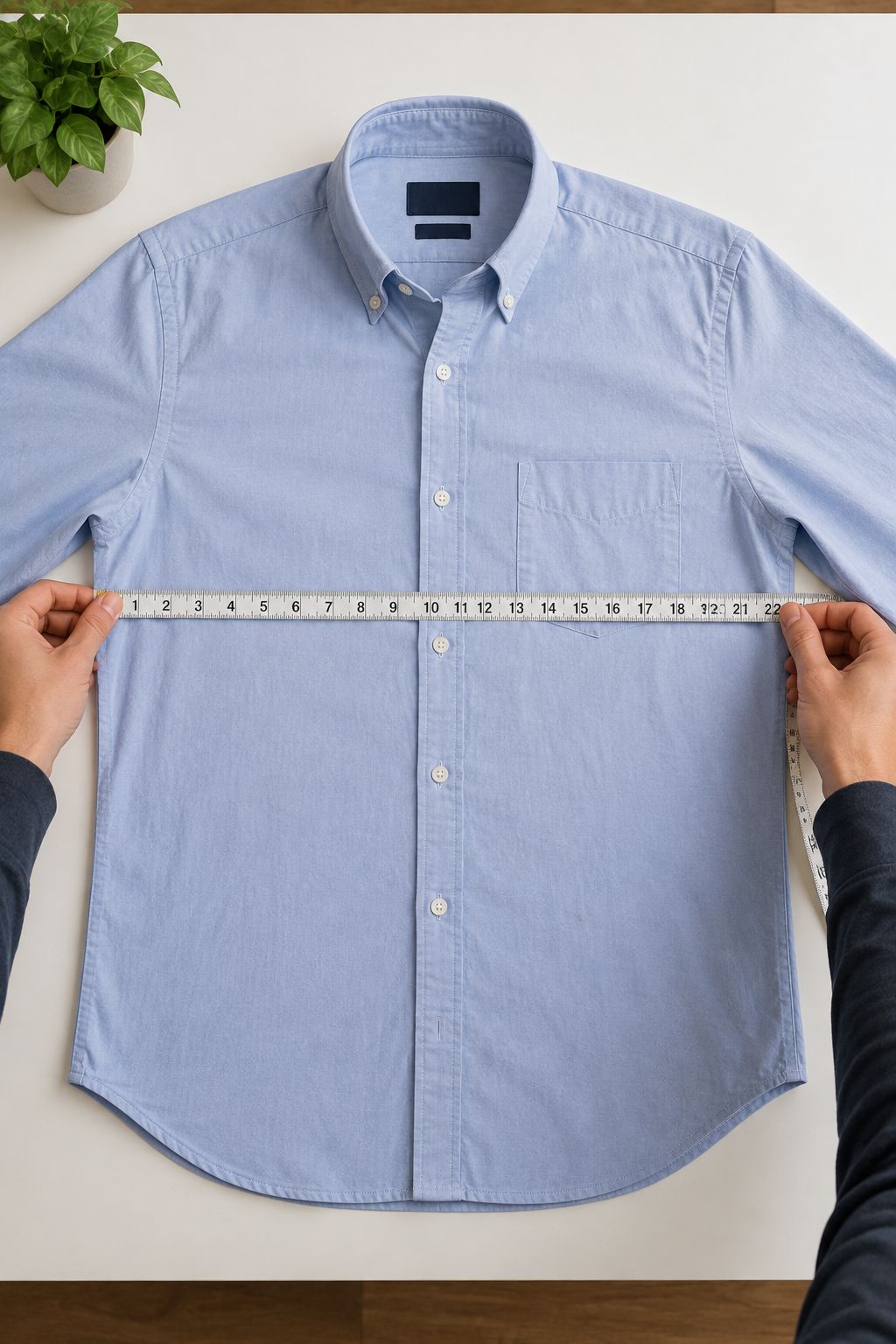
- Measure a garment you already own and love, flat on a table, and compare those numbers to the listing. Chest width, shoulder to shoulder, sleeve length, total length. This is far more reliable than any size chart.
- Read the model's height and size, usually in the product details. It's the only genuinely useful thing on most product pages.
- Check the return policy before the price. Free returns effectively turn your living room into a fitting room. Paid returns turn a $40 shirt into a $50 gamble.
- Order two sizes and return one. Annoying, wasteful, and by far the most reliable method. Some retailers now offer this formally.
A soft measuring tape costs about $5 and makes all of the above possible. It's the highest-return purchase in this post by a wide margin.
When to buy it anyway
Not everything has to pass every test.
Buy it if the shoulders are right, the armhole is high, and the only problems are length or waist. Those are cheap fixes, and a $20 alteration on something you'll wear for years is obviously worth it → Why Your Clothes Fit But Don't Look Right.
Don't buy it if the shoulders are wrong, the fabric is thin, or you're telling yourself you'll get used to it. You won't. That's the blazer that hangs unworn for three years.
And don't buy it because it's on sale. A discount on something that doesn't fit is not a discount. It's the same trap as buying furniture because it's marked down I've done both, and the sale price stops mattering approximately one week later.
The ten-minute version
- Shoulder seam at the shoulder edge
- Raise arms does the hem climb?
- Sit down
- Look for X-shaped pull lines, front and back
- Reach forward
- Check the fabric against the light
- Take a photo of the back
If it passes, buy it. If it fails on shoulders or armhole, it's not your size it's not your garment, and no size in that store will be.
Everything else is a trip to the tailor and about twenty dollars.
Affiliate Disclosure
Some links in this post are affiliate links. If you buy something through one, GlamNestStudio may earn a small commission it doesn't cost you anything extra. I only link to things I'd recommend to a friend, and I've used or genuinely researched everything mentioned here. It's what keeps the guides on this site free.
Before you go
More on buying fewer things that actually work for your closet and your rooms across the guides on GlamNestStudio.