The Sofa I Regret Buying (and the Four Questions I Should Have Asked)
Disclosure: this post contains affiliate links. If you buy something through one, I may earn a small commission at no extra cost to you.
I've already written about why buying it as part of a matching set was a mistake → Does Furniture Have to Match?. This is about the sofa itself, which was a separate and more expensive error.
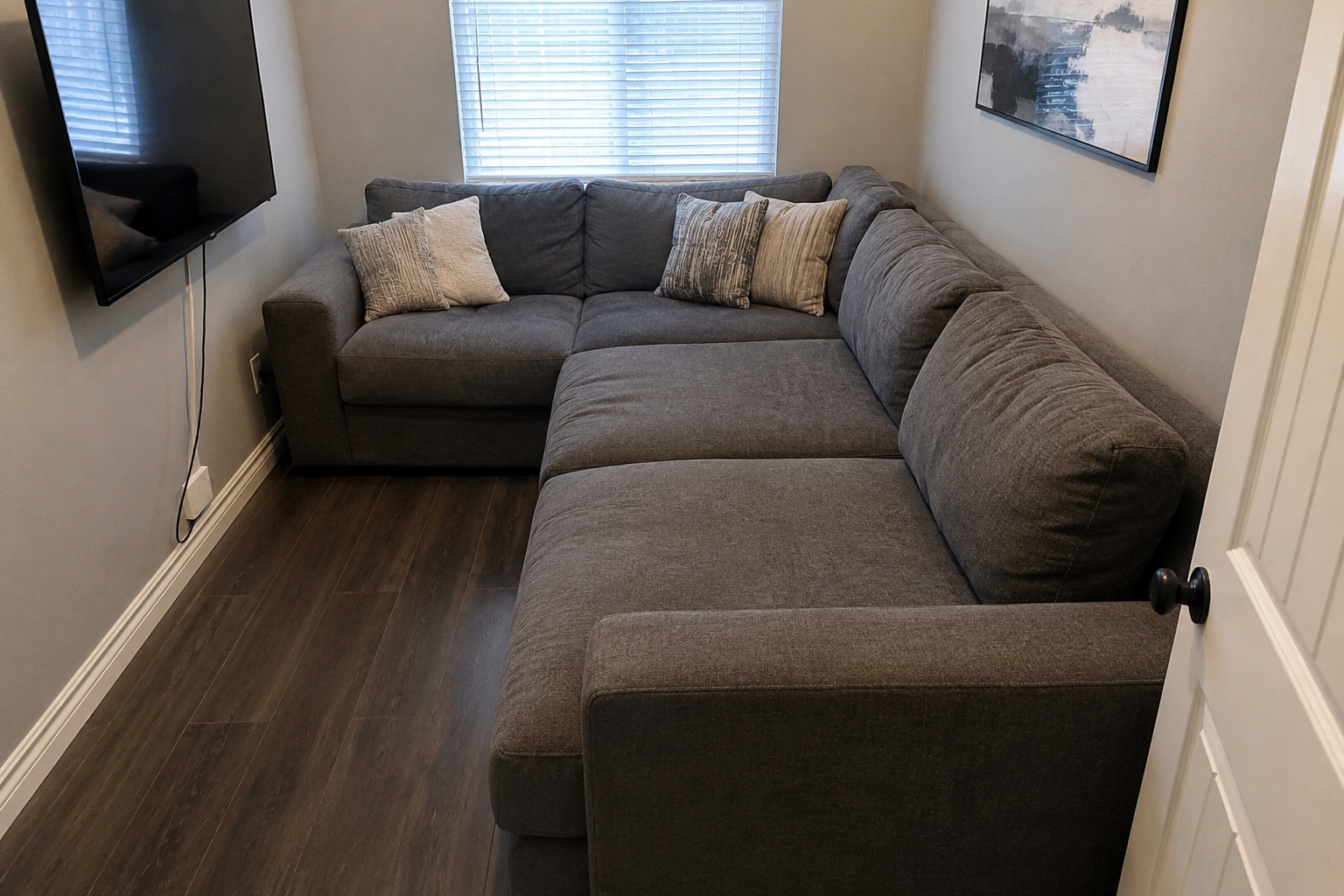
It was gray, it was on sale, and I sat on it in the showroom for about ninety seconds before deciding. Three years later I gave it away to someone with a bigger living room and a higher tolerance for discomfort.
What still bugs me is that nothing about it was defective. It was well made. It just didn't fit my room or my body, and every single thing wrong with it was knowable in advance if I'd asked four questions.
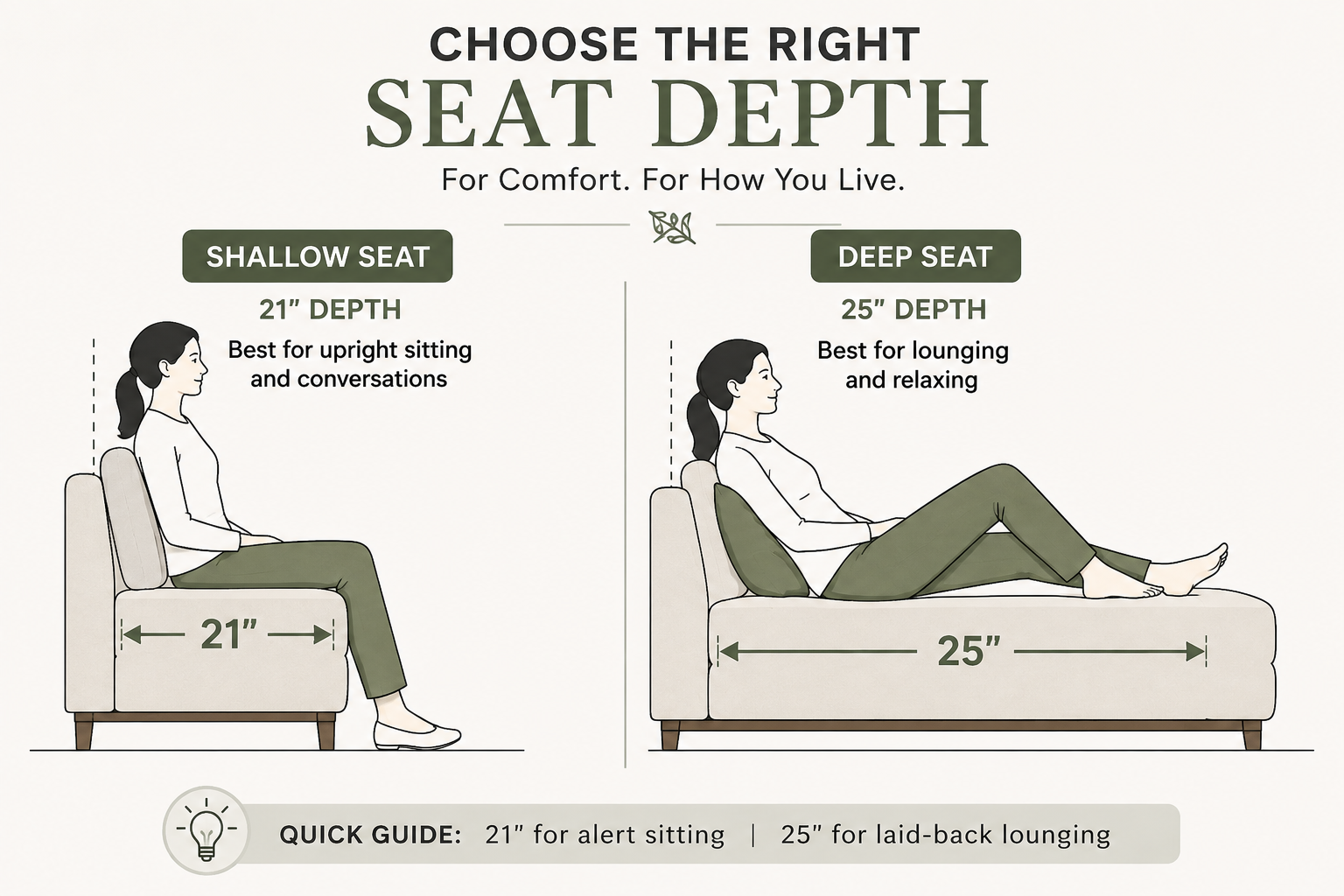
1. How deep is the seat, and how do you actually sit?
This is the one that ruined it, and it's the one nobody mentions.
Seat depth front edge to back cushion was about 24 inches on mine. That's a lounging sofa. You're meant to half-recline into it with your legs up.
I don't sit like that. I sit upright, usually with a laptop, sometimes eating. On a 24-inch seat, sitting upright means either perching on the front edge with no back support, or shoving throw pillows behind you permanently, which is what I did for three years. I bought a lounging sofa and used it as an upright one.
What to check: shallower seats (20–22 inches) suit upright sitting and small rooms. Deeper seats (24 inches and up) suit lounging and need the space to earn it. Neither is better. They're just different, and the store isn't going to ask which one you are.
How to test it: sit for at least five minutes, in the position you actually sit in at home. Take your shoes off. If you'd normally have a laptop, put your bag on your knees. Ninety seconds of polite perching tells you nothing.
2. What's underneath it?
Mine sat flat on the floor. A solid upholstered base all the way down, no gap.
Two consequences, one visual and one practical.
Visually, a sofa with no floor showing underneath reads as a wall. Enormous visual weight fine in a large room, suffocating in a small one. Legs let you see the floor continue underneath, and your brain reads that as space. It's the thing I go on about in making small rooms feel less cramped → 10 Common Home Decor Problems.
Practically: you can't clean under it. Nothing gets a vacuum head anywhere near it. Everything that goes under a solid-base sofa lives there permanently. I found a surprising amount of stuff when it left.
What to check: exposed legs with at least 4–6 inches of clearance. Enough for a vacuum head to pass under.
3. Will it physically get into the room?
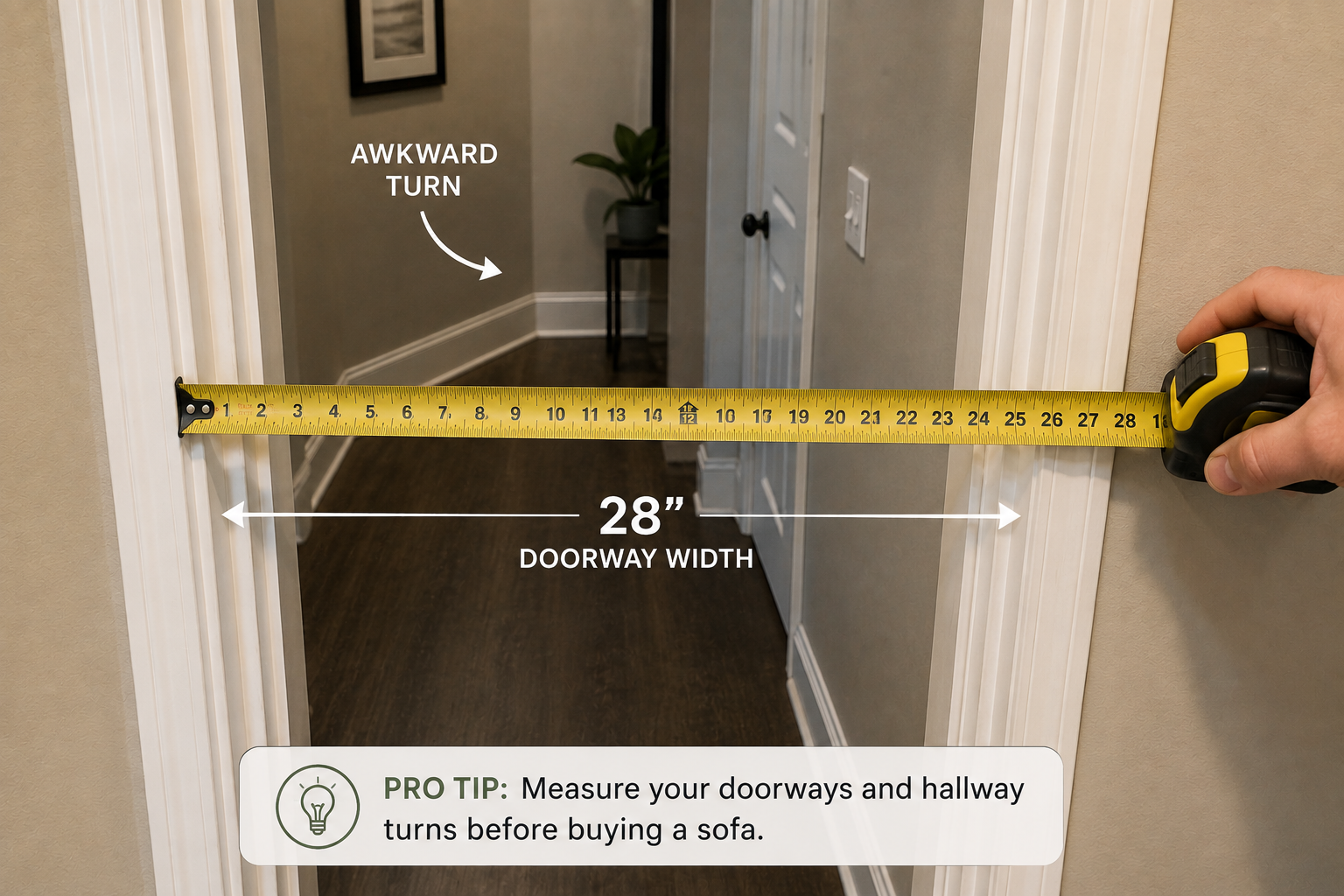
Everybody says measure the room. Almost nobody says measure the route.
My delivery involved two guys, a narrow stairwell with a turn in it, a 30-inch doorway, and eventually a screwdriver, because the front door had to come off its hinges. They got it in. They were not happy about it, and I spent that entire twenty minutes convinced I'd have to send it back.
What to measure, in this order:
- The narrowest doorway on the route width and height
- Any turn in a hallway or stairwell. This is what actually defeats deliveries, not straight runs.
- Ceiling height at the tightest point of a stairwell
- Whether the back can be unbolted (a lot of sofas can; ask before you order)
Compare against the sofa's diagonal depth, not its width. A sofa goes through a door on its side, at an angle. Good retailers list this number. If they don't, ask and if nobody can tell you, that's worth knowing too.
The painter's tape trick applies here too. Outline the sofa's footprint on the floor before you order, then walk your normal routes around it. Same principle as rugs, where it saves the most money Rug Sizing: The One Guide You Actually Need.
4. What's the fabric actually going to do?
Mine was a mid-gray woven polyester blend. It showed everything dust, one visiting cat's worth of hair, and a water ring from a glass that I'd assumed would dry invisibly. It did not.
What to ask:
- Double rub count. Around 15,000 is fine for normal household use; 30,000 and up if you have pets, kids, or you use your sofa rather than admire it.
- Are the covers removable and washable? Enormously more forgiving over five years. Worth paying for.
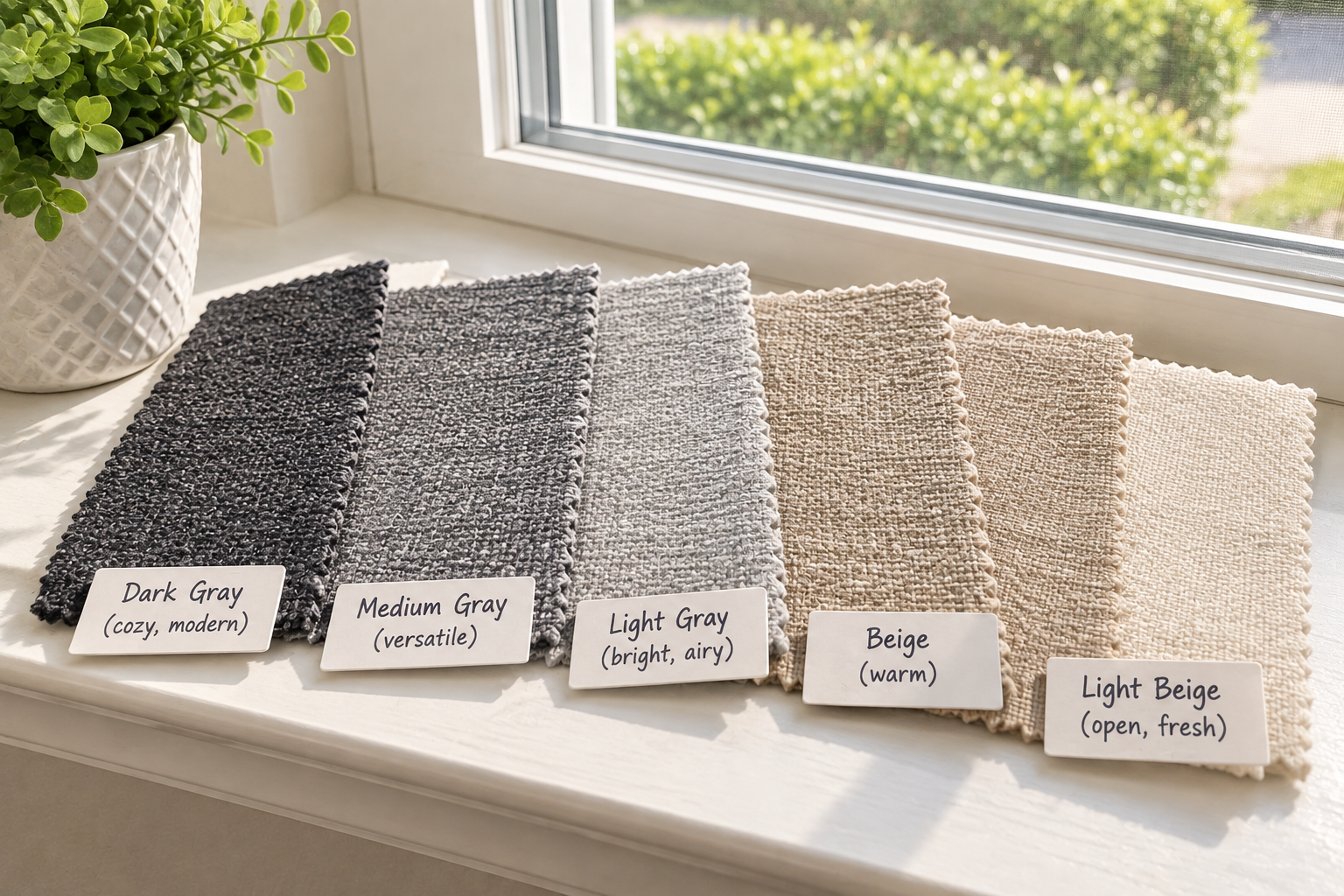
- Is it a flat, plain weave? Smooth mid-tone fabrics show the most. Textured weaves and subtle patterns hide a lot.
- Order swatches. Free from most retailers. Live with them in your own light for a week gray especially changes character completely between showroom lighting and a north-facing room.
If you're already stuck with a fabric that shows everything, a large washable throw over the seat isn't a design solution but it is an effective one. I used one for the last of those three years.
What I'd do now
Sit on it for five minutes in my real posture. Look underneath it. Measure the doorways and the turn on the stairs. Order swatches and wait a week.
That's maybe two hours spread over two weeks, against something you'll keep for a decade and sit on every night. I skipped all of it because the sofa was on sale and I was tired of the apartment looking unfinished which, as it turned out, wasn't a furniture problem to begin with → Living Room Focal Point: Why Your Room Feels Unfinished.
The sofa I have now cost a little less, has a 20-inch seat, stands on legs, and came apart at the back for delivery. Four years in, I've never once thought about it, which is exactly what you want from a sofa.

Affiliate Disclosure
Some links in this post are affiliate links. If you buy something through one, GlamNestStudio may earn a small commission — it doesn't cost you anything extra. I only link to things I'd recommend to a friend, and I've used or genuinely researched everything mentioned here. It's what keeps the guides on this site free.
Before you go
Furniture shopping and want to skip the rest of my mistakes? There are more of them documented across the guides on GlamNestStudio than I'd ideally like to admit.