Understanding Focal Points: Why Your Living Room Feels Unfinished
Disclosure: this post contains affiliate links. If you buy something through one, I may earn a small commission at no extra cost to you.
There's a particular kind of room that has nothing wrong with it. The furniture is decent. It's clean, the colors work, the lighting is fine. And it still feels like it isn't done like the last box never got unpacked, even though it did.
I lived in that room for months before I figured out what was missing. My studio was 380 square feet of beige, and I kept trying to fix it by adding things, which is exactly the wrong response.
What was missing wasn't an object. It was somewhere for my eye to land.
What a focal point actually is
Strip away the design-magazine language and a focal point is just this: the thing your eye goes to first when you walk in, and keeps coming back to.
That's it. It isn't necessarily the biggest thing, or the most expensive, or the thing in the middle. It's the thing with the most visual weight through size, contrast, color, or the simple fact that everything else in the room points at it.
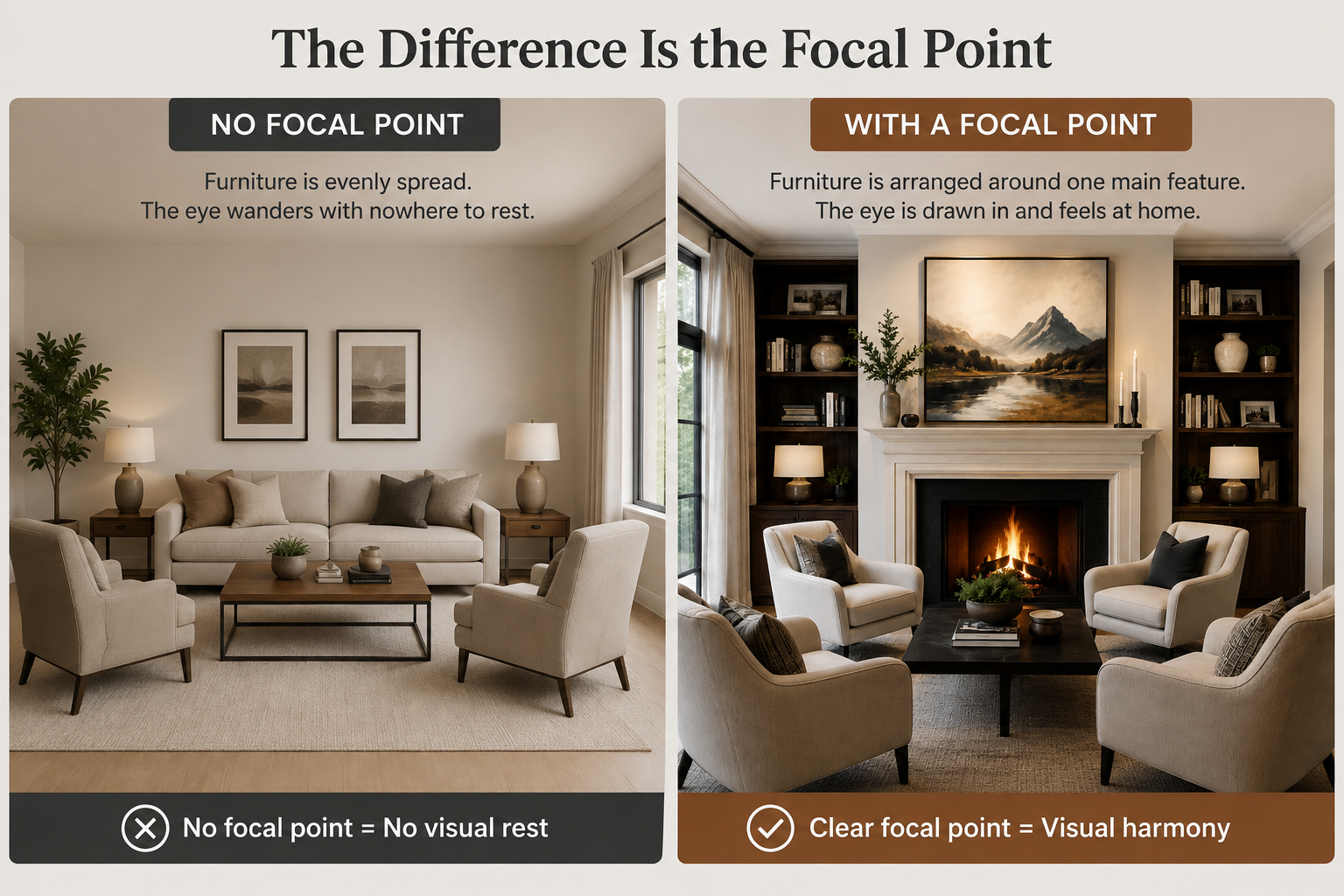
Rooms need one because attention needs somewhere to settle. Walk into a space where nothing dominates and your eye does a slow lap of the walls, finds nothing to hold onto, and reports back a vague sense of incompleteness. You'll usually blame the furniture. It's rarely the furniture.
My mistake: too many, not too few
Here's the version of this problem nobody warns you about.
In that studio, I eventually decided the room needed a focal point and having no sense of proportion whatsoever I created three. A TV on one wall. A very large framed print on another. A bookcase I'd painted a confident red.
The room got worse. Noticeably worse.
Three focal points is the same as none, because they cancel each other out. Your eye bounces between them and settles nowhere, and now the room is both unfinished and busy. In my experience this is the more common failure, especially for people who read a lot of decorating content you end up with a room full of statement pieces, all making different statements.
One primary focal point per room. Everything else supports it or stays quiet.
Start with what the room already has
Most rooms come with a candidate. You've probably stopped noticing it.
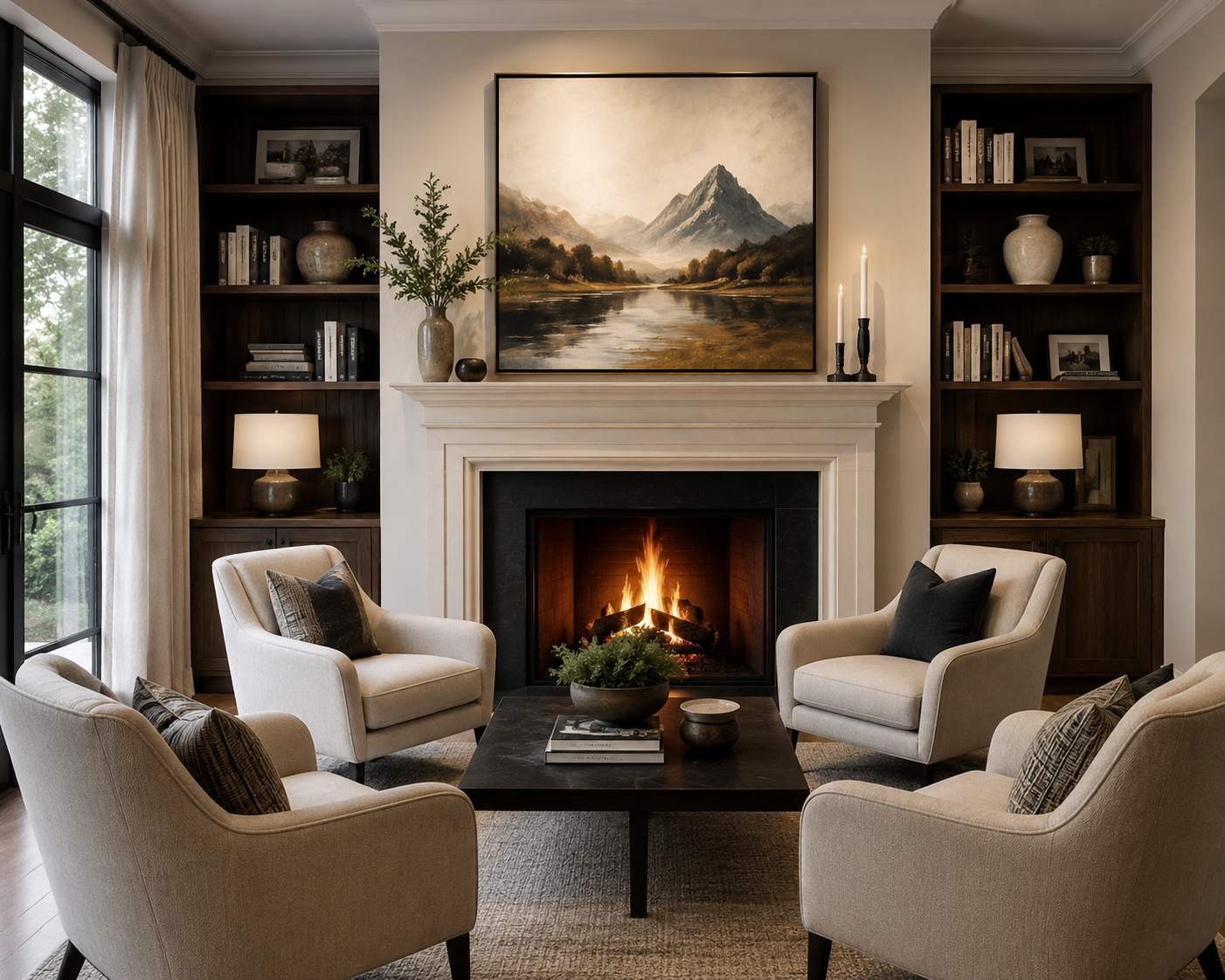
A fireplace, working or not. It's the strongest natural focal point there is, and even a sealed one with a mantel still does the job.
A blank wall where a fireplace used to be. Common in older apartments the fireplace got removed and you're left with a section of wall most people treat as an inconvenience. It's usually the best focal point in the room, and it's asking for one big piece of art or a coat of paint in a deeper color.
The window, if the view is worth having. Frame it properly with curtains hung high and wide → How to Hang Curtains So Your Ceilings Look Taller and it works on its own.
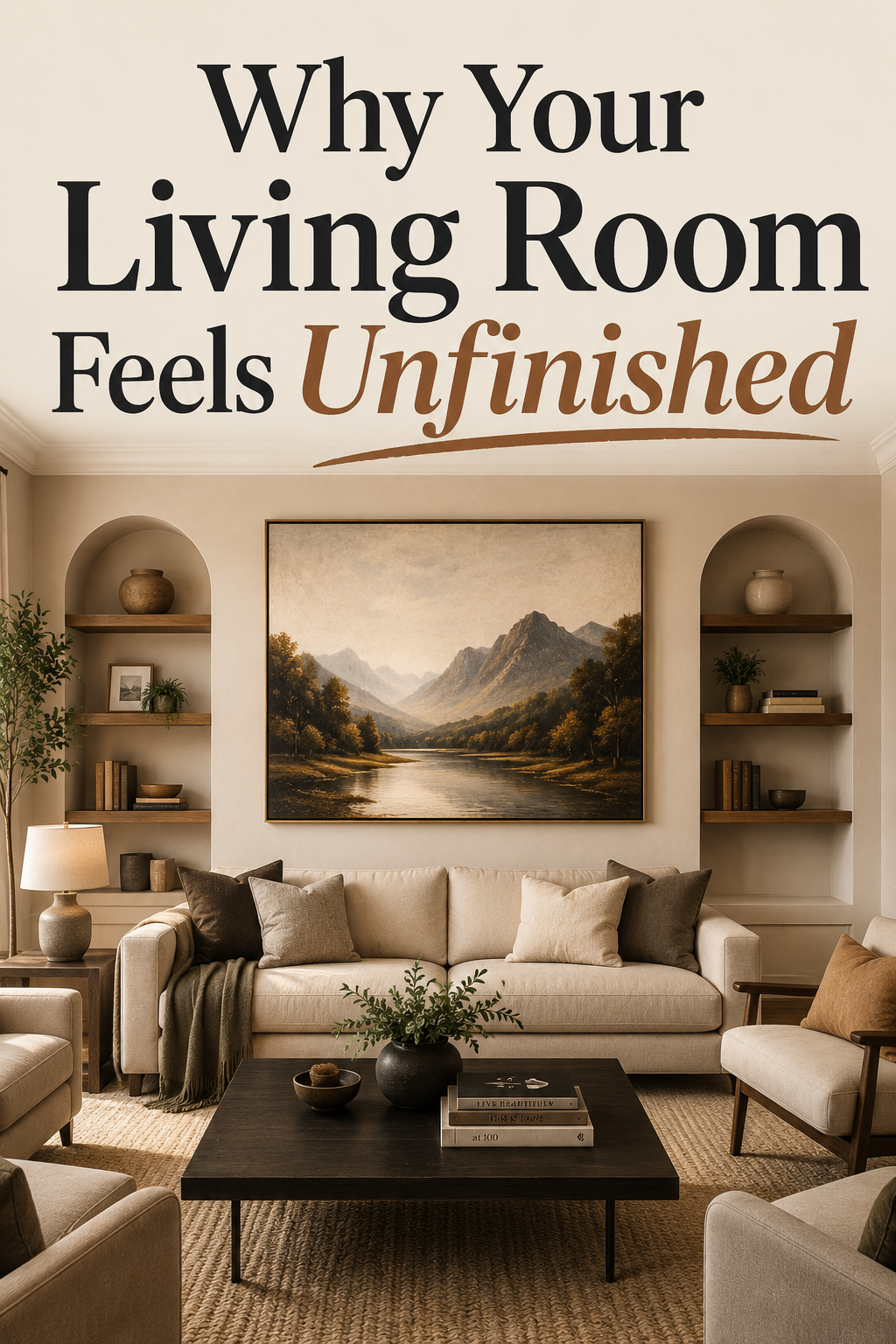
A built-in alcove or niche. Paint the back of it a few shades deeper than the walls, add shelves, light it. Alcoves painted the same color as everything else just disappear.
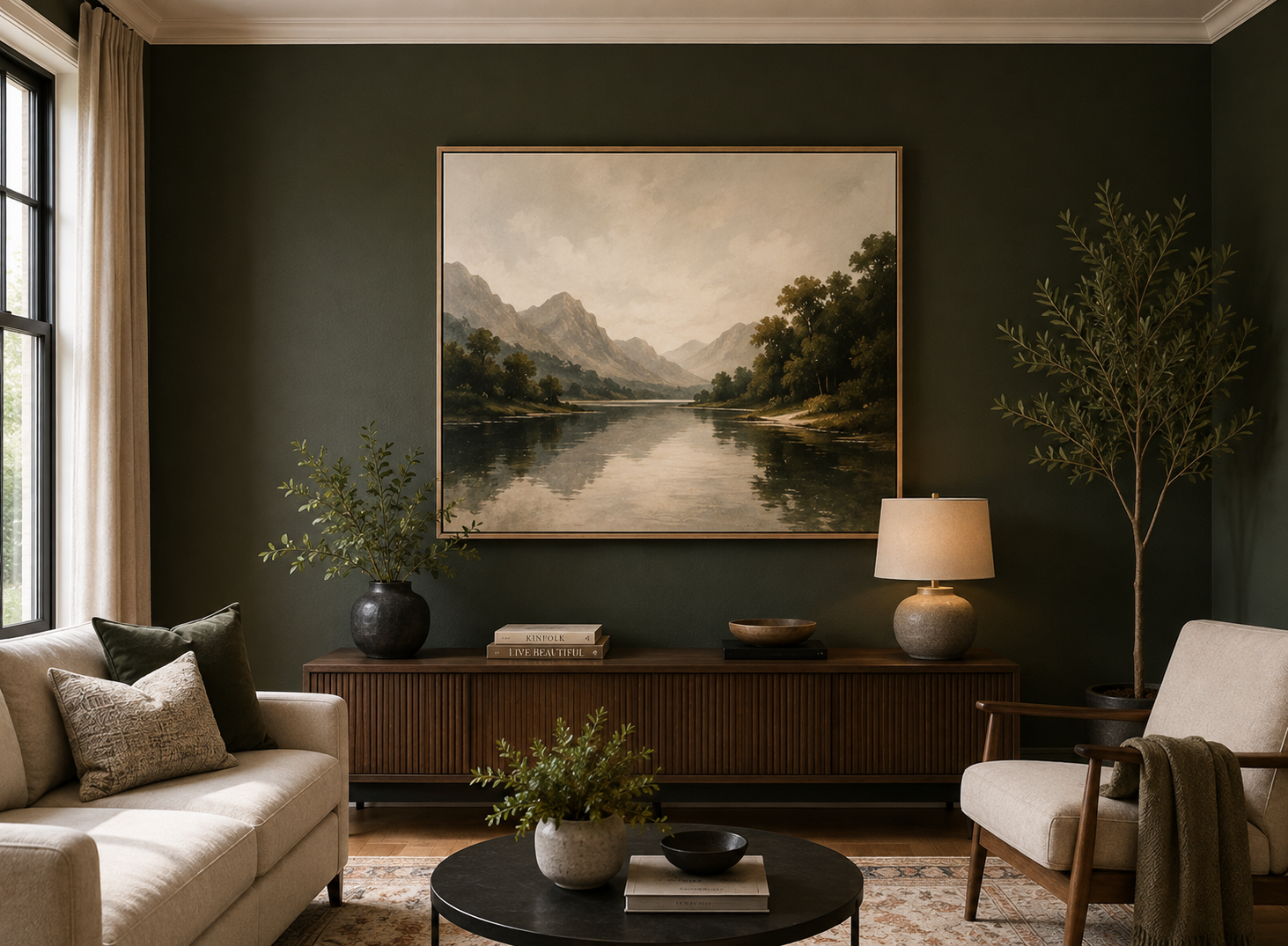
In my current apartment there's a wall like that, and I ignored it for months. I'd been treating it as an obstacle the reason the sofa couldn't go where I wanted. Once I painted it and hung one large piece on it, the room reorganized itself around it without me moving much of anything.
Creating one when there's nothing there
Newer buildings and converted apartments often have four flat walls and no features at all. You have to make the focal point, which is more freedom than it sounds like.
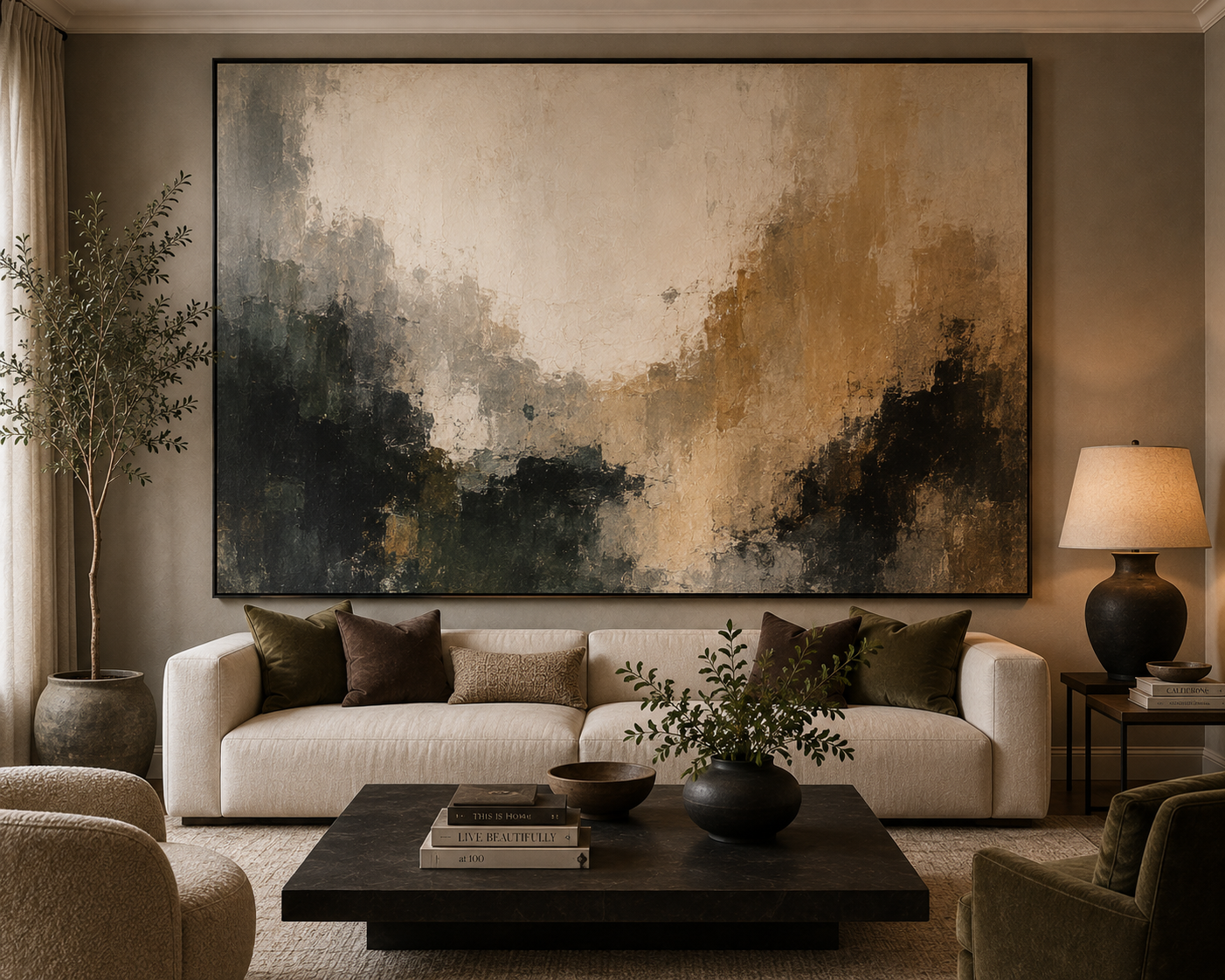
One large piece of art. The most reliable option. The key word is large bigger than feels sensible. Roughly two-thirds the width of the sofa underneath it. Most people buy art way too small, which I've complained about at length in the ten problems I keep running into → 10 Common Home Decor Problems.
A painted accent wall. Cheap, dramatic, reversible. One wall, a few shades deeper than the others.
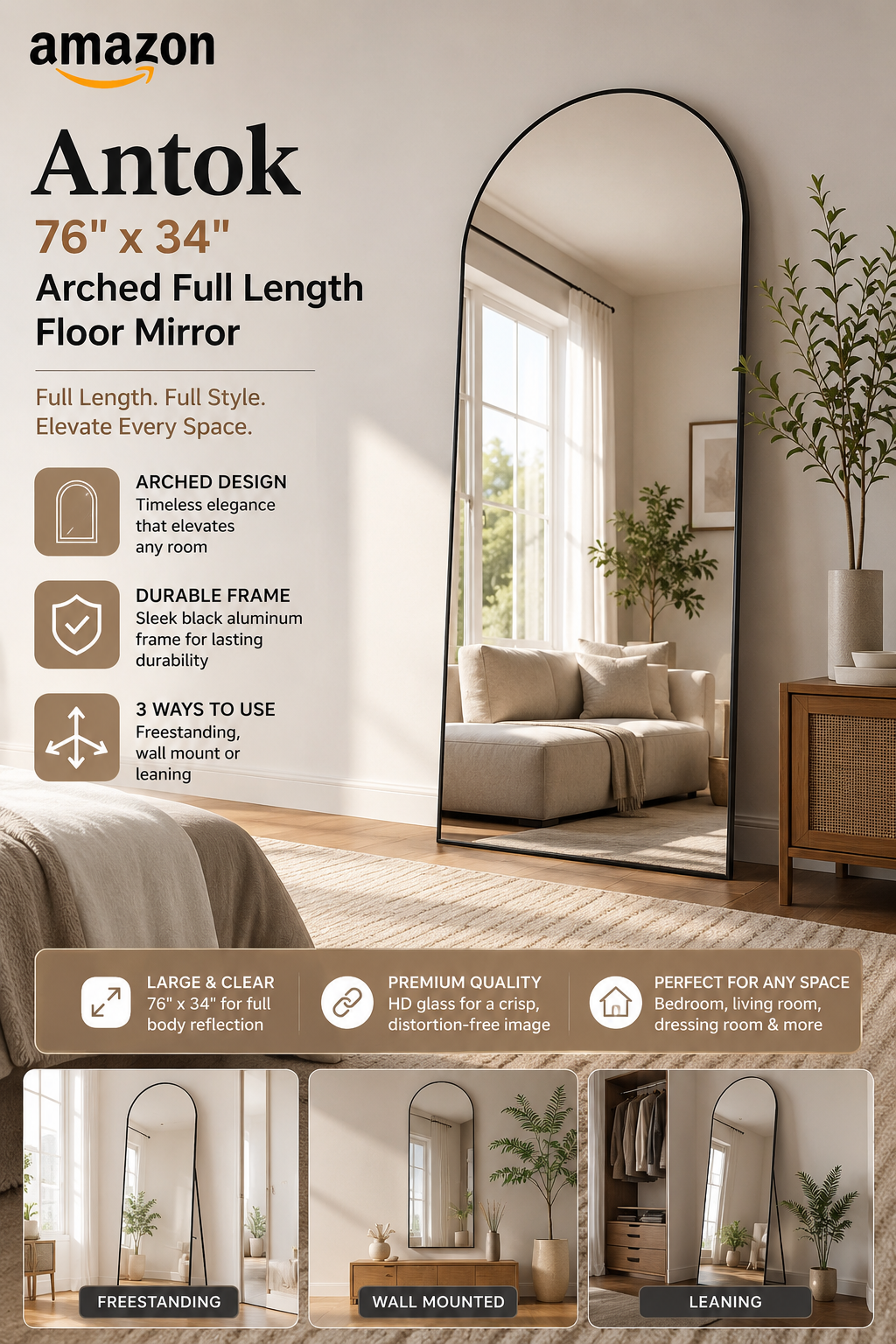
A single statement piece of furniture. A distinctive armchair, a beautiful cabinet, an unusual arched floor mirror. This works best when the rest of the room is quiet you can't have a statement piece in a room full of them.
A bold rug. Underrated, because we think of focus as vertical. A large patterned rug can absolutely anchor a room, as long as it's actually the right size → Rug Sizing: The One Guide You Actually Need. A small bold rug is just noise on the floor.
Bookshelves, styled properly. A full wall of books is a real focal point. A half-empty shelf with three ornaments on it is not.
The TV problem, honestly
Most articles either pretend TVs don't exist or tell you to hide yours behind a sliding panel you're never going to build.
So: if you watch TV most evenings, the TV is functionally your focal point whether you planned it that way or not, and fighting that gets you a room that looks nice and doesn't work. There's no moral failing here.
What helps:
- Mount it lower than you think. Eye level when seated, not standing. TVs mounted high look like they belong in a sports bar, and they wreck your neck.
- Give it a darker background. A deep painted wall, or a dark console underneath. A black rectangle on a white wall is the harshest contrast in the room, which is exactly why it dominates so aggressively.
- Put something around it. Shelving on either side, a piece of furniture below with objects on it. A screen by itself reads as equipment. A screen inside a composition reads as part of the room.
- Don't put it above the fireplace if you can help it. Now you've got two focal points stacked vertically, plus the neck problem.
Making everything else support it
Choosing the focal point isn't the end of it. The room has to agree with it.
Point the seating at it. Not rigidly a slight angle is enough. The direction furniture faces tells the eye where to go more strongly than anything else in the room.
Light it. A picture light, a nearby lamp, or just making sure it isn't the darkest corner. An unlit focal point stops being one after dark, which is when most people are actually in the room.
Keep the competing walls quiet. This is the hard part, and it's where I went wrong in the studio. If the fireplace wall is the focus, the opposite wall gets very little maybe nothing.
Echo its color elsewhere, sparingly. Two or three times, small. Same repetition principle that makes mismatched furniture work → Does Furniture Have to Match? it ties the focal point into the room instead of leaving it stranded.
Secondary focal points are allowed
Bigger rooms can carry a second point of interest, and open-plan spaces usually need one per zone. The rule is subordination: the second one is quieter, smaller, or lower-contrast than the first.
A reading corner with a good lamp and a chair. A styled console in a hallway sightline. A plant with real presence in a corner.
If you can't tell which of your two is primary, you don't have a primary. That's the test.
How to check whether it's working
Two things, both free.
Stand in the doorway and squint. Half-closing your eyes collapses detail into blocks of light and dark. Whatever still reads as the strongest block is your actual focal point which is often not the one you intended.
Take a photo from the door. A photo flattens the room and shows you where your eye goes when it isn't being polite about your own decorating choices. Same test I use for checking whether a layout is working at all → How to Arrange a Living Room With One Usable Wall.
If the answer comes back "the TV" and you didn't want that, you now know what to change. If the answer comes back "nothing," you've found your problem.
The short version
A room that feels unfinished usually doesn't need more things in it. It needs one thing that clearly matters, and the rest of the room to stop competing with it.
Find the feature you've been treating as an obstacle. Or hang something bigger than you're comfortable with. Then angle the seating toward it, light it, and leave the opposite wall alone.
That's most of it. Costs less than a side table and works better.
Affiliate Disclosure
Some links in this post are affiliate links. If you buy something through one, GlamNestStudio may earn a small commission it doesn't cost you anything extra. I only link to things I'd recommend to a friend, and I've used or genuinely researched everything mentioned here. It's what keeps the guides on this site free.
Before you go
If the room still isn't sitting right, the rest of the decorating guides on GlamNestStudio work through the usual suspects layout, lighting, rugs, and the mistakes I made with all three.