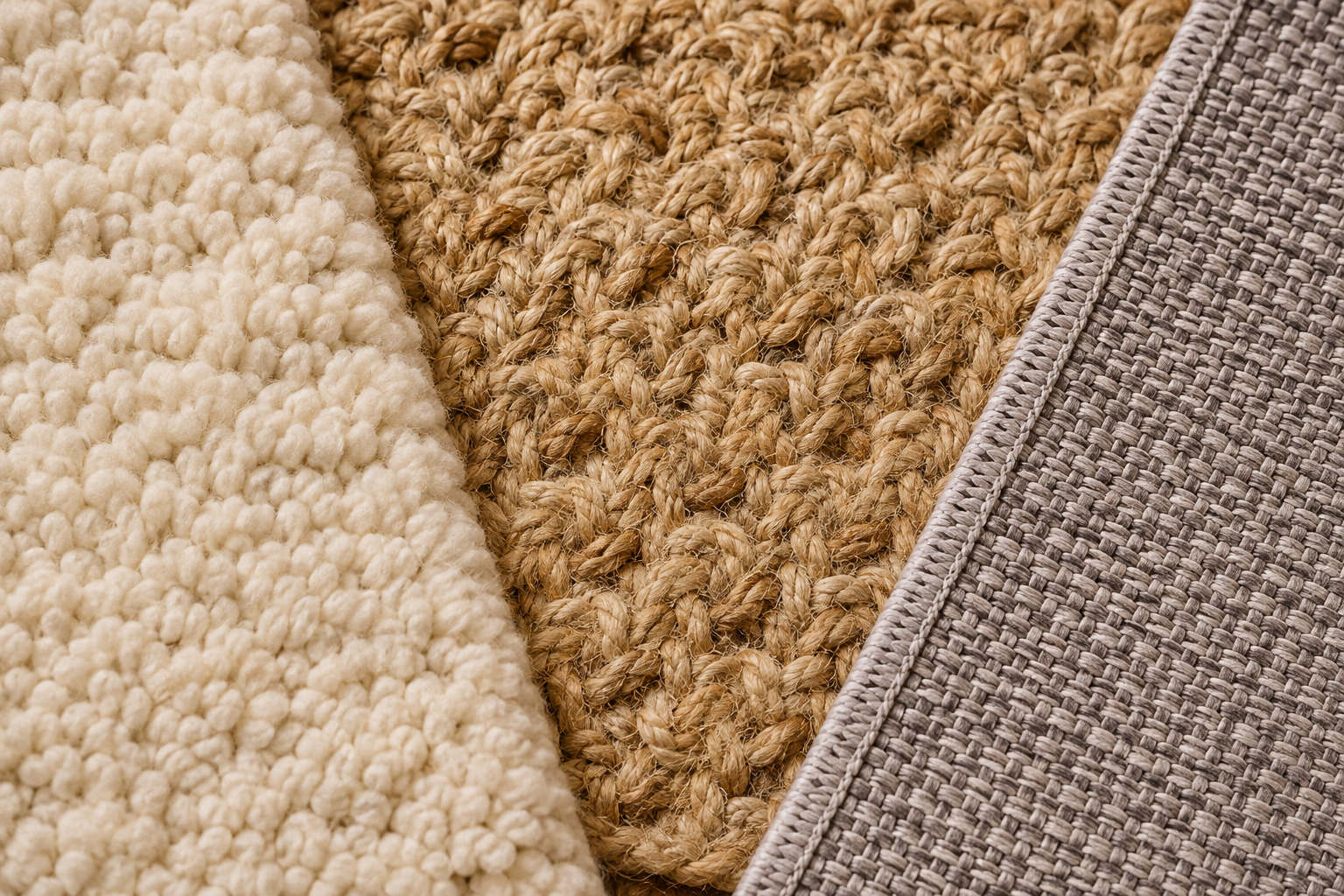
Wool vs. Jute vs. Synthetic: Which Rug Material Is Actually Worth It
Disclosure: this post contains affiliate links. If you buy something through one, I may earn a small commission at no extra cost to you.
Once you've worked out what size rug you actually need → Rug Sizing: The One Guide You Actually Need, the next question is what it should be made of and this is where the price differences get dramatic. The same 8 × 10 can cost $150 or $1,500 depending entirely on material.
I've owned four rugs in three materials. One of them was ruined by a single spilled drink, which I'll get to.
Here's what each one is actually like to live with, rather than what the product page says.
Wool
Roughly $400–1,500 for an 8 × 10
The expensive option, and mostly worth it.
What's good:
Wool has natural lanolin in the fibers, which repels liquid for a short window long enough to blot a spill before it soaks in. It's genuinely the most stain-forgiving material, which surprises people who assume natural fibers are delicate.
It's also resilient. Wool fibers have a natural crimp that springs back, so furniture dents recover and traffic paths don't flatten permanently the way synthetics do. A good wool rug lasts decades. A synthetic one looks tired in five years.
Feels best underfoot by a wide margin, and it holds dye beautifully, so colors stay rich.
What's not:
The price, obviously. And new wool rugs shed noticeably, for the first several months. Vacuum a new wool rug and the canister fills with fluff. This is normal, it stops eventually, and nobody warns you about it. If you're not expecting it, it feels like the rug is disintegrating.
Wool also doesn't like prolonged damp, and moths are a real risk in storage.
Best for: living rooms and bedrooms. Anywhere you want it to feel good and last.
Jute and sisal
Roughly $100–400 for an 8 × 10
The texture option. Beautiful in photographs, more complicated in life.
What's good:
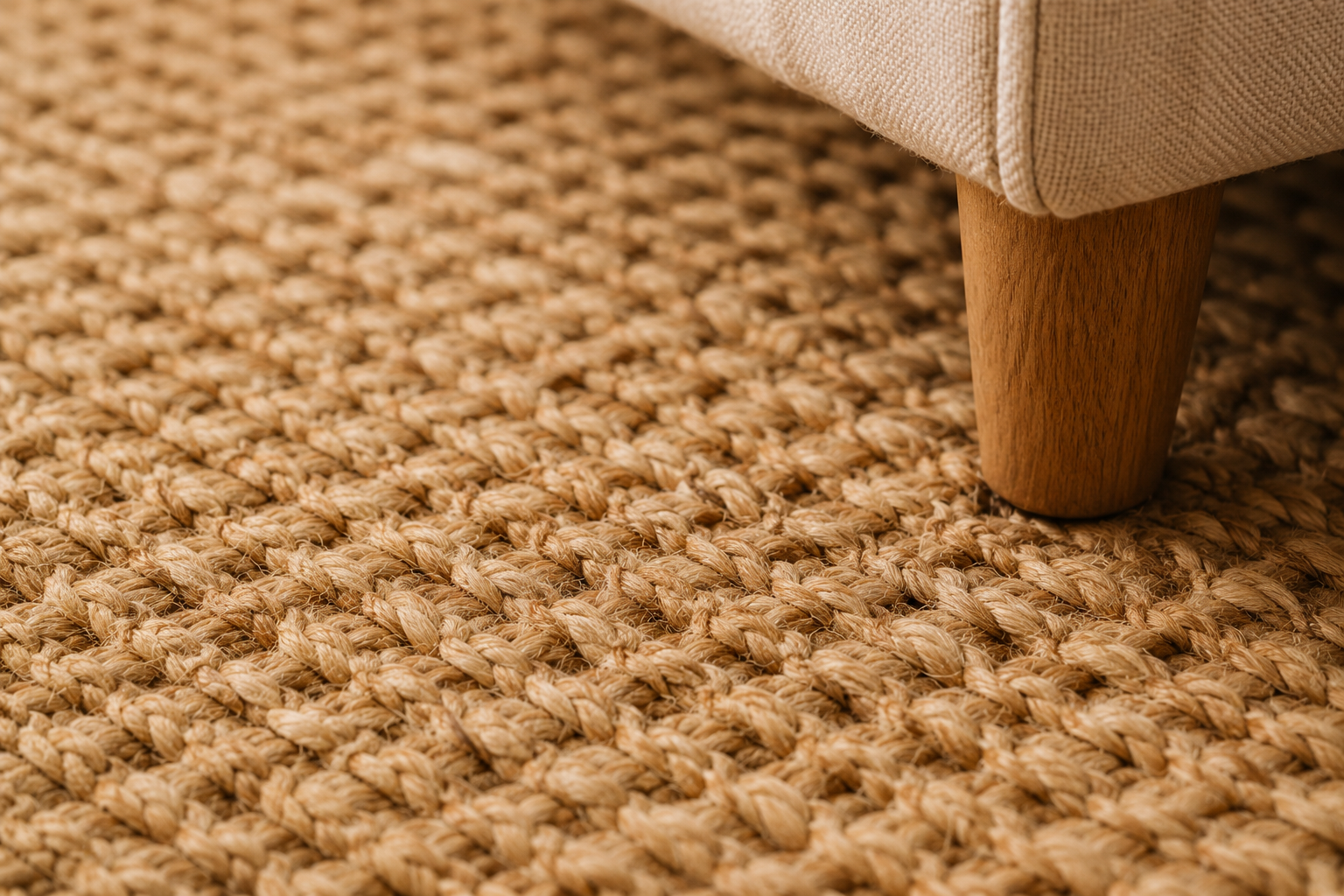
Cheap, sustainable, and the texture adds something no synthetic does that woven, natural, slightly rustic quality that makes flat rooms feel warmer. Excellent as a base layer under a smaller rug, which is my favorite use for it.
Very durable underfoot in terms of wear.
What's not:
Water is a real problem. Jute absorbs liquid immediately and stains permanently including from plain water. In my first apartment I put a jute rug near a window that turned out to leak slightly, and the mark never came out. Not faded, not lightened. Never came out.
It's also rough on bare feet and hard on knees. Fine in a living room where you're mostly on furniture; miserable in a bedroom or anywhere kids play on the floor.
It sheds fibers continuously, and the loose weave traps crumbs that vacuums struggle to get out.
Best for: low-traffic living areas, as a layering base, or under a coffee table. Avoid in dining rooms, bathrooms, kitchens, and bedrooms.
Synthetic (polypropylene, polyester, nylon)
Roughly $80–400 for an 8 × 10
The practical option, and much better than its reputation.
What's good:
Genuinely stain-resistant, because the fibers don't absorb liquid at all. Most can be scrubbed. Many are washable. Polypropylene in particular is used for outdoor rugs precisely because it shrugs off water and sunlight.
Cheap enough that replacing it in five years isn't painful, which is a legitimate strategy especially if you rent and your rooms keep changing shape.
Best choice by a distance for dining rooms, kids' rooms, pets, and patios → 7 Small Patio Decorating Ideas That Actually Work.
What's not:
It flattens. Traffic paths compress and don't spring back, so after a few years you can see where people walk. Furniture leaves permanent dents.
Cheap versions have a plastic sheen that's obvious across a room, and they can feel slippery underfoot. The tell is shine matte synthetics read as fabric; shiny ones read as plastic.
Best for: dining rooms, hallways, kids, pets, rentals, outdoors. Anywhere that needs to survive rather than impress.
Cotton
Roughly $60–250 for an 8 × 10
Flat, washable, cheap, and it works well in small sizes bathrooms, kitchens, entryways, kids' rooms.
What's not: it's thin, it wrinkles, it slides constantly without a pad, and it wears out fast in high traffic. Not a serious option for a large living room rug, but excellent for what it's good at.
Viscose (also sold as bamboo silk, art silk, rayon)
Roughly $150–600 for an 8 × 10
Avoid this one, and I say that as someone who bought one.
Viscose looks incredible in photographs. It has a silky sheen that mimics real silk at a fraction of the price, and it photographs so well that it appears constantly in styled interiors.
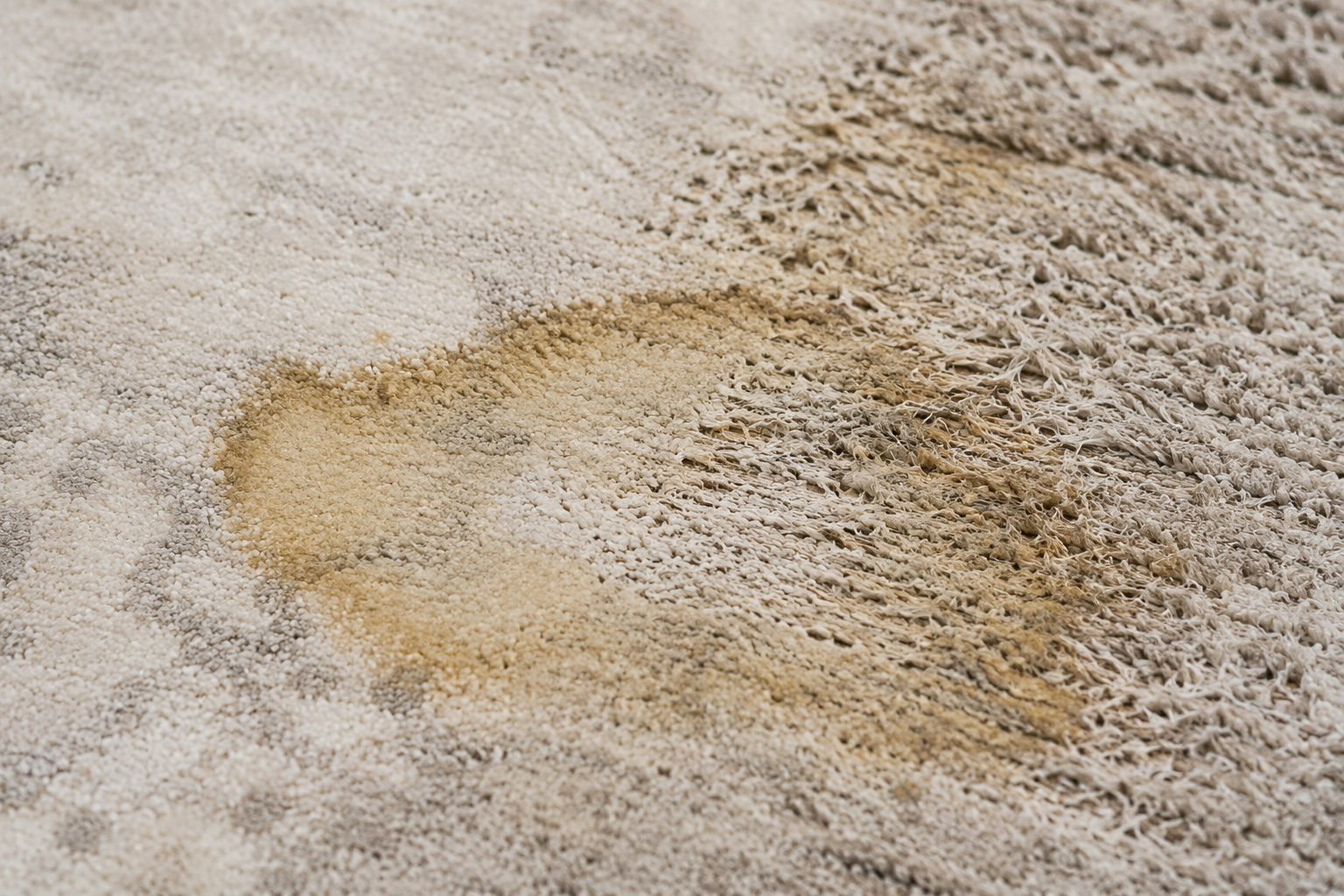
Then someone spills a drink on it.
Viscose fibers are chemically weakened by water. Not stained weakened. A water spill leaves a permanent yellowish mark and a patch of fiber that's visibly rougher and duller than the surrounding rug. Professional cleaners often refuse to work on it. Mine got a spilled drink in month four and the mark was still there when I got rid of it.
It's also extremely prone to shedding and crushing, so traffic paths appear quickly.
The only place it makes sense: a formal room nobody eats or drinks in, or a wall hanging. Read the fiber content on any rug with an unusually silky sheen for the price viscose is very often blended in without being obvious in the listing.
Quick comparison
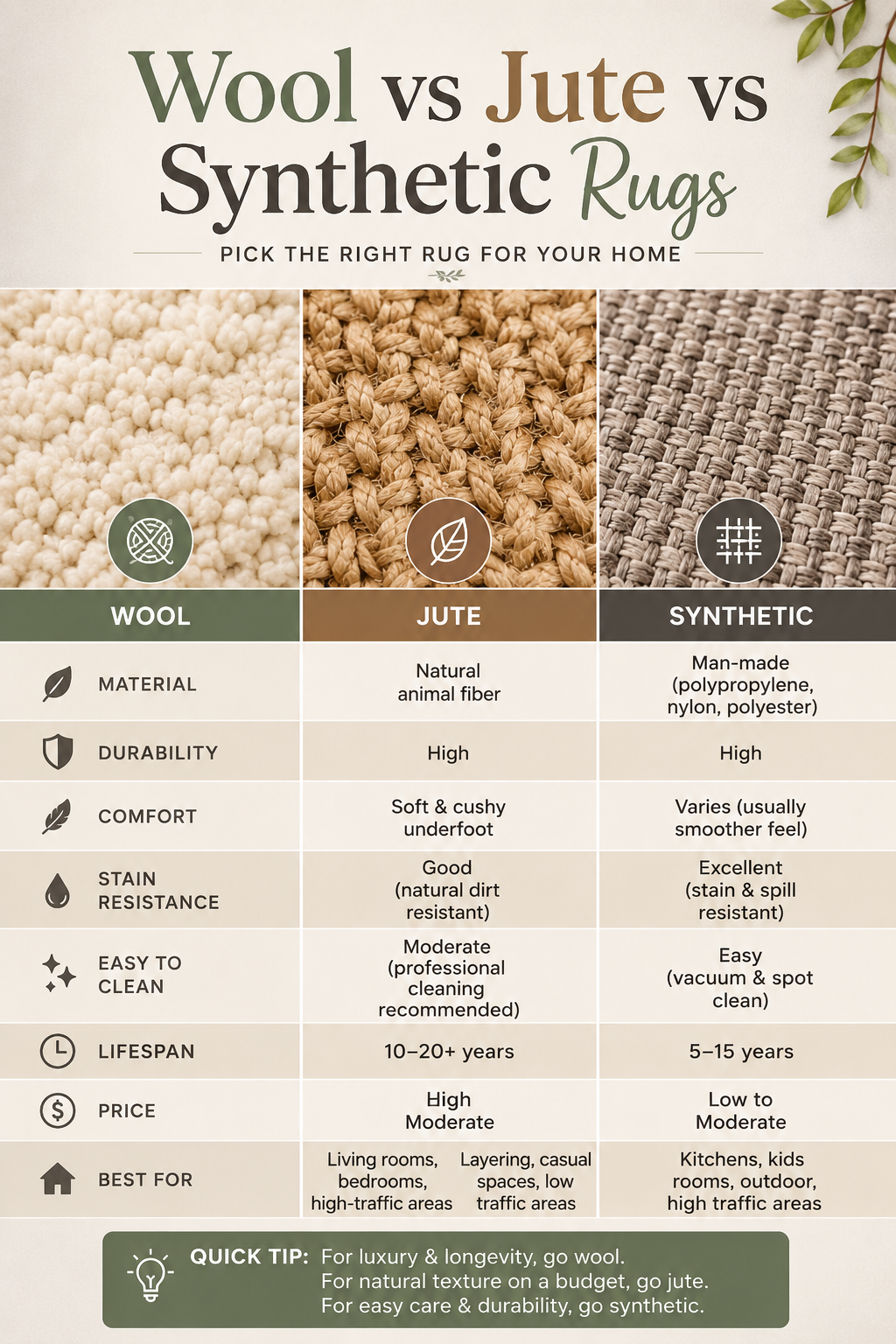
| Wool | Jute | Synthetic | Cotton | Viscose | |
|---|---|---|---|---|---|
| Cost | High | Low–mid | Low | Low | Mid |
| Stain resistance | Good | Poor | Excellent | Good | Very poor |
| Feel underfoot | Excellent | Rough | Varies | Thin | Soft |
| Durability | 20+ yrs | 5–10 yrs | 5–8 yrs | 3–5 yrs | 2–5 yrs |
| Water safe | Mostly | No | Yes | Yes | No |
| Best for | Living, bedroom | Layering base | Dining, kids, pets | Small spaces | Nowhere much |
What I'd actually buy
Living room, staying put a while: wool. It's the one purchase where paying more genuinely returns it, and it's a decade-plus item.
Living room, renting or on a budget: a large jute base with a smaller wool or synthetic rug layered on top. Gets you the size you need at roughly half the cost of one large wool rug.
Dining room: flat-weave synthetic, washable. No exceptions. Crumbs and wine make this decision for you.
Bedroom: wool if the budget allows, synthetic if not. Skip jute it's unpleasant on bare feet first thing in the morning.
Anywhere with a puppy or a toddler: washable synthetic, and don't feel bad about it. A machine-washable low-pile rug is the correct answer for that phase of life, and you can buy the nice one later.
Whatever you choose, add a felt and rubber rug pad. It's about 10% of the rug cost and it materially extends the life of every material on this list.
One last thing about price
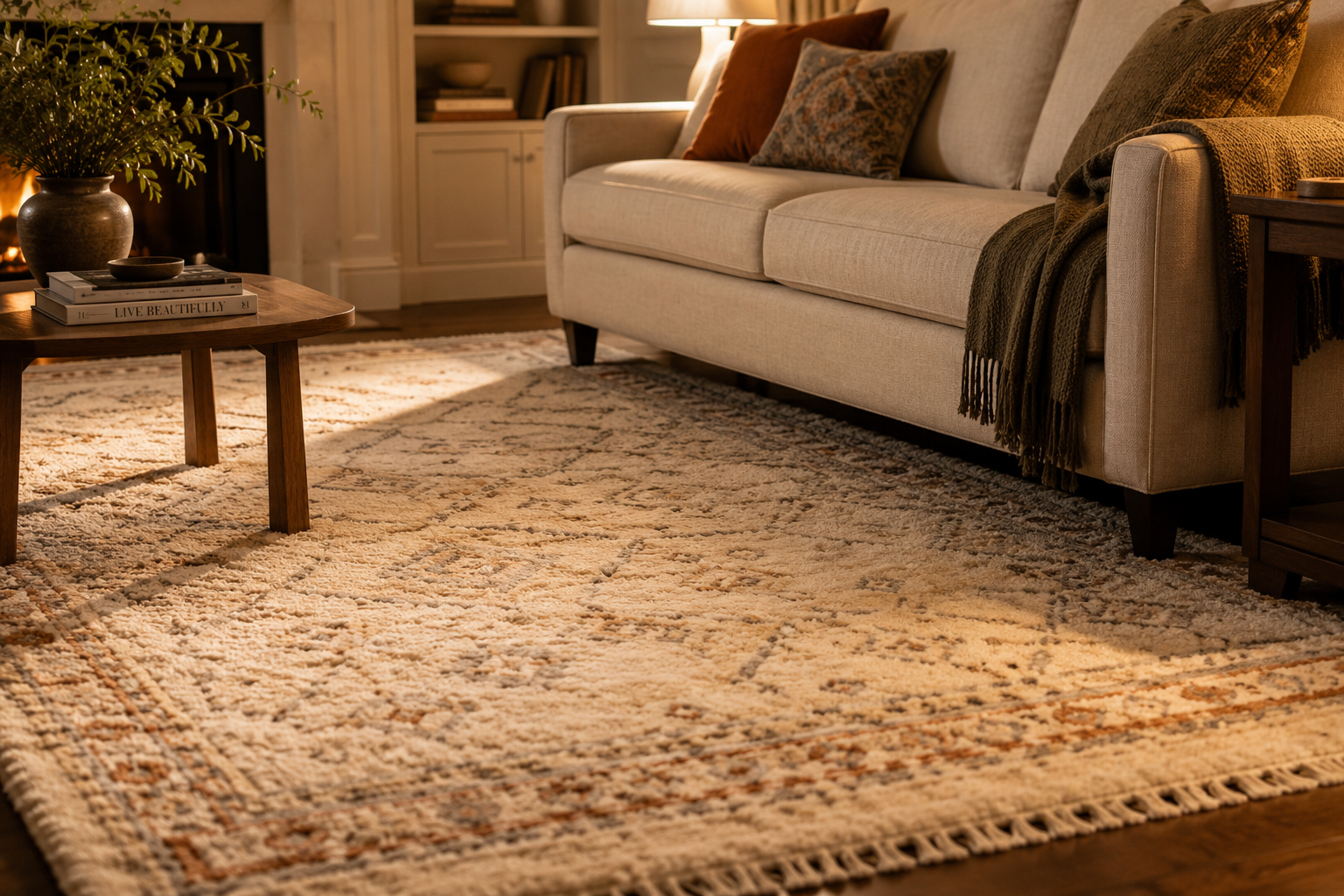
The gap between a $150 rug and a $700 rug is real, but it isn't linear. Most of the difference shows up in years three through ten how the pile holds up, whether traffic paths appear, whether spills become permanent.
If you're moving in a year, buy cheap and buy the right size. If you're staying, the same logic applies as with any furniture worth keeping → 10 Common Home Decor Problems: spend on the things you touch every day, save on the things that are easy to swap.
A rug is under your feet every day. That puts it firmly in the first category.
Affiliate Disclosure
Some links in this post are affiliate links. If you buy something through one, GlamNestStudio may earn a small commission it doesn't cost you anything extra. I only link to things I'd recommend to a friend, and I've used or genuinely researched everything mentioned here. It's what keeps the guides on this site free.
Before you go
More on the things worth spending real money on, and the things that aren't, across the guides on GlamNestStudio.