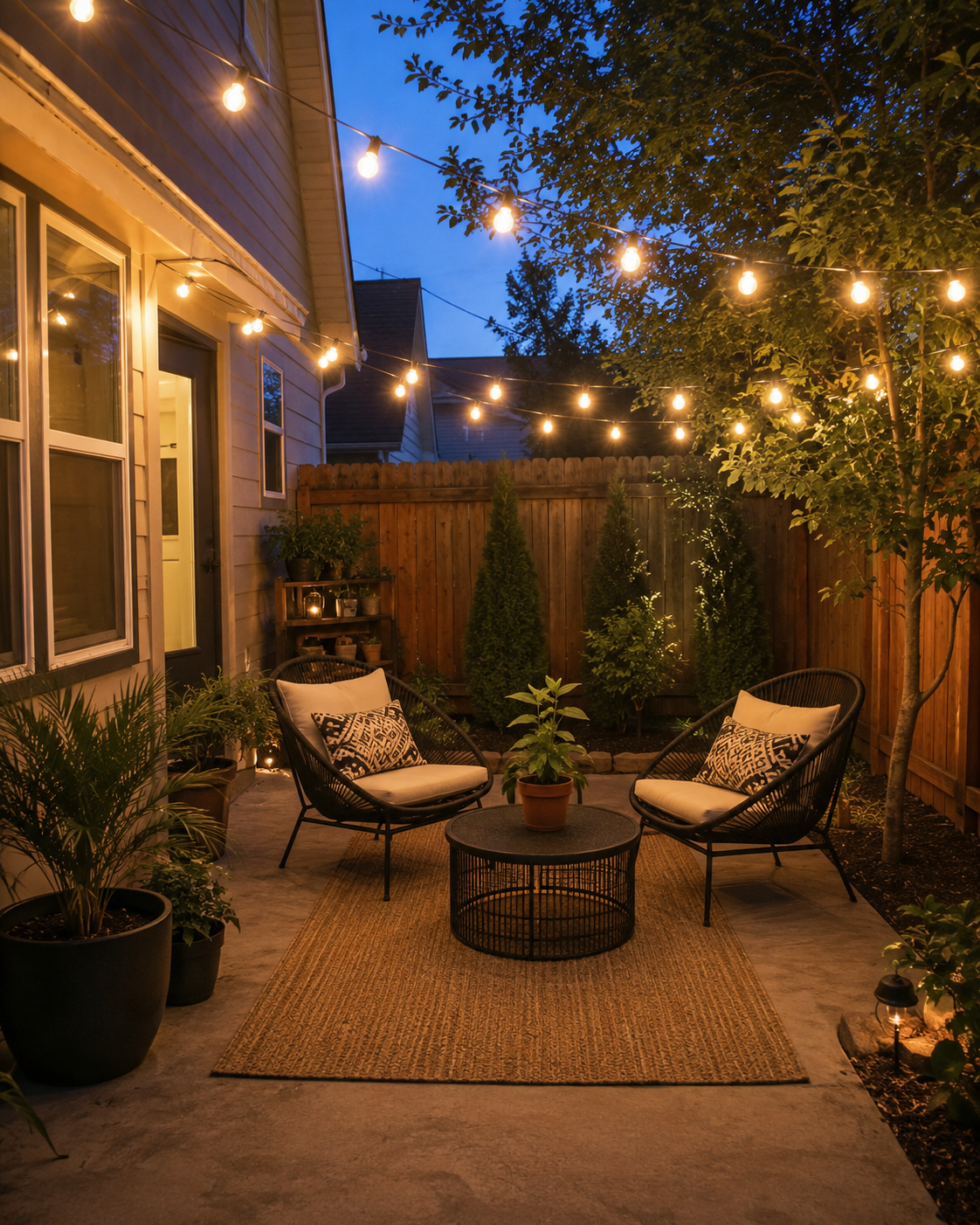
7 Small Patio Decorating Ideas That Actually Work (I Got Two of Them Wrong First)
Disclosure: this post contains affiliate links. If you buy something through one, I may earn a small commission at no extra cost to you.
My patio is about 10 by 8 feet, and it's concrete. Gray, a little stained, with a drain in one corner and fencing on two sides that I'm not allowed to paint.
For the first year I put a plastic table on it and used it maybe four times.
The problem wasn't the size. Small outdoor spaces can be great. The problem was that I'd treated it as leftover ground instead of a room, and it behaved accordingly. Once I started applying the same thinking I use indoors one focal point, layered light, texture, actual comfortable seating it turned into where I spend most summer evenings.
Here's what worked, in the order I'd do it again, including the two things I got wrong the first time.
1. Cover the concrete (but not the way I did it first)
Bare concrete is the single biggest reason a patio feels like a service area instead of a space.
What I got wrong: I bought a cheap woven plastic outdoor rug, put it straight down on the concrete, and left it there. Within three weeks the underside was slimy, the concrete underneath had gone dark green, and when I finally lifted it, the stain took a season to fade.
Outdoor rugs need to dry out. If yours sits permanently on a surface that holds water, it traps moisture underneath and you get algae, staining, and eventually a rug that smells.
What works instead:
- A flat-weave polypropylene outdoor rug you lift and hang over a chair every couple of weeks, especially after rain
- Interlocking wood or composite deck tiles, which sit on small feet and let water run underneath. More expensive up front, much better in damp climates, and they come up in twenty minutes when you move out.
- Or just a smaller rug under the seating area only, leaving the drainage path clear
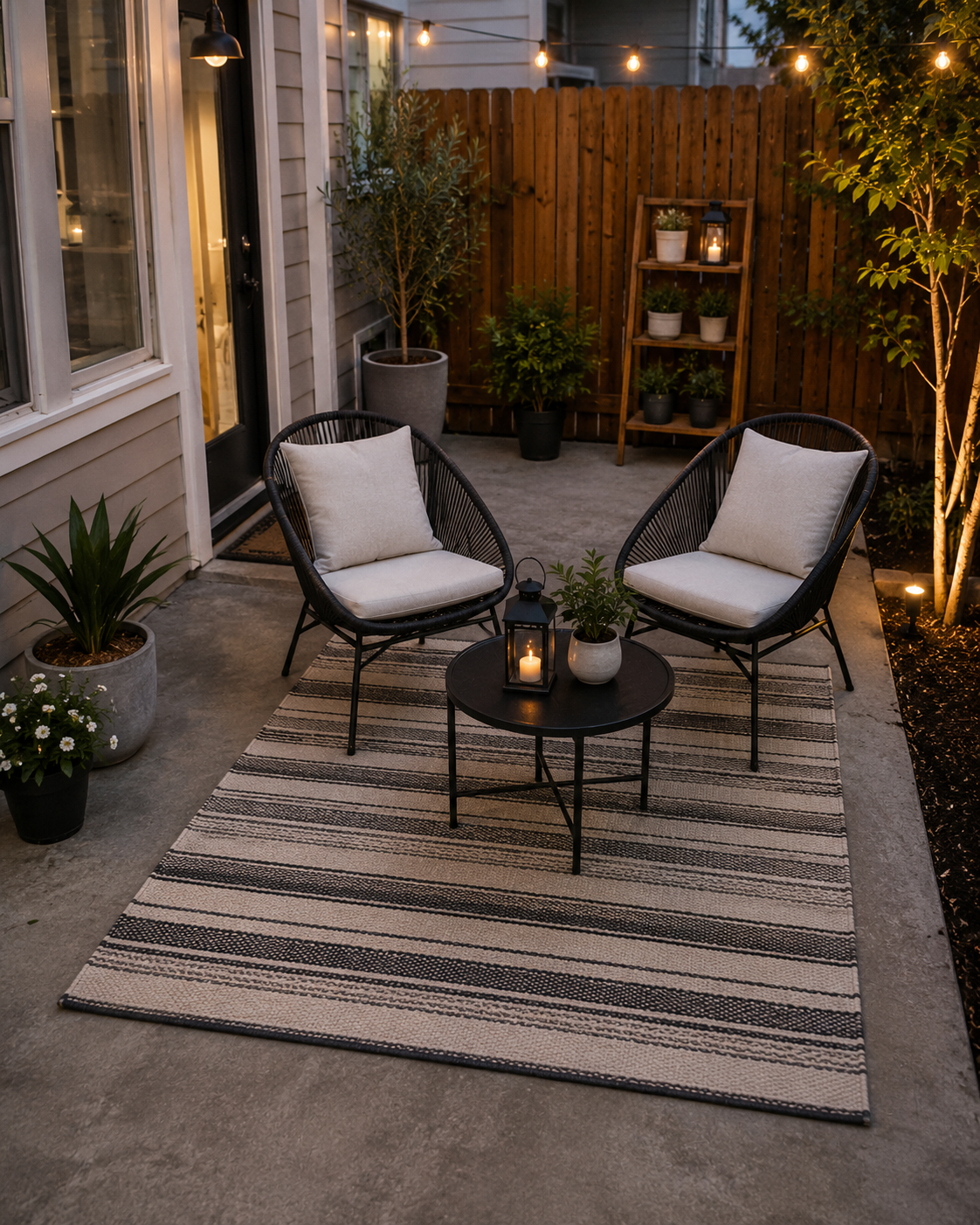
Rug sizing outdoors follows the same rules as indoors: at minimum, the front legs of the chairs sit on it. [[INT: The full sizing logic is here Rug Sizing: The One Guide You Actually Need and it transfers almost unchanged.
2. Buy seating you'd sit in for two hours
The bistro set was the other thing I got wrong. Two small metal chairs and a tiny round table, bought because they fit and were cheap.
Nobody ever sat in them longer than it took to drink a coffee. They were upright, hard, and slightly too small, and the patio stayed empty because there was nowhere comfortable to be.
The fix was two proper chairs with deep seats and real cushions. Fewer, larger, more comfortable. The patio got used immediately.
The principle: two comfortable chairs beat four uncomfortable ones in a small space, every time. You're not hosting a dinner party for six on 80 square feet. You're making somewhere to sit with a drink after work.
If you occasionally need more seating, a couple of stackable folding stools stored against the fence handles it without permanently eating floor space.
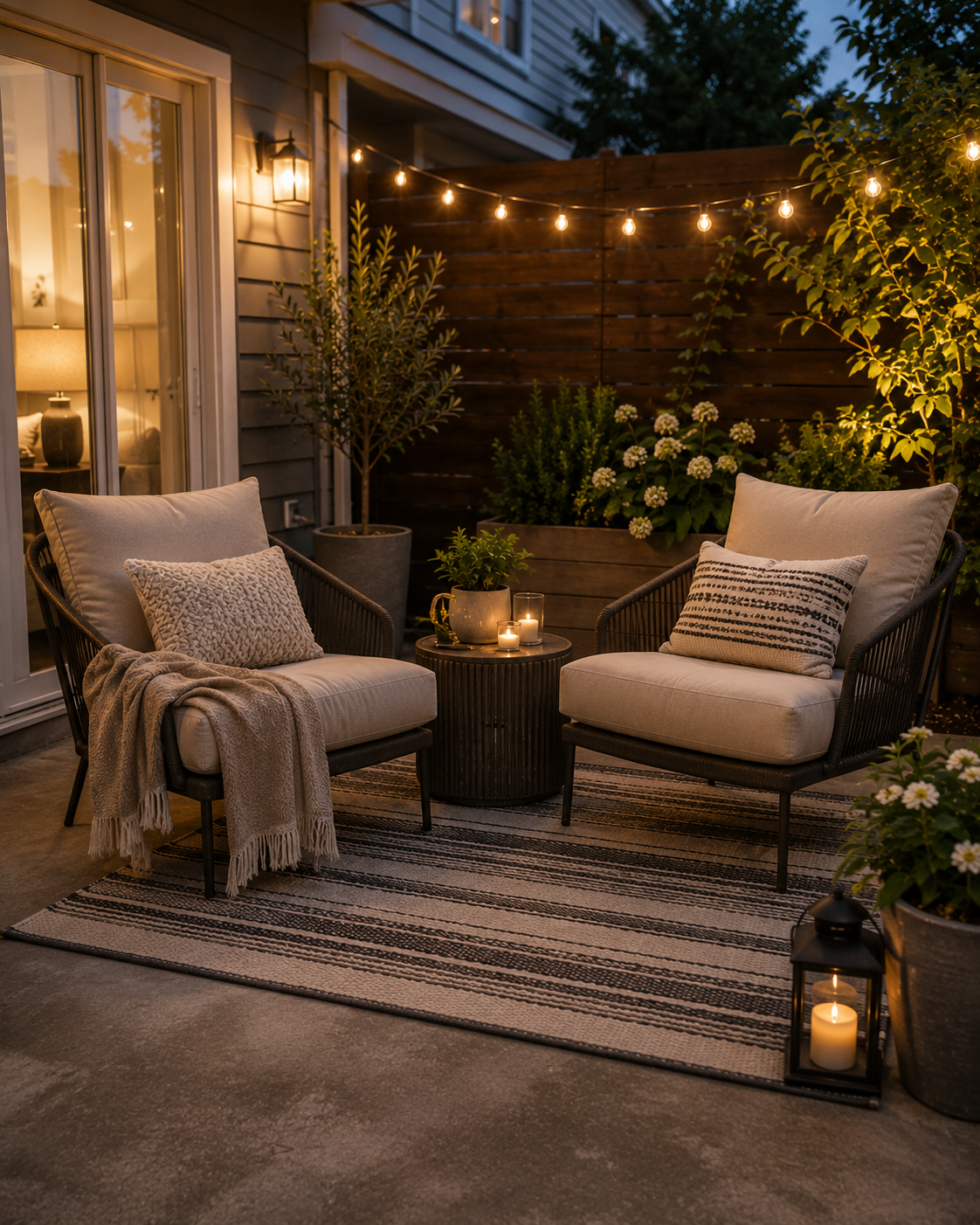
On cushions: buy covers you can bring inside, or accept they'll fade. Outdoor fabric is a real thing, but "outdoor" mostly means water-resistant, not sun-proof. Mine live in a bin by the door and come out when I do.
3. Light it properly, and low
This made the biggest difference, and it's the same lesson as indoors: one bright light overhead does nothing good, and several small warm lights at different heights do everything.
Outdoors the effect is even stronger, because there are no walls or ceiling bouncing light around. A single bright floodlight makes a patio feel like a parking lot. Several low warm sources make it feel enclosed.
What works:
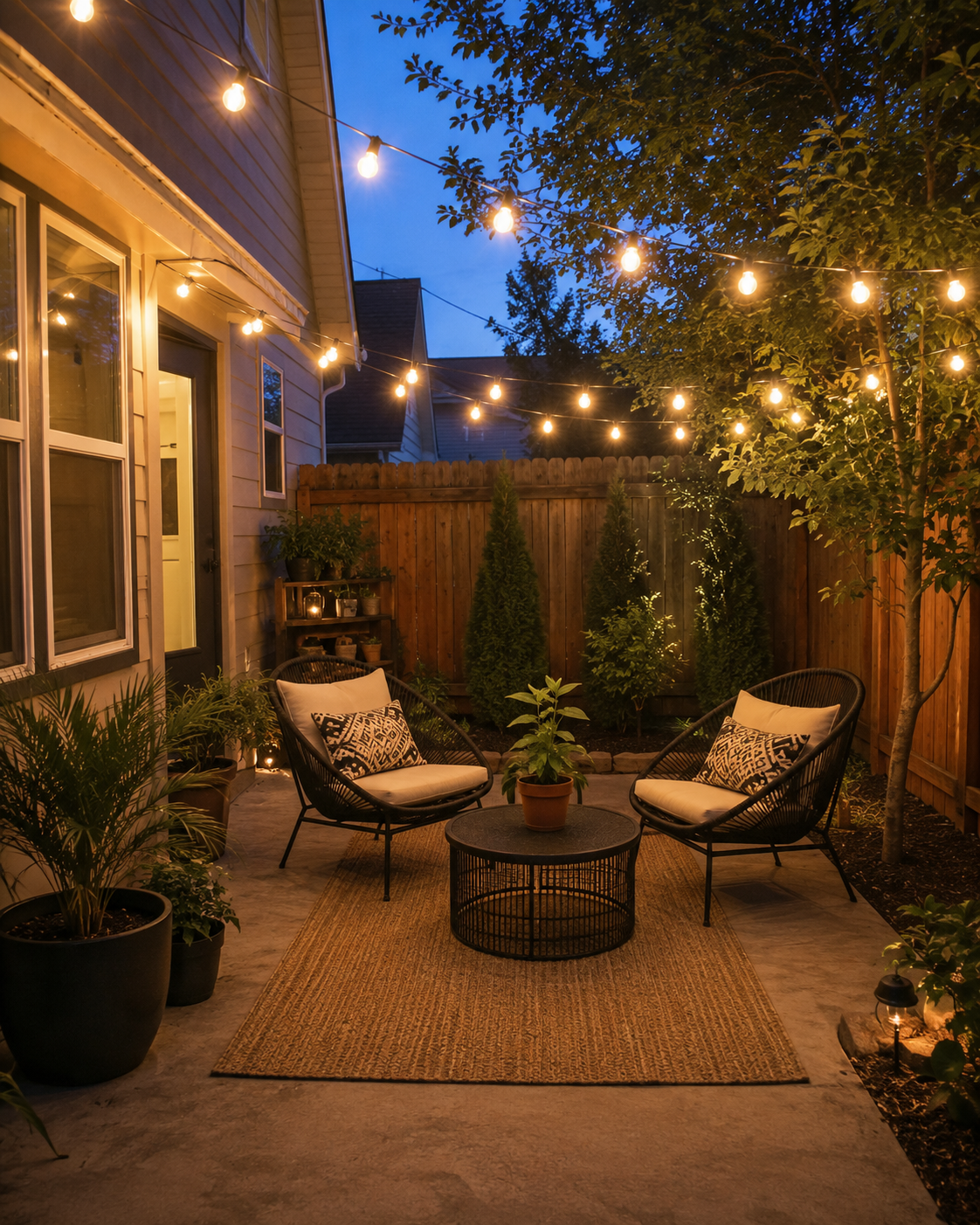
- Warm white string lights overhead, zigzagged between fence posts or along a wall. Warm white, around 2700K — cool white outdoors looks clinical.
- Solar path lights or lanterns at ground level, which is where outdoor lighting is most flattering
- A candle or lantern on the table, if you're the kind of person who'll actually light it
- Nothing at eye level, and nothing pointed at where people sit
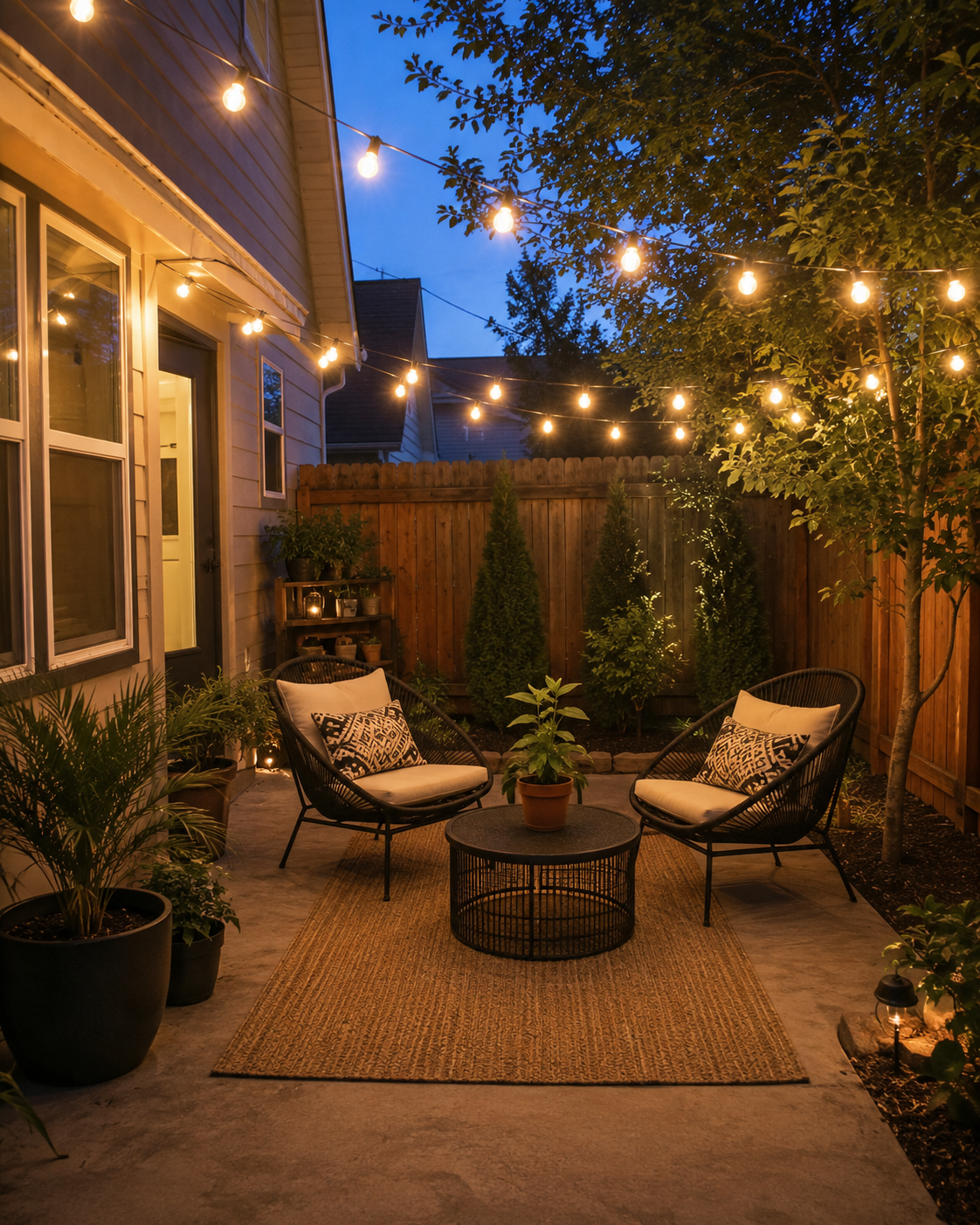
On solar: it performs poorly in shaded patios and in winter in the northern half of the country. If your patio faces north or sits between buildings, plug-in or battery lights will disappoint you a lot less.
4. Go vertical, because the floor is full
Small patios run out of ground long before they run out of wall and fence.
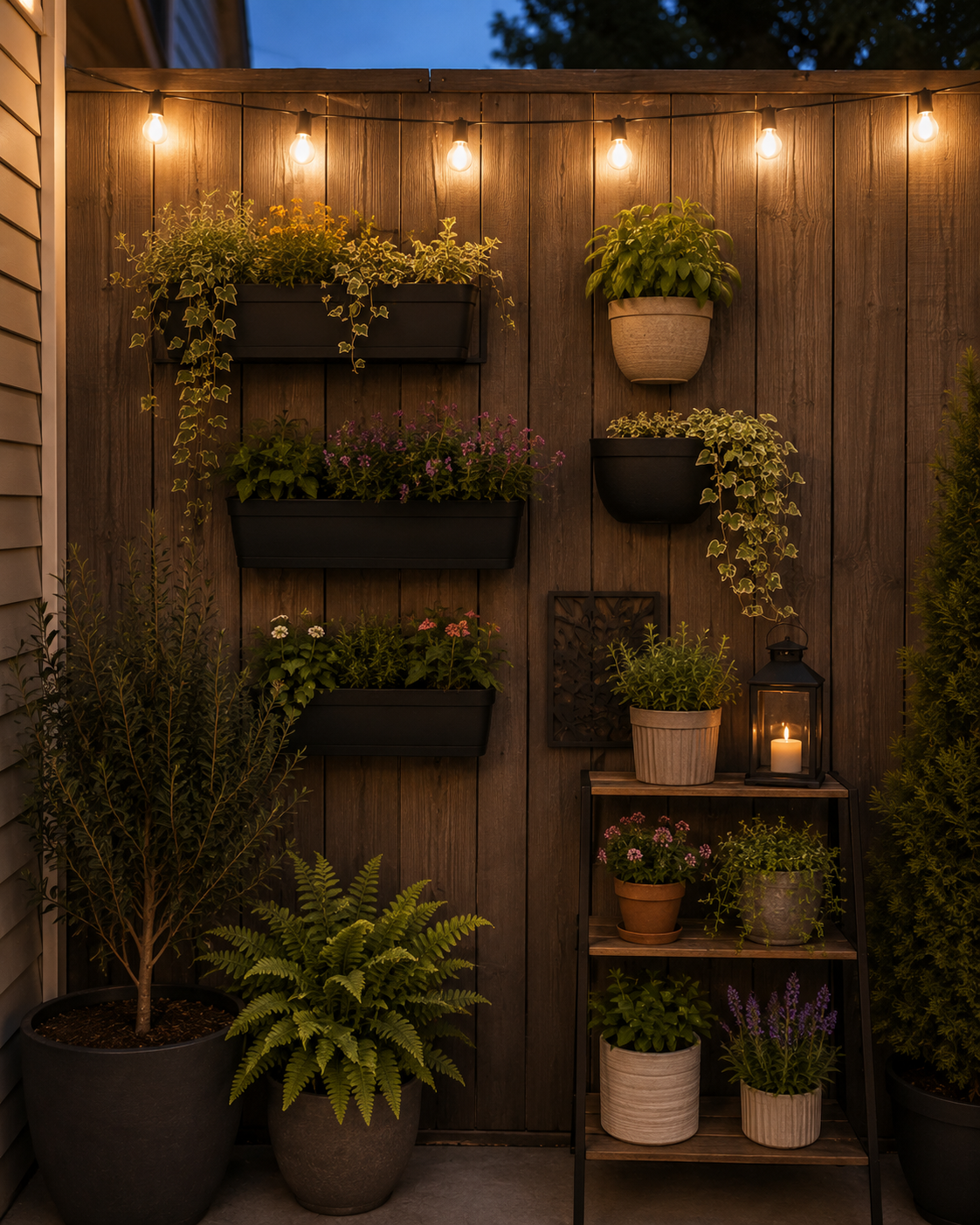
- Wall-mounted planters, or a hanging pocket planter on the fence
- A narrow tiered plant stand in a corner. Corners get wasted outdoors just like they do indoors → How to Arrange a Living Room With One Usable Wall.
- A trellis with a climber, if you're allowed to attach to the fence. Jasmine or clematis for scent; ivy if you want something that survives neglect.
- Hooks for lanterns, or a hanging chair if the structure genuinely supports one
If you rent: check what you're allowed to attach to before drilling into a fence, especially a shared or property-line fence. In a lot of leases the fence isn't yours to modify, and a boundary fence may not even belong to your landlord. Freestanding trellis in a heavy planter sidesteps the whole question.
5. Screen whatever you don't want to look at
Every patio has one. A neighbor's window, the trash cans, an AC unit, a stretch of ugly wall.
You don't need to hide it completely you need to break the sightline from where you sit. Much easier job.
- Tall grasses or bamboo in a large planter. Bamboo in a pot, never in the ground it's genuinely hard to get rid of once established.
- A freestanding trellis panel
- An outdoor curtain on a tension rod, if you have two fixed points
- Reed or willow screening zip-tied to a fence, which is cheap and completely reversible
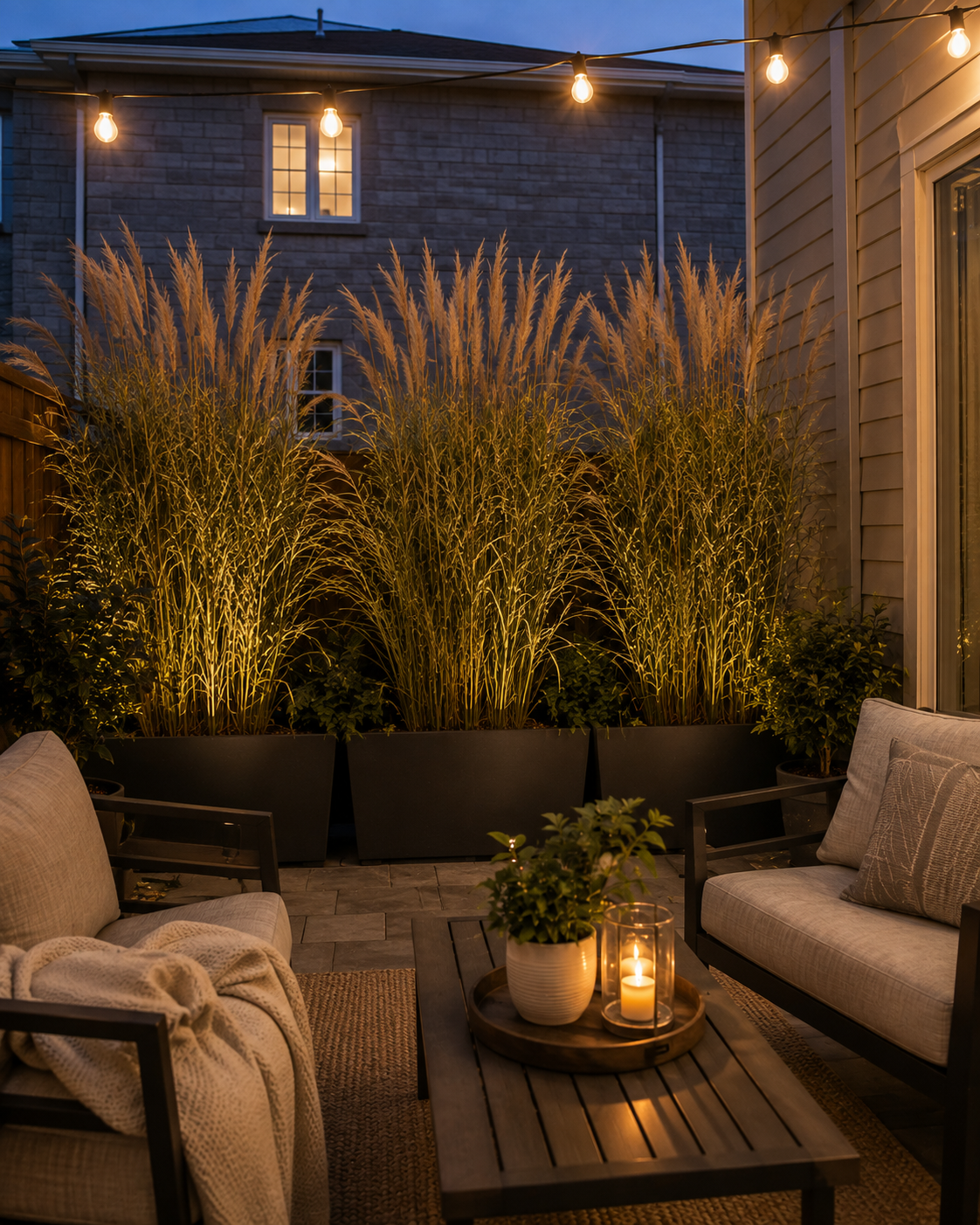
Sit in your actual chair before deciding where the screen goes. What blocks the view standing up often doesn't when you're sitting down.
6. Pick a focal point out here too
Same principle as indoors: a space with nothing to look at never feels finished. On a patio the eye has even less to hold onto, since there are no bookshelves or artwork to fall back on.
What works in a small space:
- One large plant with real presence an olive tree, a fig, a big fern instead of nine small pots
- A fire pit, which also doubles the season you can use the space
- A piece of outdoor art or a weathered mirror on the fence
- A water feature, if you don't mind maintaining it
One only. Same rule as indoors → Living Room Focal Point: Why Your Room Feels Unfinished — I once made the mistake of three competing focal points in a room and it was a mess. On a patio this size, three would be comical.
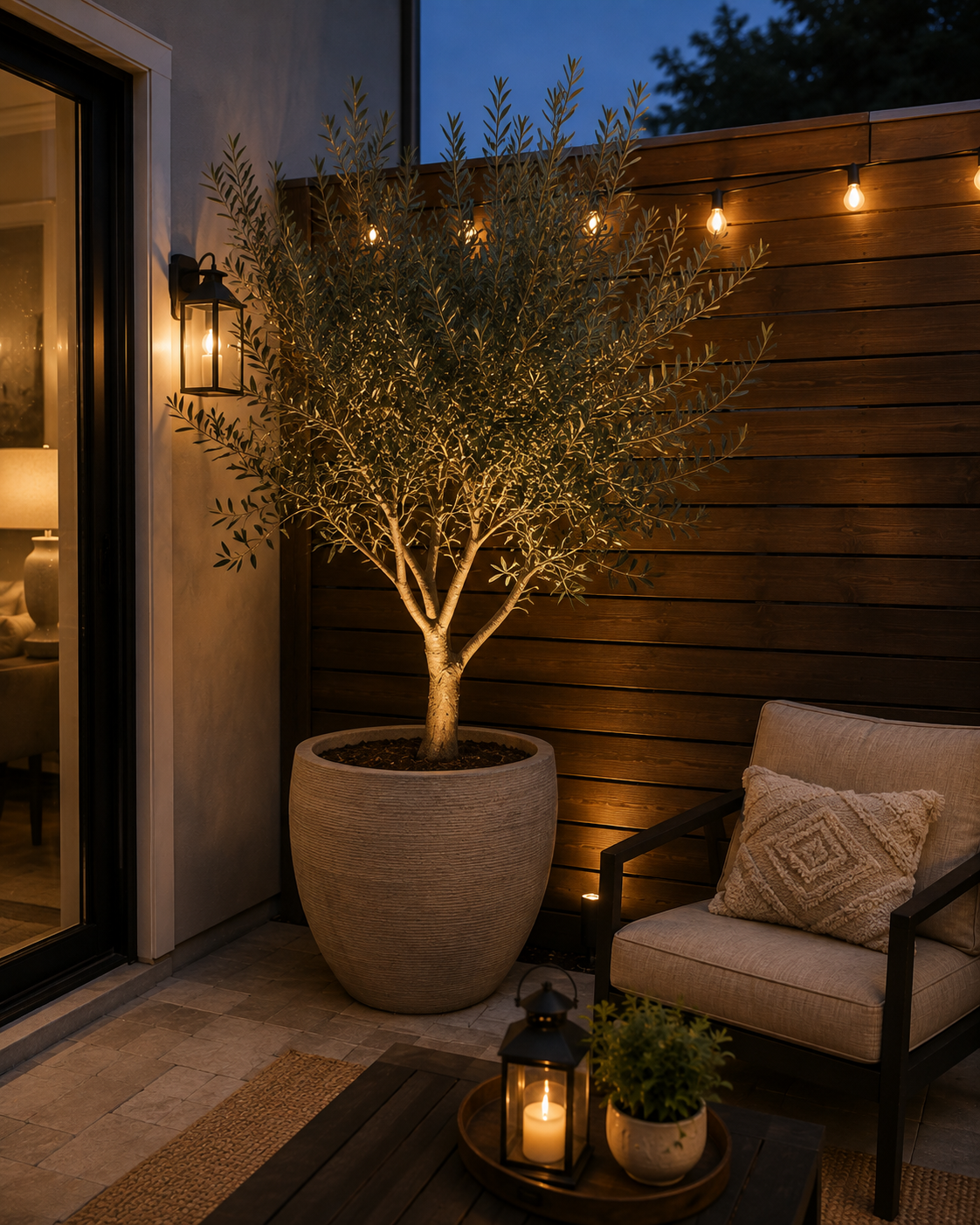
On pots: fewer and bigger, in a repeating material. Nine mismatched plastic pots read as clutter; three large terracotta ones read as a decision. Same repetition principle that makes mismatched indoor furniture work → Does Furniture Have to Match?.
7. Add the soft things
The last 10% is texture, and it's what makes a patio feel like a room instead of a paved area with chairs on it.
- An outdoor throw blanket over the back of a chair. Buys you an extra hour outside in spring and fall, which is more useful than it sounds.
- Cushions in one or two colors, repeated
- A bin or basket for the cushions and blankets, so bringing them in doesn't become a chore you quit doing
- Something scented lavender, rosemary, night-blooming jasmine near where you sit

What I'd do first, on a small budget
Starting with bare concrete and about $100:
- String lights. $20–30 and the single biggest change.
- One large plant in one good pot. Around $40. Gives you a focal point immediately.
- Cushions for whatever seating you already have. Around $30. Comfort is what gets you sitting out there.
Then the rug, then better seating, then screening in that order, as budget allows. The rug and the seating are the expensive parts, and they're the ones worth waiting for.
The whole thing came together over about two summers, which is longer than a blog post makes it sound. But the string lights went up in an afternoon, and I noticed the difference that same night.
Affiliate Disclosure
Some links in this post are affiliate links. If you buy something through one, GlamNestStudio may earn a small commission it doesn't cost you anything extra. I only link to things I'd recommend to a friend, and I've used or genuinely researched everything mentioned here. It's what keeps the guides on this site free.
Before you go
Working on the inside too? The rest of the decorating guides on GlamNestStudio cover the indoor version of most of these problems lighting, layout, and the rug I regretted for two years.