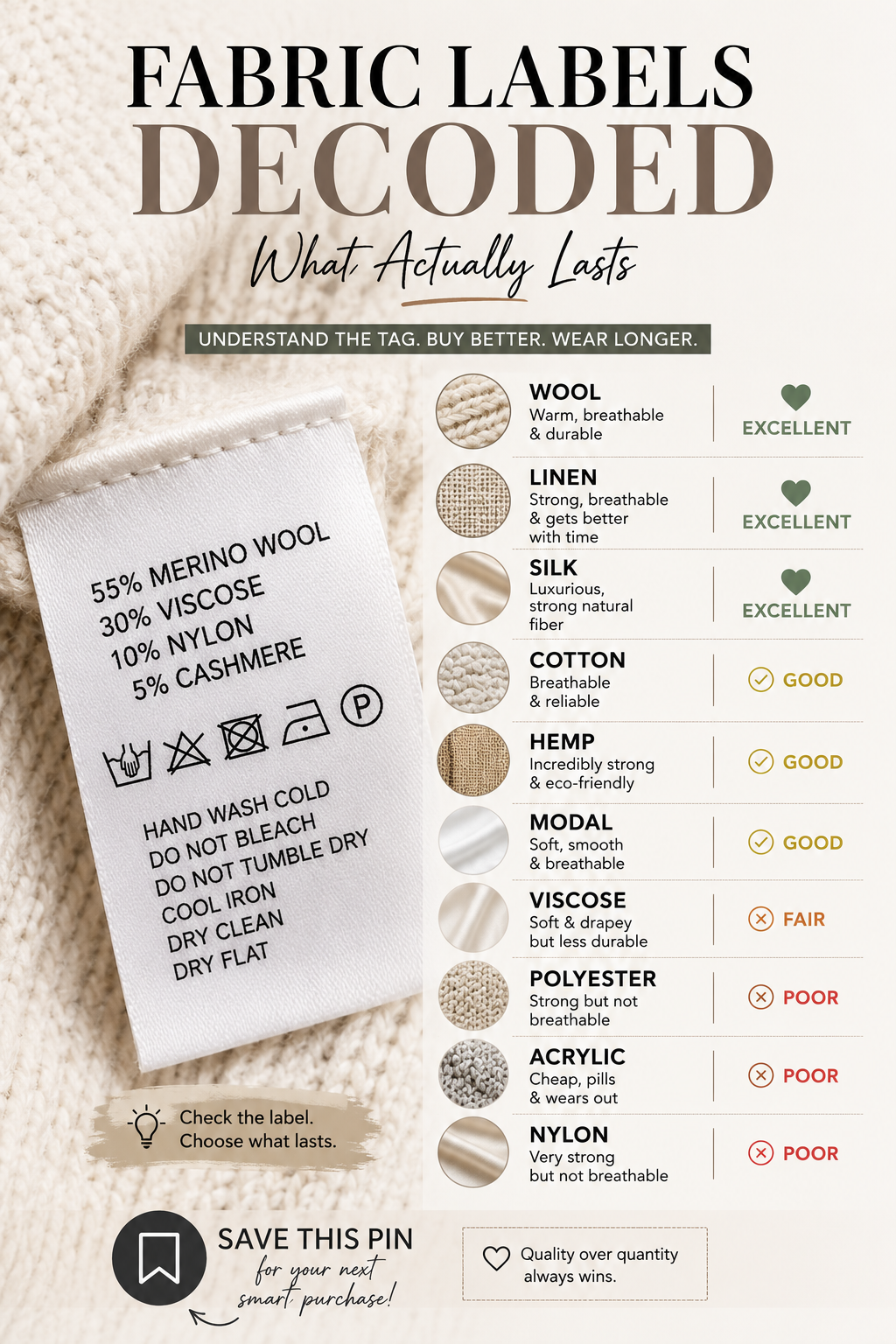
Fabric Labels, Decoded: What Actually Lasts
Disclosure: this post contains affiliate links. If you buy something through one, I may earn a small commission at no extra cost to you.
I bought two sweaters the same week. One was merino wool, one was acrylic, and the acrylic one cost about a third of the price.
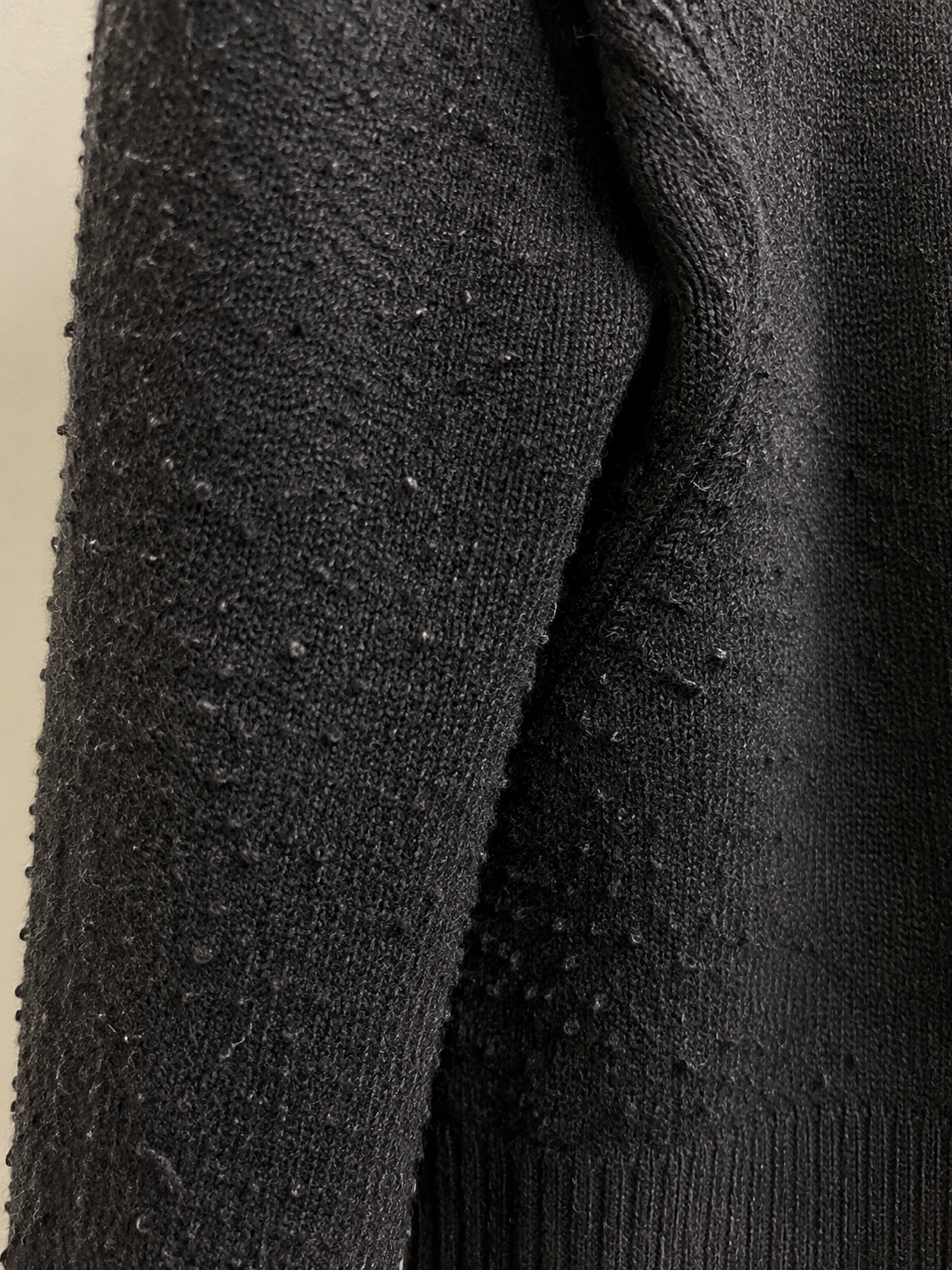
By the end of that winter the acrylic one had pilled across both sides, gone slightly shiny at the elbows, and developed a static charge that made it unpleasant to take off. The wool one is four years old and looks essentially the same as it did new.
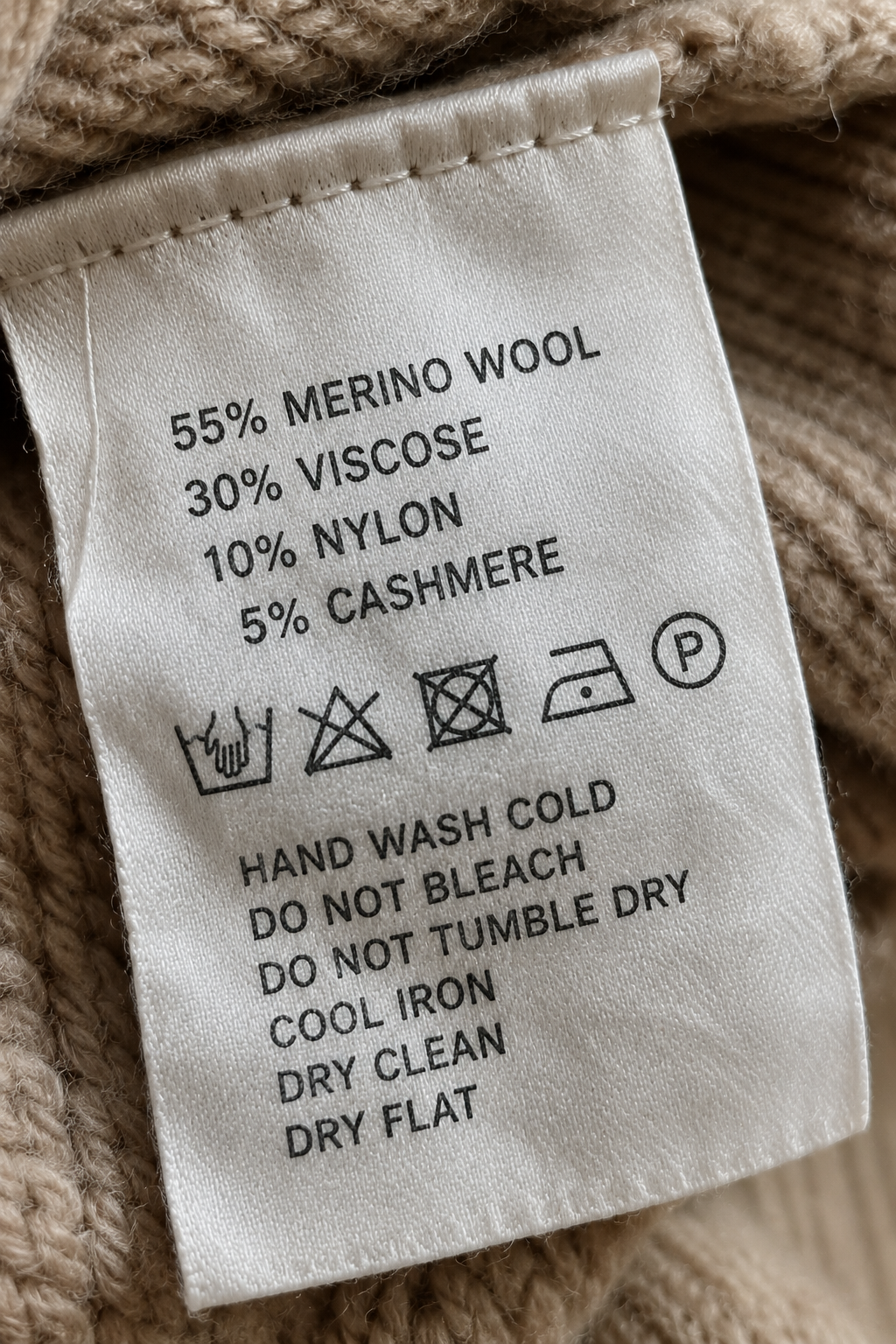
The price tag didn't tell me that was going to happen. The little label inside the side seam did, and I hadn't read it.
That label is the only genuinely honest piece of information on most garments. Here's how to read it.
Natural fibers
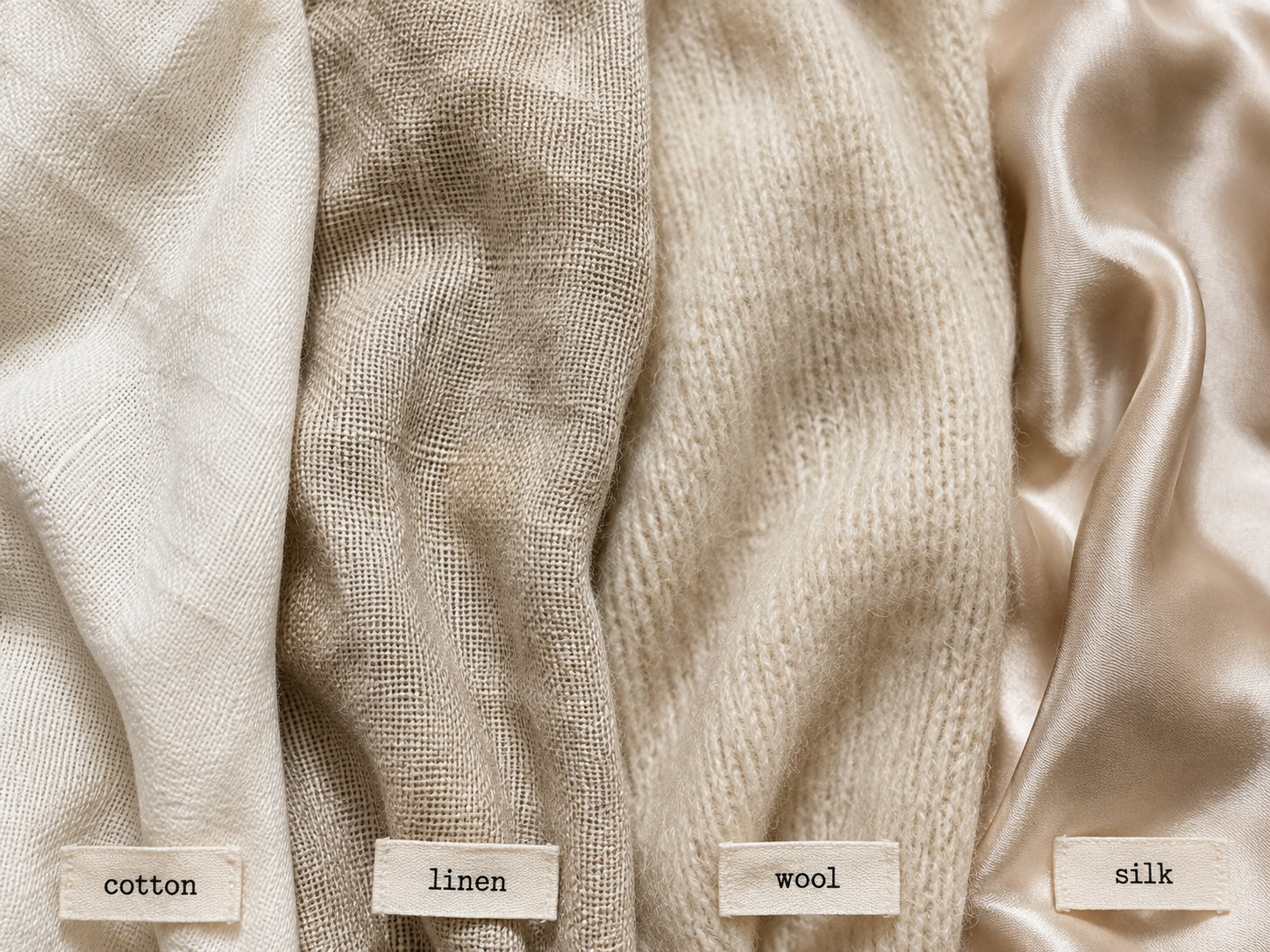
Cotton
The default, and mostly deservedly.
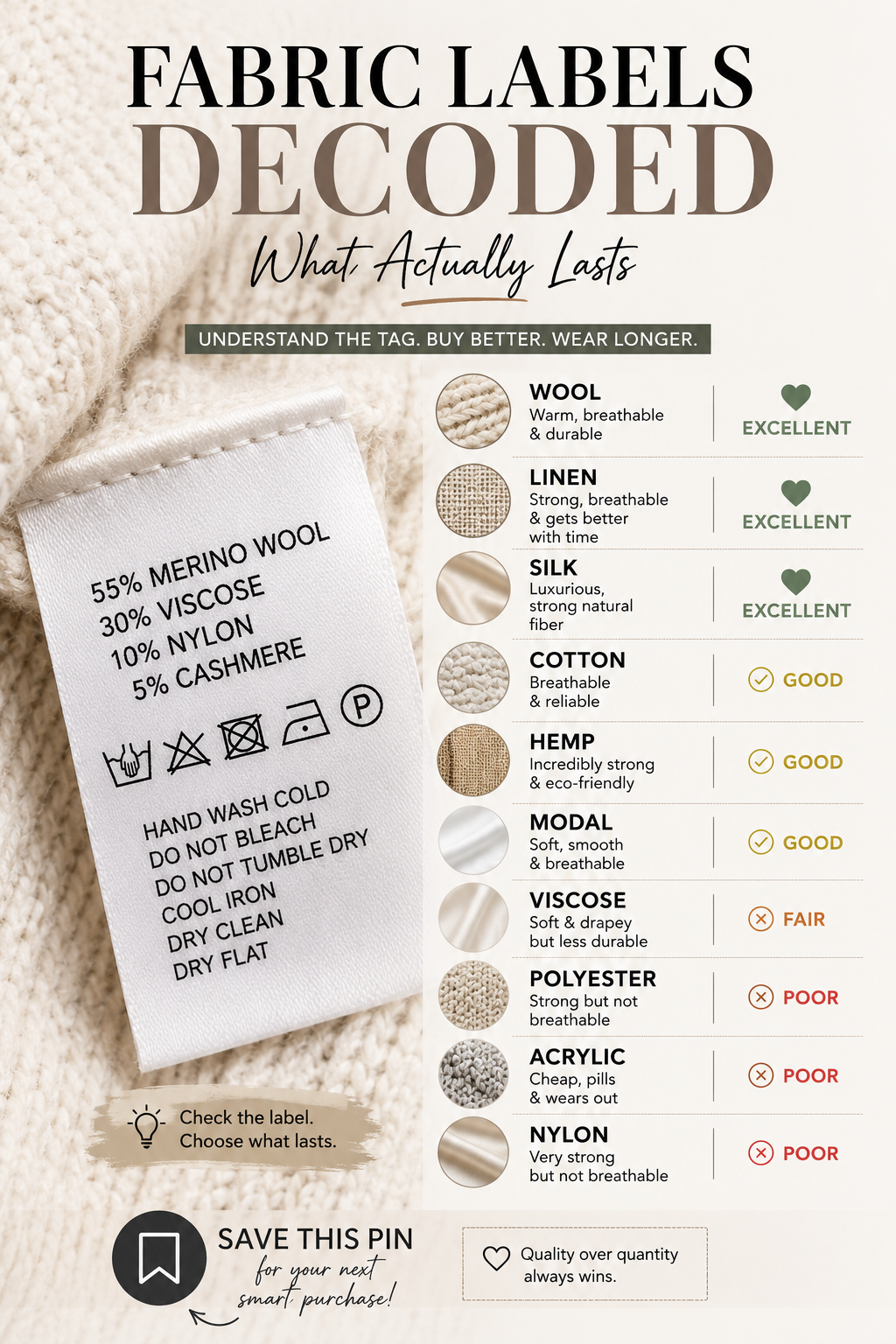
Good: breathable, soft, washes well, gets better with age, comfortable against skin. Less good: wrinkles, shrinks in heat, loses shape over time without some elastane, absorbs and holds moisture.
What to look for: long-staple cotton (sold as Pima, Supima or Egyptian) is genuinely better longer fibers mean less pilling and a smoother finish. Worth the difference on things you wear constantly.
Weight matters more than people realize. A thin cotton t-shirt for $8 and a heavy one for $30 are different products, and the heavy one will still be in your closet in three years.
Linen
Good: the best hot-weather fabric there is. Strong, gets softer forever, genuinely improves with washing. Less good: wrinkles immediately and permanently. That's not a defect, it's the material if creasing bothers you, don't buy linen and don't buy a linen blend hoping it'll be different.
Wool
Good: warm, naturally odor-resistant, springs back into shape, lasts decades. Merino is fine enough to wear against skin without itching; lambswool is soft; cashmere is softest and least durable. Less good: needs careful washing, moths, and it costs.
Wool needs washing far less often than other fibers airing usually does it. That's a genuine cost saving over a garment's life, and it's why washing less is one of the highest-return laundry habits → 8 Laundry Mistakes That Are Aging Your Clothes.
Silk
Good: drapes beautifully, temperature-regulating, strong for its weight. Less good: water-marks, sun-fades, and most silk needs dry cleaning. A garment that costs $12 to clean each time is more expensive than its price tag.
Semi-synthetics
These are made from plant cellulose that's been chemically processed. The names are confusing on purpose.
Viscose / rayon
Soft, drapes well, breathes reasonably. Also weak when wet, shrinks, wrinkles, and pills fast.
It's fine in a blend. As the dominant fiber in something you'll wear often, it won't last.
Incidentally, this is the same fiber that makes viscose rugs such a bad purchase → Wool vs. Jute vs. Synthetic Rugs — water permanently damages the fibers. In clothing you at least expect to wash it, but the underlying weakness is the same.
Modal and Tencel (lyocell)
Better versions of viscose. Stronger, especially wet, more resistant to pilling and shrinking, and softer. Tencel in particular holds up well.
If you're choosing between a viscose shirt and a Tencel one at similar prices, take the Tencel every time.
Bamboo
Almost always viscose made from bamboo, sold as if it were a separate natural fiber. It's processed the same way and behaves the same way. Treat it as viscose.
Synthetics
Polyester
The most common fiber in clothing, and the most variable. Very cheap polyester is stiff, shiny and traps odor. Good polyester is genuinely useful it holds shape, resists wrinkles, and doesn't shrink.
Where it's fine: outerwear, structured pieces, anything that needs to hold a shape, activewear. Where it isn't: anything worn against skin all day in warm weather. It doesn't breathe, and it holds smell in a way that washing doesn't fully fix.
Nylon (polyamide)
Stronger than polyester and more abrasion-resistant. Good in outerwear, bags, and blended into socks and knitwear for durability.
Acrylic
The one I'd steer away from. Marketed as a wool substitute warm, cheap, soft in the store.
Then it pills within a season, generates static, goes shiny where it rubs, and holds odor. It's the fiber in my $40 sweater, and it's why that sweater lasted one winter.
Some acrylic in a blend is tolerable. Above roughly 30% in a knit, expect pilling and expect it early. Given the choice, a smaller number of wool or cotton knits beats a drawer full of acrylic ones.
Elastane (spandex, Lycra)
Stretch. Almost always a small percentage of a blend, and usually a good thing.
The sweet spot is 2–5%. Enough for movement and recovery. Above about 8% and the garment starts to rely on the stretch to fit which means when the elastane degrades, and it will, the whole thing goes.
Elastane is killed by heat. Every hot wash and every dryer cycle shortens its life, which is why stretch jeans go baggy and never recover.
Reading a blend
The percentages are listed in descending order, and the first one tells you most of what you need to know.
Blends worth having:
- Cotton with 2–5% elastane shape retention without dependence
- Wool with a little nylon durability in socks and knitwear
- Linen and cotton linen's coolness with less extreme wrinkling
- Wool and cashmere softness at a workable price
Blends to be careful with:
- Anything with acrylic above about 30%
- Viscose or rayon as the dominant fiber in something you'll wear weekly
- Elastane above 8% in anything you want to keep for years
- Cotton and polyester where polyester dominates often the worst of both, with cotton's wrinkles and polyester's lack of breathability
What to check in the store
Two seconds each, and they tell you what the label can't:
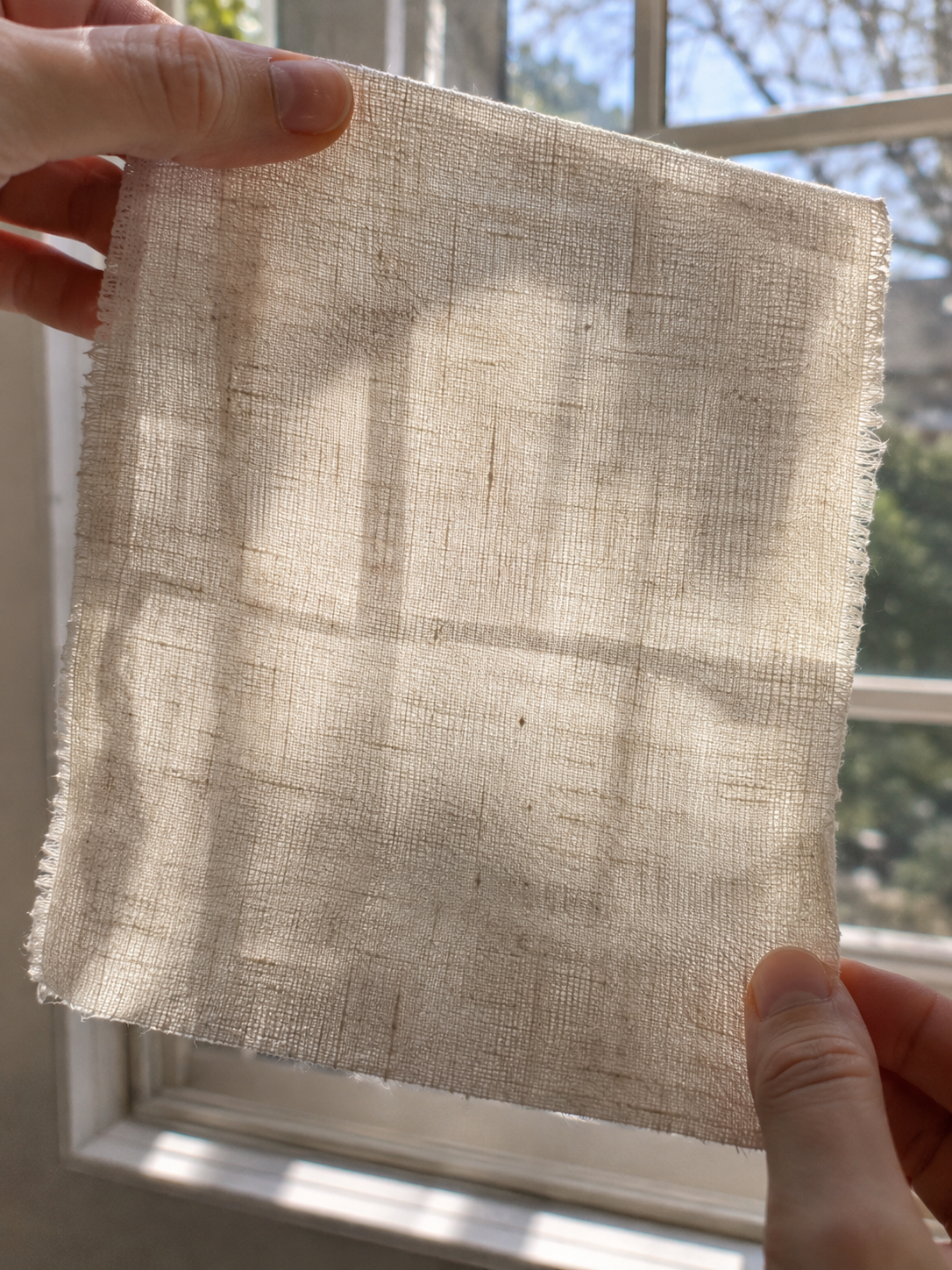
Hold it up to the light. If you can see through it clearly, it's thin, and thin fabric loses its shape fast regardless of fiber.
Pinch and release. Good fabric has some body and springs back. Fabric that stays slightly deformed will do that at your knees and elbows within a month.
Rub it against itself. If it's going to pill, it usually will start showing under friction almost immediately.
Look at the seams inside. Generous seam allowance means it can be altered later. Narrow allowance means it can't, and it'll fray.
More on what to check before buying anything in the in-store fitting routine → How to Tell If Something Actually Fits in the Store.
What I'd actually buy
Things worn against skin: cotton, linen, merino. Breathability matters most here.
Knitwear: wool, in whatever grade the budget allows. This is the category where fiber content matters most and where cheap is most expensive over time.
Structured pieces blazers, coats: wool, or a good wool blend. Some polyester in the mix is fine and helps it hold shape.
Anything with stretch: cotton or Tencel with 2–5% elastane.
Activewear: polyester and nylon, unapologetically. This is what synthetics are actually good at.
Avoid: dominant acrylic, dominant viscose in anything you'll wear weekly, and very thin fabric of any fiber.
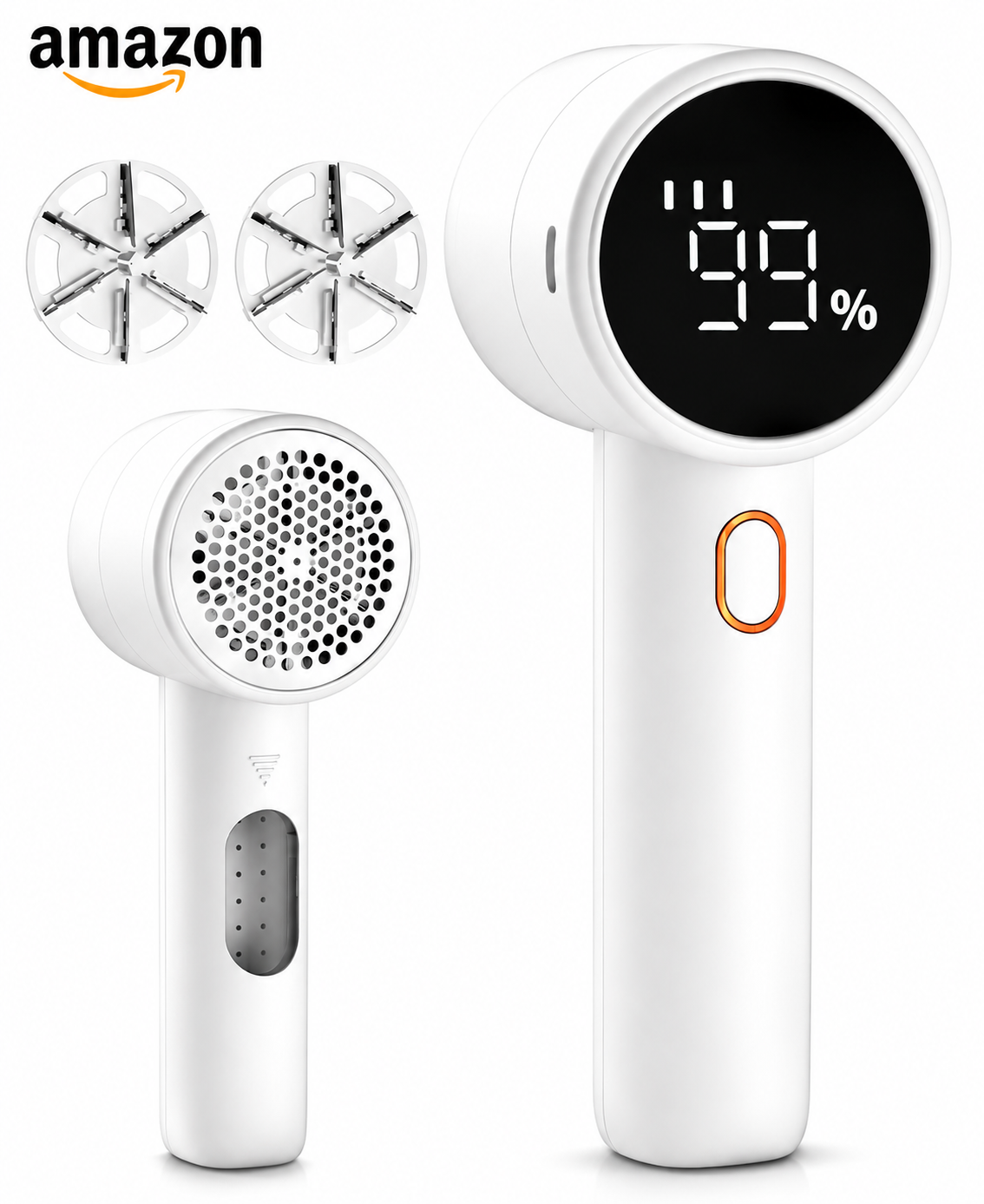
The label costs nothing to read and it's a better predictor of whether you'll still be wearing something in three years than the price is. That's the same calculation that runs through buying fewer, better things generally → A Capsule Wardrobe That Isn't All Beige — and a fabric shaver for the acrylic you already own, which is where most of us are starting from.
Affiliate Disclosure
Some links in this post are affiliate links. If you buy something through one, GlamNestStudio may earn a small commission it doesn't cost you anything extra. I only link to things I'd recommend to a friend, and I've used or genuinely researched everything mentioned here. It's what keeps the guides on this site free.
Before you go
More on buying fewer things that actually last closet and home across the guides on GlamNestStudio.