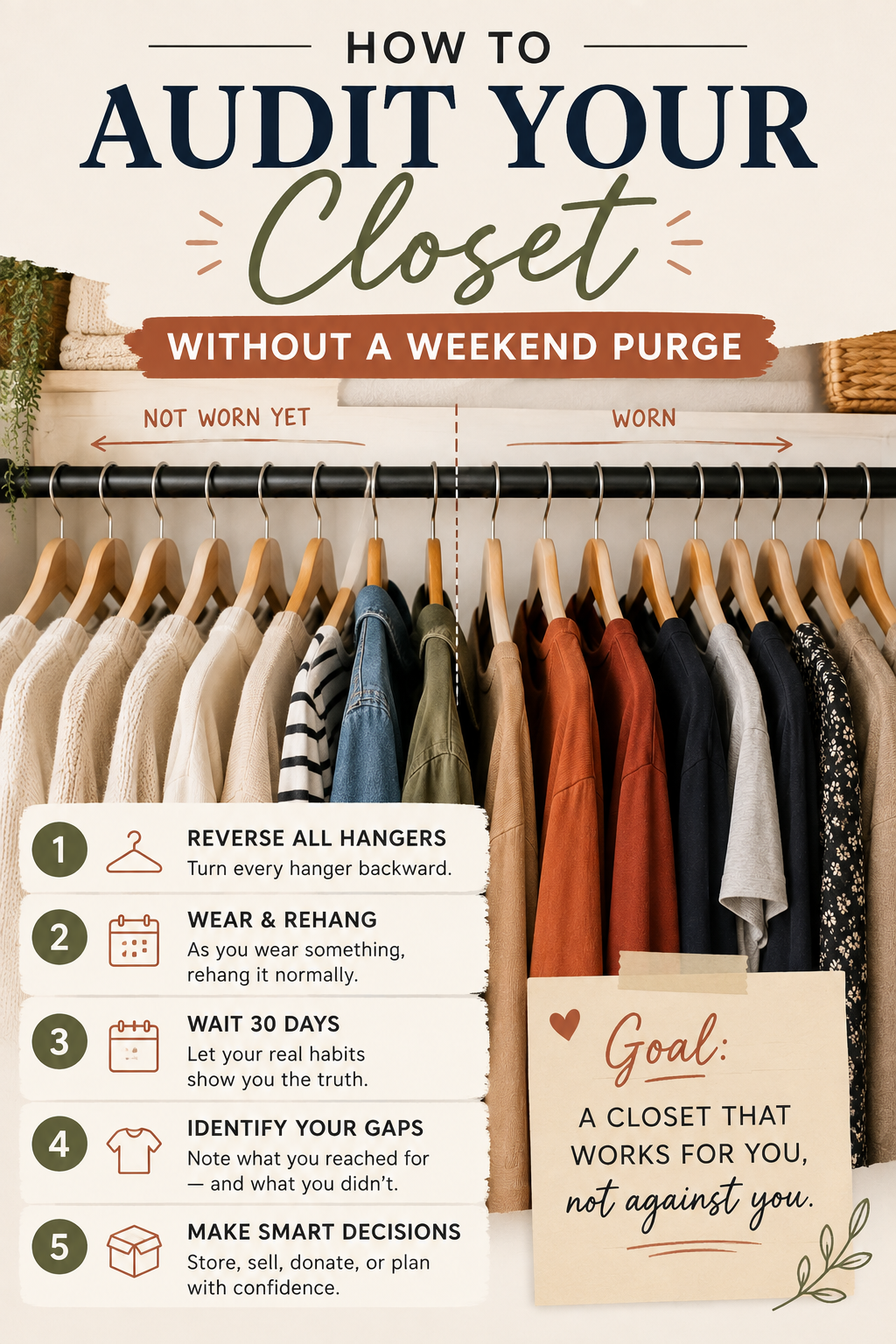
How to Audit Your Closet Without a Weekend Purge
Disclosure: this post contains affiliate links. If you buy something through one, I may earn a small commission at no extra cost to you.
I've done the big weekend purge three times. Everything on the bed, four piles, six hours, a strange emotional low point around hour four, and three trash bags to donate.
All three times I re-bought something within six months that I'd given away.
The problem with the purge weekend is that you're making thirty decisions in an afternoon, on incomplete information, in a state of decision fatigue. You end up keeping things because they're expensive and getting rid of things because you happen to be sick of them that particular Saturday.
This is the slower version. It takes two months of almost no effort and it produces much better decisions which is the same reason gradual decluttering works better at home than a big clear-out → 10 Common Home Decor Problems.
Step 1: Turn every hanger backward
Today, right now, takes five minutes.
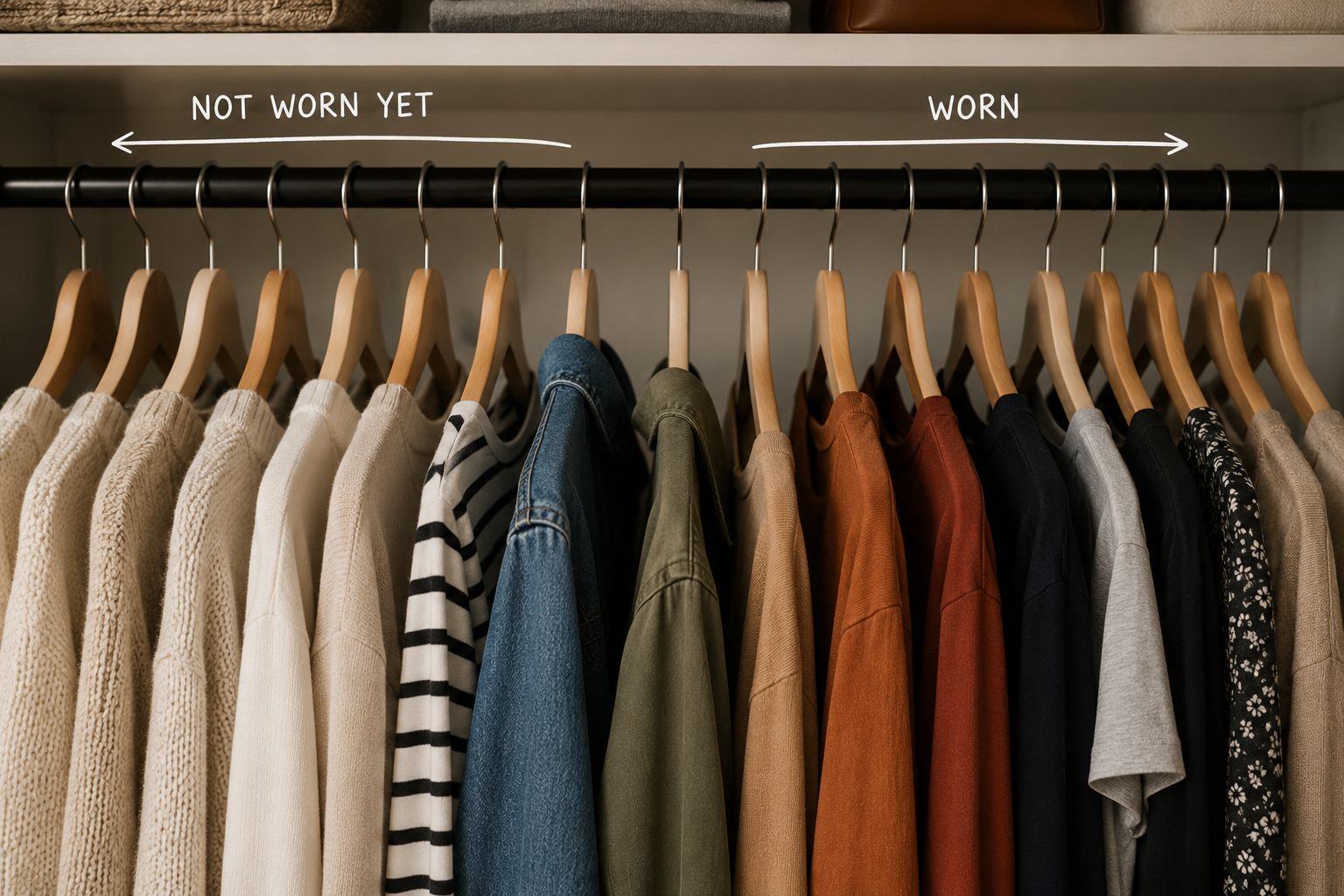
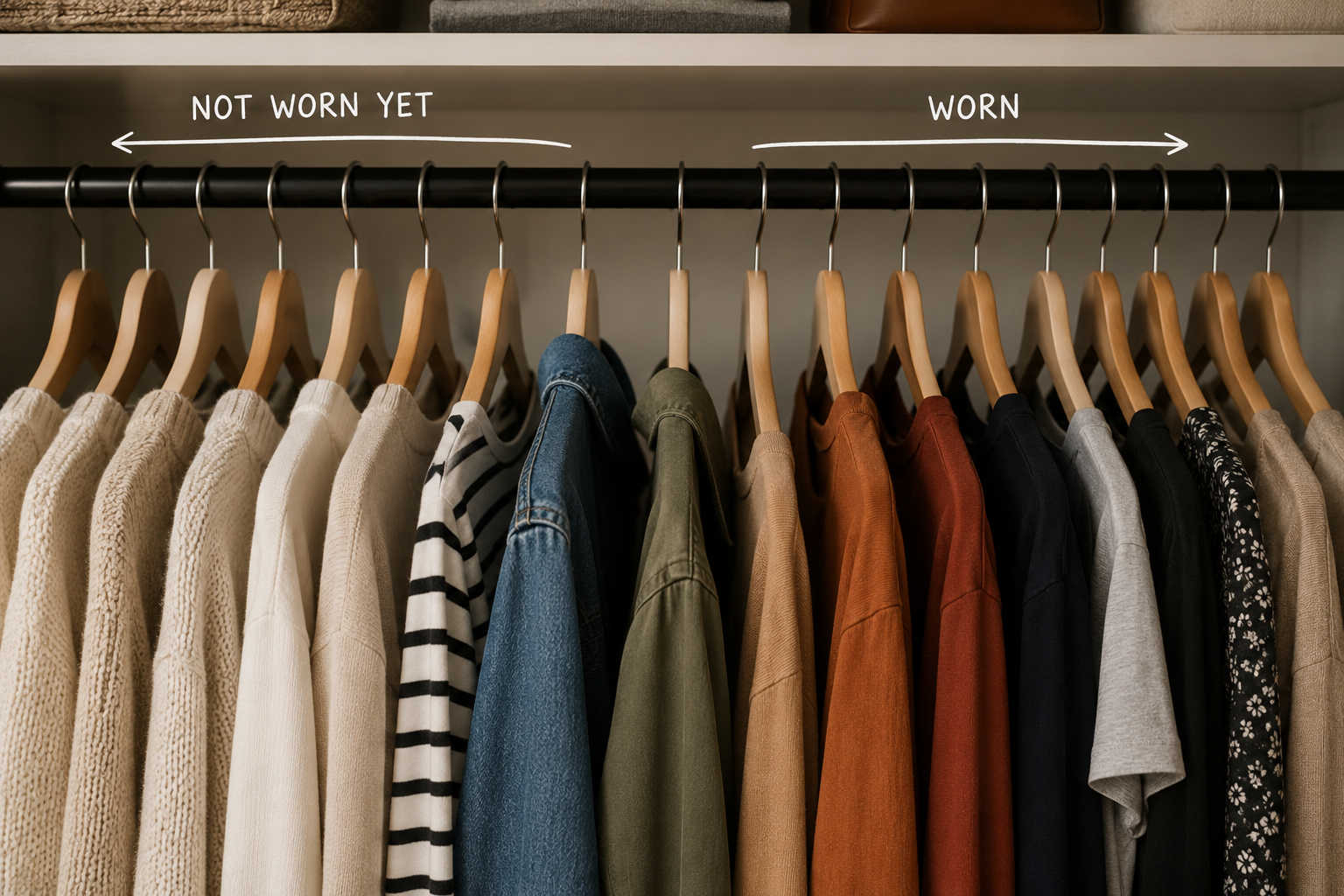
Turn every hanger in your closet so the hook faces out toward you instead of away. Then live normally. Every time you wear something and hang it back up, hang it the correct way around.
After two months, the backward hangers are things you haven't worn in two months. After six, they're things you haven't worn in six.
Why this works better than guessing: everyone dramatically overestimates how much of their closet they use. You remember wearing something because you remember liking it, not because you actually put it on. The hangers don't have opinions.
For folded items: put a slip of paper or a ribbon in the middle of each stack. Anything that stays below the marker isn't being worn.
Step 2: While you wait, keep a note
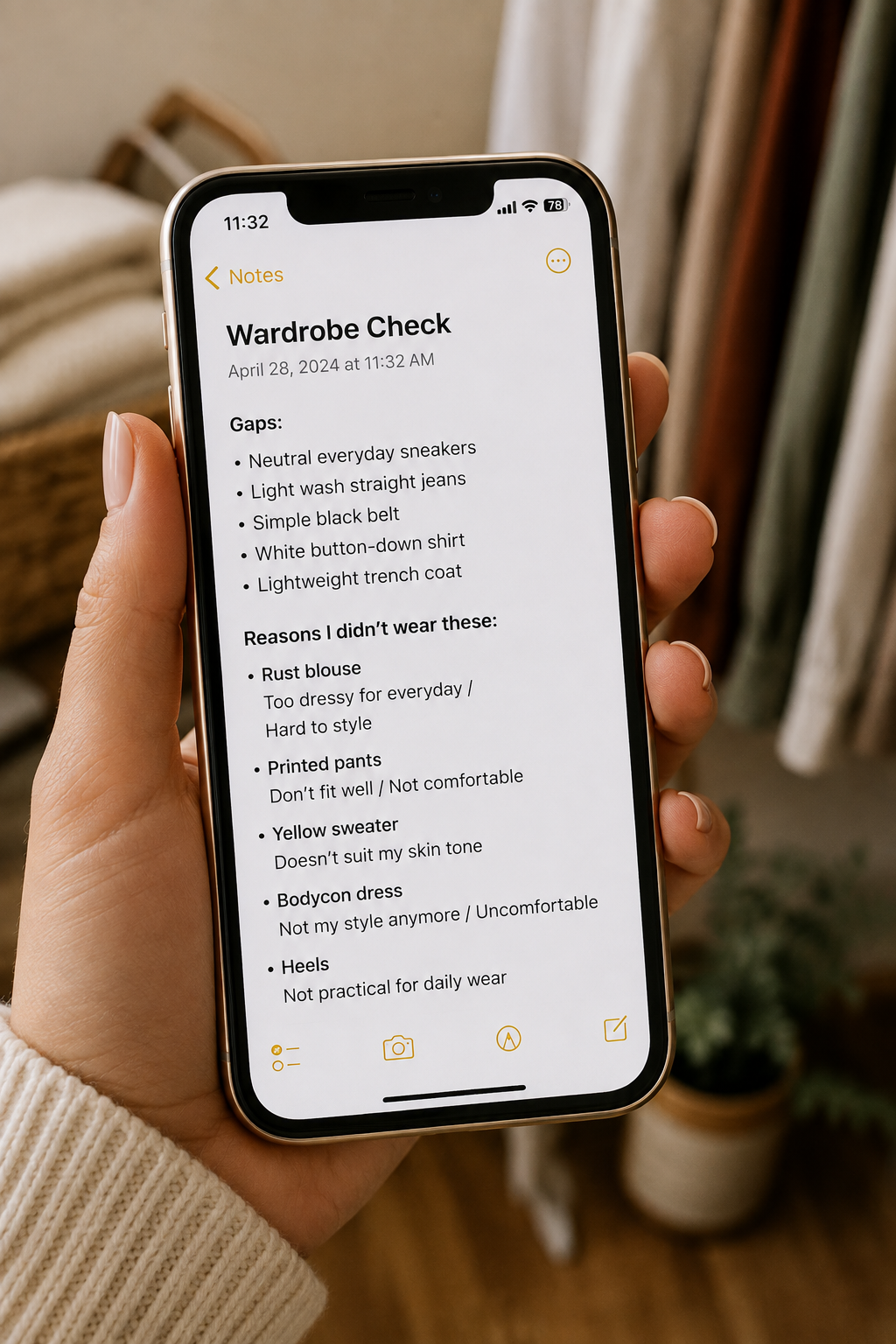
On your phone, one running note. Two things go in it:
What you reached for and it wasn't clean or available. This is the single most valuable piece of information about your wardrobe, and it evaporates within about an hour of noticing it. If you go looking for a plain white shirt twice in a month and don't have one, that's a real gap.
What you put on and took off again. Also record why. "Itchy." "Too short when I sit." "Fine but I felt overdressed." The reasons matter more than the items, because they repeat.
After two months this note tells you what to buy and what to stop buying, and it's more accurate than any style guide.
Step 3: At two months, sort into four groups
Now look at what's still backward. Four categories, and be honest about which is which.
Wear it, keep it. No decision needed. Notice what these have in common that's the pattern you build the rest of the wardrobe around → A Capsule Wardrobe That Isn't All Beige.
Don't wear it because it doesn't fit right. Not "doesn't fit" doesn't fit right. This is a big pile for most people and it's the most recoverable one. A sleeve shortened or a waist taken in costs about $20 and turns an unworn item into a worn one. Check whether it's actually fixable → Why Your Clothes Fit But Don't Look Right] shoulders aren't, most other things are.
Don't wear it because of the occasion. Clothes for a job you left, a climate you moved away from, an event that already happened. These feel wasteful to release and they're the easiest to release, because the life they belonged to isn't coming back.
Don't wear it and don't know why. The interesting pile. Put these on, one at a time, in front of a mirror, and find the actual reason. It's usually fit, fabric feel, or that it doesn't go with anything you own. All three are useful to know.
Step 4: The maybe box
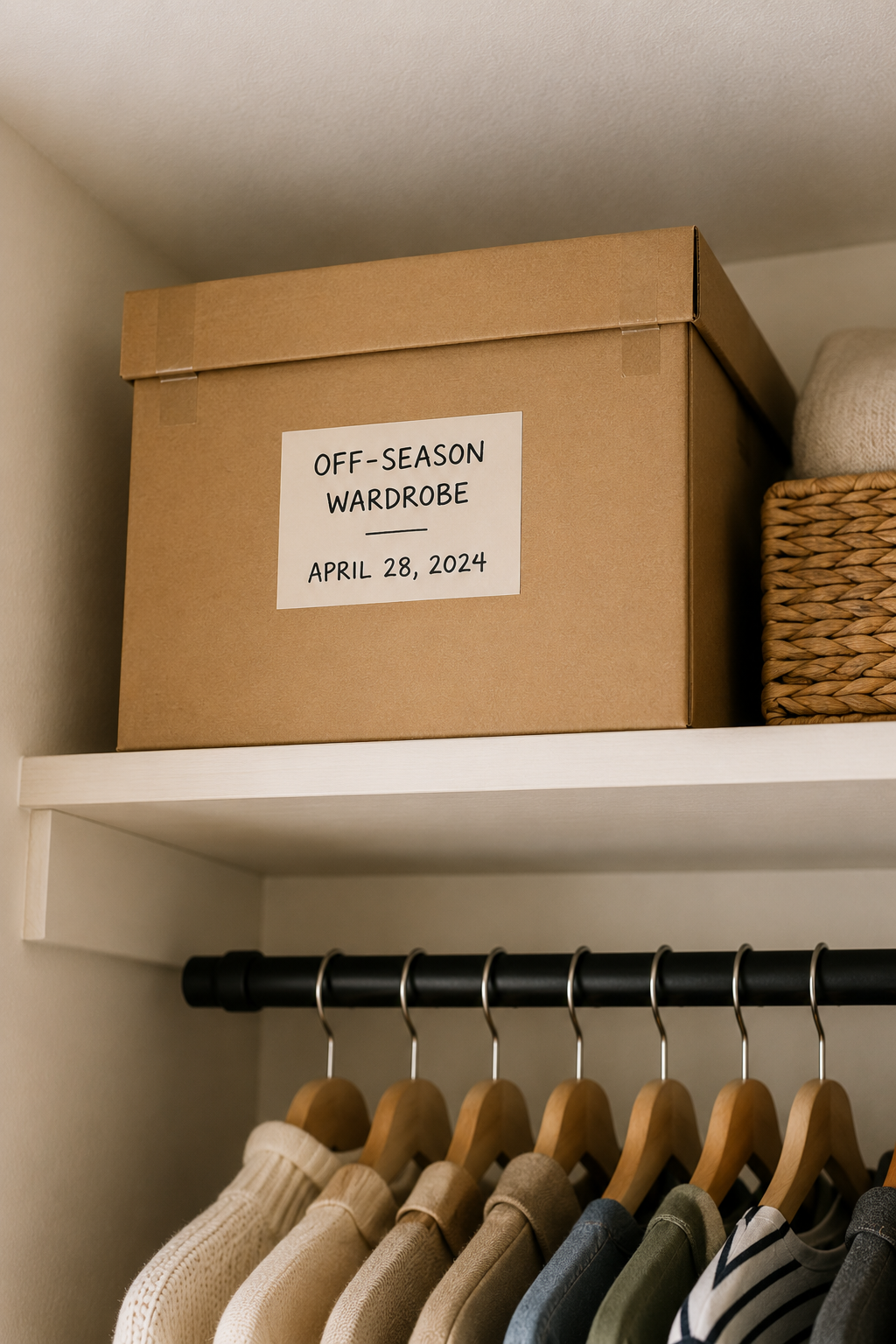
For anything you can't decide on: a box, sealed, dated, out of sight. Not in the closet.
If you haven't opened it in six months, donate it unopened. Don't look inside looking inside restarts the whole decision process and you'll find reasons.
Mine sat for a year. When I finally donated it I couldn't remember a single thing that had been in it, which is the answer.
One exception: genuinely expensive or sentimental items don't belong in the maybe box. Keep them somewhere proper, stored clean → 8 Laundry Mistakes That Are Aging Your Clothes, and stop making them part of the decision.
Step 5: Fix the storage, not just the contents
Half of what people call a closet problem is a visibility problem. You don't wear things you can't see.
- Same hangers throughout. Slim velvet hangers roughly double usable rail space and stop things sliding off. The most cost-effective closet purchase there is.
- Fold what should be folded. Knits and heavy things stretch on hangers. Sweaters on a shelf, shirts on a rail.
- Shelf dividers so folded stacks stop collapsing into each other.
- Store out-of-season elsewhere. You can't see this season's clothes past a winter coat in July.
- A hanging shelf organizer if you have height but not rail space.
The rule is the same one that applies to storage anywhere in a home → 10 Common Home Decor Problems: things you use should be visible, things you don't should be somewhere else.
What to do with what leaves
- Donate the ordinary stuff. Local shelters often need practical clothing more than thrift shops do.
- Sell anything genuinely valuable but be realistic. Listing, photographing and shipping a $15 item is a poor use of an evening.
- Textile recycling for anything too worn to donate. Stained and holey clothes shouldn't go in a donation bag; it costs charities money to dispose of them.
- Keep two or three as rags or paint clothes. Not twelve.
The whole method
- Turn all hangers backward. Five minutes, today.
- Keep a running note of gaps and takeoffs.
- At two months, sort what's still backward into four groups.
- Anything undecided goes in a sealed, dated box.
- Fix the storage so you can see what you kept.
- At six months, donate the box unopened.
Total active effort: maybe two hours, spread over half a year. Compared to a six-hour Saturday that you undo within a season.
The point isn't owning less. It's knowing what you actually wear because until you know that, everything you buy is a guess.
Affiliate Disclosure
Some links in this post are affiliate links. If you buy something through one, GlamNestStudio may earn a small commission it doesn't cost you anything extra. I only link to things I'd recommend to a friend, and I've used or genuinely researched everything mentioned here. It's what keeps the guides on this site free.
Before you go
More on owning fewer things and actually using them closet and home across the guides on GlamNestStudio.